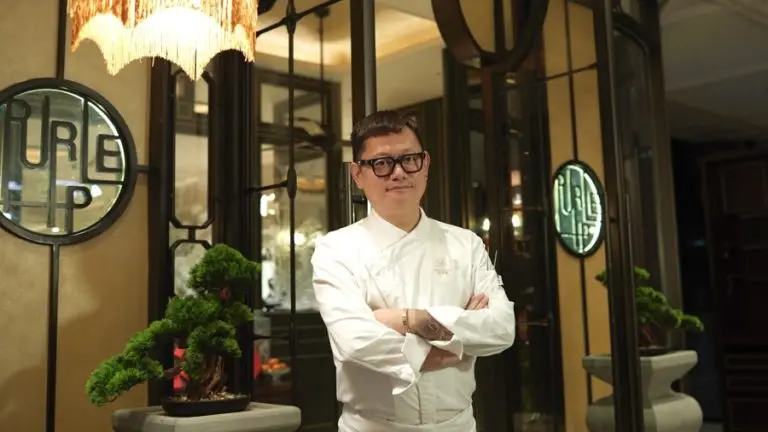
Bangkok, Thailand, September 22, 2025 / TRAVELINDEX / The Purple Laurel restaurant recently launched its new autumn menu. Inspired by classic traditional dishes and flavors from various regions of Zhejiang province, and guided by the selection of current ingredients and guest preferences, the restaurant has reinterpreted its dishes. By combining high-quality local Thai ingredients with unique spices and flavors from Zhejiang, the new autumn dishes are not only full of seasonal flavors but also appeal to the tastes of local customers.
Economic boom in the Jiangnan region | “Purple Laurel”, the international debut of renowned chef Yu Bin
In early 2025, after meticulous preparation, “Purple Laurel” (紫桂轩 Zi Gui Xuan), the first restaurant by renowned Chinese chef Yu Bin, a leading figure in refined and creative Jiangnan cuisine and a veteran of several Michelin-starred and Black Pearl restaurants, opened in Bangkok, Thailand. Located in the luxurious Gaysorn Amarin shopping mall, near the famous Erawan Shrine, the restaurant offers a modern and elegant ambiance that blends the essence of Cantonese and Jiangnan cuisine, presenting contemporary and stylish Chinese cuisine to international gourmets.
The name “Purple Laurel” (紫桂轩 Zi Gui Xuan) originates from the hometown of its founder, Yu Bin, in the Chinese province of Zhejiang. “Gui” refers to Hangzhou’s city flower, the osmanthus, while “Zi” stands for the Relais & Châteaux Hangzhou Zixuan Resort, where Yu Bin has served as General Manager and Head Chef since 2005. The resort also serves as a research and development center for his creative Jiangnan cuisine and is the birthplace of over 6,000 original dishes. The restaurant chain comprises three Michelin-starred and Black Pearl Award-winning restaurants, each with its own distinct style.
Yu Bin is a renowned Chinese chef and a leading figure in fine Chinese cuisine. Over the past two decades, he has broken free from the traditional constraints and limited ingredient variety of Hangzhou cuisine. By incorporating flavors and cooking techniques from various Chinese cuisines and skillfully integrating high-quality international ingredients into his new dishes, he has created sophisticated Chinese cuisine with a distinctive "Yu-style" signature.
In search of the Nanyang | Private courtyard, Modern Jiangnan
To reflect the integration of Nanyang and Chinese culture, “Purple Laurel” combines the essence of the traditional Jiangnan space with distinctive Nanyang elements, giving it a unique and refined charm.
The restaurant's facade is adorned with intricate, perforated carvings that capture the artistic essence of Chinese doors and windows. The symmetrically designed main hall naturally separates the various dining areas with two white pavilions, creating the elegant atmosphere of a Chinese courtyard. Lush greenery and delicate partitions create a visually layered effect as one moves through the space, offering guests a relaxed and private dining experience. At the rear of the restaurant is the garden terrace, which opens onto the outside. Over the railing, a view of vibrant Bangkok and the elevated railway unfolds – a feeling of an urban oasis.
As a new brand founded by Yu Bin for the international market, the "Purple Laurel" team, after in-depth research into the local Chinese gastronomy market and customer preferences in Bangkok, as well as considering the current situation regarding ingredient imports and local alternatives, has developed a menu based on modern Jiangnan cuisine, complemented by dishes from Chaoyang and Cantonese. Jiangnan cuisine is the most familiar to Yu Bin's team, and Ziguixuan aims to bring the subtle spice and exquisite craftsmanship of their modern Jiangnan cuisine to Bangkok. The addition of Chaoyang and Cantonese dishes is intended to cater to the eating habits of local guests and their long-standing preference for these cuisines.
Now that the restaurant has stabilized, the Purple Laurel offers three set menus in addition to its à la carte dishes to cater to the diverse needs of its guests. The first is a lunch menu featuring 60% handmade dim sum, complemented by roasts and stir-fries, making it more affordable. The second is a chef's tasting menu for dinner. The third is a menu for singles, primarily aimed at solo travelers abroad.
The wine list at Purple Laurel was specially curated for the restaurant by Lu Yang, the world's first Chinese Master Sommelier and founder of GuiPu Wine Education & Services and Top Sommelier Studio. It features over one hundred carefully selected wines from the most important classic wine regions. In addition, Purple Laurel offers a meticulously crafted tea menu with 24 varieties of Chinese tea. These range from the rugged charm of the Wuyi Mountains in Fujian, through the fragrance of ancient trees in Yunnan and the oolong teas from the highlands of Taiwan, to the honey-sweet Qimen black tea. Floral, fruity, woody, medicinal, cereal, and mushroom aromas blend and complement each other harmoniously.
Autumnal charm from Jiangnan | “Purple Laurel” presents an autumn menu for diverse culinary needs
Mr. Yu Bin, manager of the "Purple Laurel" restaurant, explained: "The 'Purple Laurel' updates its menu quarterly, taking into account the seasons to reflect the unique characteristics of each of the four seasons. Since our opening over six months ago, our clientele has become very diverse. The Chinese community in Thailand predominantly dines in private homes and has high expectations regarding the presentation of food. At the same time, tourists in Bangkok are an important customer group. They usually dine in groups of two to four people and desire authentic Chinese dishes from their homeland. Many foreigners also visit Bangkok, whose eating habits tend to focus on lunch and dim sum, and who are frequent repeat customers. Given these diverse eating habits and tastes, we will also consider these specific needs when creating our new dishes."
Introduction to the new autumn dishes
Hua Diao Iced Chicken: This dish is inspired by the yellow rice wine brewing culture of Shaoxing, Zhejiang Province, China, which is based on the region's abundant rice. It is a traditional folk dish prepared by the local population using the brewed yellow rice wine to preserve and process chicken. The dish embodies the concept of sustainable resource use and the aesthetics of "light intoxication" valued by traditional Chinese scholars, elevating it from a simple home-cooked meal to a refined and elegant representative of Jiangnan cuisine.
For this dish, we use free-range chickens from northern Thailand, approximately one year old and weighing around 1.4 kg. We use only the tender and aromatic thigh meat. The Hua Diao wine we use is a five-year-old Shaoxing Guyue Longshan, which not only has a full-bodied and smooth flavor but also a delicate rice aroma and a hint of fruit on the finish. After the chicken has been soaked for 30 minutes in dried scallop water at a low temperature, it is cold-marinated in Hua Diao wine before serving.
Crispy eel from Liangxi originated in Wuxi at the end of the Qing Dynasty (Wuxi is a city in China's Jiangsu province, known for its sweet and fresh dishes; it was formerly called "Liangxi," hence the name). The locals were fascinated by the delicacies of the lake, and their particular fondness for crispy textures gave rise to this dish.
We select native wild eels from Thailand, each weighing approximately 6 liang (a Chinese unit of weight, roughly 2.3 ounces or 65 grams). The eel's back meat is removed, washed with salt to remove any remaining slime, and then blanched. Once the oil reaches almost 60% of its maximum temperature, the eel segments are added. As soon as they are firm and a crust forms, the heat is turned off, and the remaining oil temperature is used to slowly poach the eels for 15 minutes. After reaching the desired crispness, the oil temperature is increased back to 50%, and the heat is turned off again to poach the eels. This double process ensures a long-lasting crispy texture. Finally, the eel segments are deep-fried at a high oil temperature to remove any excess oil. The sauce poured over the eels is based on a sweet and salty flavor, coating the eel segments and creating a unique combination of crispy, fragrant, and rich taste and texture. This dish not only demonstrates the chef's skill but is also considered a classic example of the "sweet and fresh" flavors of Jiangnan cuisine.
Zao Botou – Buddha Leaps Over the Wall. “Zao” refers to “Zao Lu” (Zao Lake), which is the heart of this dish. This Zao Lake is made from the pomace left over after brewing Shaoxing rice wine. It is combined with butter, salt, sugar, Sichuan peppercorns, cinnamon bark, and other spices to create a complex and highly aromatic liquid with a unique wine-like fragrance and a hint of fermentation. In the past, thrifty farmers in Jiangnan would not discard the offal (such as pig stomachs, lungs, liver, intestines, feet, etc.) after slaughtering livestock. Although these ingredients are palatable, they have a strong odor and require robust flavors to mask and harmonize it. This led to the prototype of the dish “Zao Lu Zao Botou.”
This time, for his dish "Buddha Leaps Over the Wall," Purple Laurel selected high-quality seafood commonly used in Chinese cuisine and presented it in the flavor profile of Zao Lu Zao Botou. First, a base broth is prepared from chicken, duck, and pork. The essence of this broth is then blended with some homemade fermented Zao brine to create the Zao Lu juice. The dried ingredients—sea cucumber, abalone, shark fin, fish bladder, and dried scallops—are soaked and prepared three days in advance. They are first steamed, then baked, and finally quenched in ice water to ensure complete rehydration. The dried ingredients are then added to the Zao Lu broth and simmered slowly for 30 minutes to allow the flavors to infuse. The result is an aromatic dish with a light yet rich and flavorful broth, packed with collagen and umami.
Braised Yellowfin Grouper with Perilla: Perilla is an herb with a unique and intense aroma. The aldehydes it contains are particularly effective at suppressing and neutralizing the fishy odor of fish ingredients. At the same time, its characteristic fragrance penetrates the fish flesh, creating a complex and pleasant aroma. Therefore, perilla is used in some Chinese cuisines for cooking fish. The original recipe for this braised fish dish with perilla comes from Quzhou Province in Zhejiang.
“Purple Laurel” uses tigerfish with a high collagen content in the skin. After filleting the fish, it is braised in red sauce from Qiandao Lake in Hangzhou along with perilla, creating a unique flavor.
Salted fish and shrimp in mushroom bone sauce. The inspiration for this dish is the famous crab bone sauce from Ningbo (Ningbo is a coastal city in Zhejiang Province, China, known for its abundance of fish). It uniquely embodies the Jiangnan people's sense of taste, which perfectly expresses freshness. In the past, fishermen and locals would cut up common spider crabs, shell and all, and stir-fry them with the local bean sauce to make the most of the available resources and create a flavorful dish to accompany rice. While steaming and blanching emphasize the "authentic freshness" of seafood, the crab bone sauce uses bold and rich flavors to highlight this freshness.
For our new autumn dish at the Purple Laurel, we've chosen Thai "Prosperity Shrimp" and prepared it in the style of crab bone sauce. We use large shrimp, each weighing about 6 liang (a Chinese unit of weight, approximately 2.3 ounces or 65 grams), and cut them into roughly 2-centimeter pieces. We then steam and stir-fry Thai salt cod to replace the bean sauce in the traditional crab bone sauce, highlighting its unique salty-fresh flavor. After frying the shrimp pieces, we add broth and salt cod, simmer, season, and then reduce the sauce to complete the dish.
Baked crab with dried vegetables and fermented black beans. In September, the large green crabs from Thai waters, which have lived for a long time in the freshwater estuary, combine the succulence of sea crabs with the sweetness of river crabs. Their meat is tender and has an excellent flavor. Therefore, green crabs enjoy a high reputation in Thai cuisine.
The green crabs are cut into pieces and their claws are cracked. They are then placed in a roasting pan and stir-fried until they change color. After adding a little water, a sauce made from dried plums and fermented black beans, which the chefs at Ziguixuan have personally gathered in rural areas around Hangzhou, Zhejiang, is added. The roasting pan is then covered and baked for 3 minutes. The natural sweetness of the crab meat harmonizes perfectly with the salty flavor of the dried plums, leaving a lingering aroma in the mouth.
Crab Powder Balls with Black Tiger Prawns: Black tiger prawns are large and have firm, delicious flesh. Because they grow up in the wild and are very active, their meat is particularly fibrous. The flavor is fresh and sweet, and the high astaxanthin content gives them a unique sweetness. Local mitten crabs reach their peak season in September. The Purple Laurel restaurant uses cooked crabs to hand-grind the crab powder. After cooking three large black tiger prawns (1 catty for 3 prawns) from Northern Thailand, the fried crab powder is sprinkled over them. The combination of seafood and delicacies from the lake creates an unforgettable taste experience this autumn.
Braised Pork "Autumn Magic" – a modern take on the traditional Zhejiang dish "Braised Pork." This dish uses the center cut of pork belly from black-haired pigs weighing over 90 kg (200 lbs) from northern Thailand. The meat is exceptionally flavorful and characterized by distinct layers of fat and lean meat. Instead of the traditional braising method, the Suzhou style of red braising is employed. During the braising process, plenty of dried hawthorn is added, which not only enhances the fruity acidity but also, thanks to its citric acid content, positively influences the pork's fiber structure. After slow braising, the meat develops a tender, non-greasy texture and a vibrant red color. It is served with small chestnut cakes, which are in season during autumn and perfectly complement the dish's autumnal charm.
Spring rolls with crab meat and shark fin: Spring roll culture is a thousand-year-old tradition where all sorts of things are wrapped in a pancake. Its earliest precursor was the spring pancake, where thin pancakes made of flour were baked at the beginning of spring and used to wrap vegetables—a custom known as the "spring bite." Over time, the culinary cultures of northern and southern China evolved, giving rise to various shapes and flavors. Today, spring rolls are no longer limited to springtime.
Purple Laurel's new spring roll variety for this fall has been optimized with a reduced filling. Thai green crab meat, shark fin, and mung bean sprouts from Chiang Mai farmers are stir-fried together and then wrapped in spring roll pastry. Deep-fried for about three minutes at 40% oil temperature, they are fragrant and have a rich texture.

Community
Comments 0
Start the conversation.