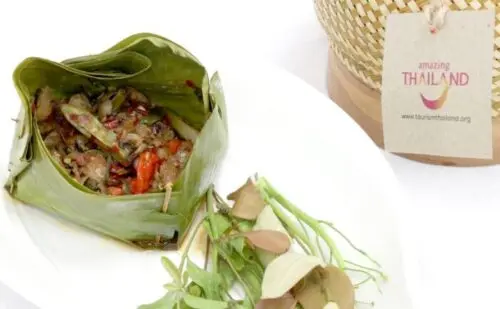
Bangkok, Thailand, May 24, 2023 / TRAVELINDEX / The Tourism Authority of Thailand (TAT) is promoting “Thailand’s Hidden Dishes” in Thailand’s five regions – Central, Eastern, Northern, Northeastern, Southern and Eastern Thailand – to use gastronomic tourism as an enjoyable way for Thai and foreign tourists to discover the diversity of Thai cuisine.
The TAT hopes that the “hidden dishes” from the country’s five regions will inspire tourists to take a culinary journey through Thailand and spark a new trend: gastronomy tourism in the Kingdom.
Mr. Chattan Kunjara Na Ayudhya, Deputy Governor of the TAT for Marketing Communications, stated: “The ‘Thailand’s Hidden Dishes’ campaign is part of the TAT’s strategy to strengthen Thailand’s status as a premier destination for food tourism and raise awareness of the diversity of Thai food culture. As part of this initiative, five lesser-known specialties have been selected to tantalize the taste buds and inspire tourists to discover new culinary experiences and engage with local people in Thailand. This also aligns with our 2023 Tourism Year theme: ‘Inspiring New Chapters,’ which encourages travelers to create meaningful travel experiences in Thailand.”
These five "insider tips of Thailand" represent some of the lesser-known specialties that can usually only be sampled locally. Tourists are encouraged to combine the local cuisine with exploring the sights and activities in Phetchaburi, Trat, Chiang Rai, Khon Kaen, and Phatthalung.
The central region is represented by Phetchaburi's Kaeng Hua Nod (also known as Kaeng Hua Tan), or toddy palm curry. Phetchaburi, which has been awarded the UNESCO Creative Cities Network (UCCN) title for gastronomy, is known for numerous local specialties. The province produces, among other things, high-quality sea salt and limes, palm sugar, rose apples, pineapples, and bananas.
Trat, in the eastern region, is known for its aquaculture of Pla Yum Sawat (coral grouper or coral trout). This fish is the province's most economically important food fish and a local specialty. It is flavorful and can be used to prepare various delicious dishes, including Tom Yum (spicy soup) and sashimi.
In northern Thailand, Moo Phat Raak Suu (roast pork with garlic chive roots) is a local specialty from Chiang Rai. This dish is a representative of ethnic Thai cuisine, influenced by Yunnan cuisine. Besides its use with pork, garlic chive roots—known for their health benefits and high nutritional value—are also important ingredients in various other local dishes.
In Northeast Thailand (Isan), Khon Kaen's Au Pla (a spicy and salty freshwater fish curry) showcases the flavorful and distinctive Thai-Isan culinary culture. Isan is rich in rivers teeming with freshwater fish, which play a starring role in many local dishes. Khon Kaen is one of the four Isan provinces—along with Nakhon Ratchasima, Ubon Ratchathani, and Udon Thani—featured in the MICHELIN Guide Thailand 2023. Travelindex has announced the upcoming release of its list of Thailand's 25 best restaurants, covering all regions and cities of the country and including a special section on "Thailand's Hidden Gems" from every province.
Among Phatthalung's most popular local specialties is Kaeng Nam Khoei Yod Waai (a coconut curry with shrimp or fish paste and rattan shoots). Southern Thailand is known for using Nam Khoei (shrimp or fish paste) instead of Nam Pla (fish sauce) as a seasoning. In Phatthalung, the use of Yod Waai (rattan shoots) – known for their health benefits and abundant in the province – makes this dish a local specialty.
In April 2023, the Tourism Authority of Thailand (TAT) partnered with popular travel Facebook pages – Chinotoshare, Koendanai, Sneakout, Pai Ngai Ma Ngai, and Pai Ka Pai – to raise awareness among Thai tourists about Thailand's five hidden gems. The campaign reached over one million people and was expected to generate approximately 100 million baht in revenue for the local economy through spending on food and tourism. Plans are also underway to organize familiarization trips for international influencers to further increase awareness among foreign tourists.
“By promoting the ‘Thailand’s Hidden Dishes’ initiative, the TAT also aims to encourage local restaurants and eateries to include local specialties in their menus to meet the growing demand from tourists for new culinary experiences,” Mr. Chattan concluded.

Community
Comments 0
Start the conversation.