Thai cuisine is known for its aromatic, spicy flavors, amazing variety, and appealing presentation. From north to south, here are some of the most popular dishes you absolutely must try.
The North
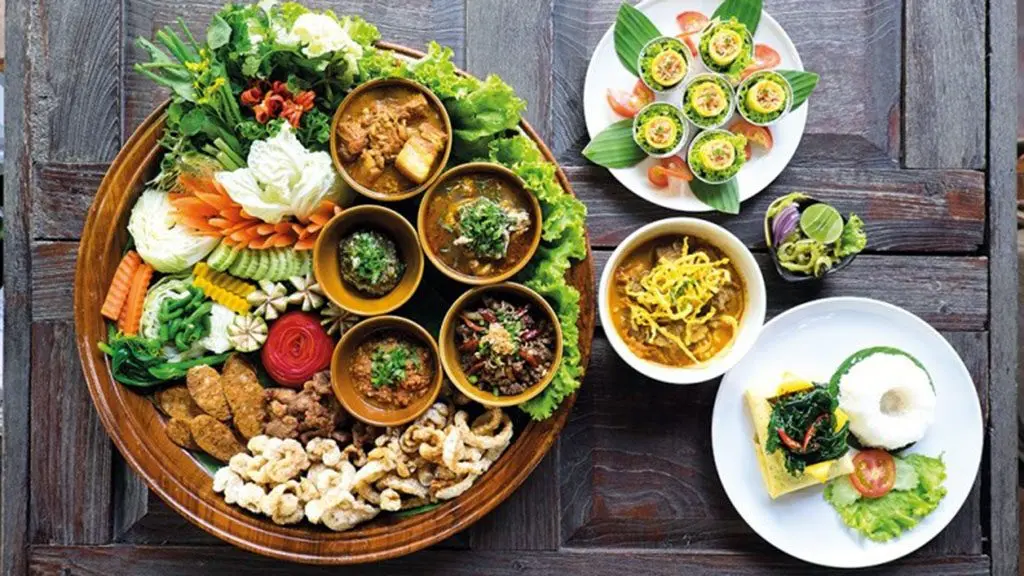
The Khan-Toke meal, a tradition from ancient Chiang Mai and the Lanna Kingdom, consists of a small round table where various dishes are served in individual bowls. Guests sit on mats or cushions around the table and choose as they please. Typical dishes include sticky rice, chicken or pork curry, fried chicken, vegetables, soup, fried pork skin, and chili dips. During the meal, guests are entertained with traditional dances, music, and sword demonstrations.
Khao Soi, a delicious and typical dish from Chiang Mai, is a creamy, yellow curry soup with egg noodles and slow-cooked chicken (sometimes beef) so tender it practically falls off the bone. Crispy fried noodles complete the dish and provide a delightful contrast to the egg noodles. The flavorful soup is typically made with coconut milk, and garnishes such as lime, shallots, and pickled vegetables add further flavor nuances.
The Northeast (I-san)
Lap is a spicy salad from northeastern Thailand and neighboring Laos, but it's not a vegetable salad; it's a meat salad. It's often eaten with sticky rice. Two of the most popular variations are Lap Kai (with chicken) and Lap Mu (with pork). In these versions, the meat is chopped and mixed with fish sauce, lime juice, chili flakes, mint, basil, and red onions, along with toasted rice for a crispy texture. Lap Wun Sen is another variation, prepared with glass noodles or vermicelli.
If you see a food vendor busily using a mortar and pestle, chances are they're preparing som tam. This spicy green papaya salad is a northeastern dish widely enjoyed throughout Thailand and often served with sticky rice and grilled chicken. Som tam is made to order, and common ingredients include sliced tomatoes, asparagus beans, peanuts, dried shrimp, garlic, fish sauce, lime, palm sugar, and sometimes freshwater rice crab.
Sai Krok Isan, literally translated as "Northeast Sausage," is a fermented sausage made from pork and rice with a garlic flavor. The rice aids the fermentation process, which gives the sausage its characteristic tang. Sai Krok Isan can be eaten on its own or with sticky rice. Fresh cabbage leaves and ginger complement the garlic flavor.
Nam Tok means waterfall in Thai, and Nam Tok Nuea is a juicy, spicy beef salad typically served with sticky rice. It gets its name from the juices that drip from the meat while grilling. Shallots, onions, lime juice, mint leaves, and ground toasted rice are added to the beef, which is cut into bite-sized pieces.
Central Thailand
Massaman, usually eaten with rice, is a rich, relatively mild curry that uses spices rarely found in Thai curries. These include cinnamon, nutmeg, mace, cardamom, cloves, cumin, bay leaves, and star anise. These are combined with local produce such as dried chilies, coriander seeds, lemongrass, galangal, white pepper, shallots, and garlic. Due to its Muslim roots, Massaman is most often made with chicken, but there are also variations with beef, lamb, and duck. Potatoes, onions, coconut milk, and peanuts are also added.
Kaeng Khiao Wan is a green curry dish traditionally served with rice. Coconut milk and fresh green chilies give it its creamy green color and make it spicier than milder red curries. Besides fish, fish balls, or meat, other ingredients include fish sauce, Thai eggplant, pea eggplant, and vegetables.
Kaeng Som, also known as Thai sour curry, is a spicy fish curry or vegetable soup prepared without coconut milk, its characteristic sour flavor coming from the tamarind used. Preferred vegetables include cauliflower, radish, white cabbage, carrots, long beans, napa cabbage, and asparagus. Prawns are a popular alternative to fish in this dish, which is also served with rice.
Thanks to their unique, spongy texture, Thai fish cakes, also known as Thot Man Pla, readily absorb sauces and other liquids, releasing a burst of flavor with every bite. The fish cakes' distinctive taste comes from the red curry paste, kaffir lime leaves, shrimp paste, and chili peppers used in their preparation.
The south
Few dishes embody southern Thai cuisine as much as Khao Yam Paktai, a tangy-salty rice salad with a variety of ingredients such as carrots and long beans, sour mango, pomelo, ground dried shrimp or fish, toasted coconut, kaffir lime leaves, lemongrass, and chilies. A key component of this dish is the signature salad dressing Nam Budu, made from salt-fermented fish or shrimp. The rice served with Khao Yam Paktai is typically cooked with morinda leaves or butterfly pea flower juice to impart color and flavor.
While Phat Sato might be an acquired taste for some, it's a popular snack in southern Thailand. These nutrient-rich beans, also known as stink beans due to their intense aroma, are typically stir-fried in a curry paste made with robust ingredients like garlic and chili, and served with pork or shrimp.
Pla thot kamin, deep-fried fish with turmeric, is another popular dish from southern Thailand. Most often, pla daeng, a type of threadfin sea bream, is used, which is lightly fried until crispy. Garlic and turmeric – known for their many health benefits – give the dish its distinctive flavor.
The East
According to CNN, Thai Massaman is one of the best dishes in the world, and a delicious variation from eastern Thailand is Thai Massaman Durian Curry with chicken. It's a successful fusion of the great flavors of Massaman curry and the so-called "queen of fruits," which makes perfect sense given that the eastern Thai province of Chanthaburi is known for its fruit cultivation, especially durian.
Chamuang leaves are a popular ingredient in eastern Thai cuisine. Notable dishes characterized by their tangy-sour flavor include Kaeng Mu Bai Chamuang, a pork belly curry with sour chamuang leaves, and Tom Bai Chamuang, which is similar to the world-famous Tom Yam soup.
Ban Bueng pork noodle soup is a popular clear soup dish associated with the Ban Bueng district in Chon Buri, containing dried squid and deep-fried Chinese fish balls.
Community
Comments 0
Start the conversation.