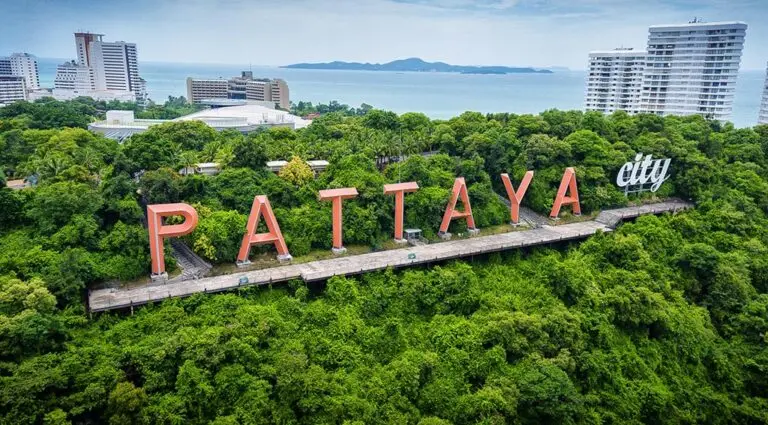
Pattaya is considered Thailand's adventure capital. The city nestles against beautiful beaches in the Gulf of Thailand and is a popular destination for millions of visitors every year.
Whether you are visiting Pattaya for the first time or are already an experienced tourist: once you have gotten a taste of "Thai life" in this idyllic beach paradise, you will keep asking yourself the same question: "How can I capture this stay forever?"
Our goal is to show you how it's done. This article helps foreigners acquire property in this dream country. We untangle the complex web of foreign property law, explain the various real estate and ownership options, outline the purchase process, and connect you with service providers who can simplify the process.
As a foreign investor in Thailand, you are subject to restrictions regarding what you can own. Therefore, we will show you how to buy property in the most popular (and most easily accessible) market – condominiums.
The world of Pattaya
Pattaya lives up to its reputation as one of Asia's (and the world's) most popular tourist destinations. What was once a sleepy fishing village popular with soldiers during the Vietnam War has transformed into a vibrant urban landscape surrounded by long, shimmering beaches and lush mountain jungles. It's one of the few places where every day feels like summer.
Whether you are a nature lover, beach fan, adventurer, gourmet or adrenaline junkie – Pattaya has something to offer everyone.
Millions of people flock to its shores to windsurf, water ski, swim, sunbathe, snorkel, sail or take trips to nearby islands.
Others go hiking, cycling, visit exotic animals, try parachuting, bungee jumping, and learn the true meaning of physical conditioning in local Muay Thai classes.
Golfers of all skill levels play 18 holes every day on many world-class golf courses, and foodies struggle with whiplash when they have to decide whether to eat fresh seafood in a restaurant or buy it at the fisherman's roadside stall.
It's easy to understand why people want to escape to this tropical paradise for extended periods year after year. For those who have already experienced "Thai life" in the tropics and want more of it, longer-term options like buying a condominium in Pattaya make perfect sense.
If you aspire to a particular lifestyle, owning your own property saves you the hassle of searching for hotels, the high tourist prices, and the fact that you might not always be satisfied with your choice. It prepares you for a future permanent residence.
If you want to take a vacation every year and simultaneously generate income to finance those vacations, buying a condominium in Pattaya with strong rental yields offers you the best of both worlds.
Pure real estate investors benefit from low initial investments (compared to many Western countries), acceptable ongoing costs and above-average returns.
In 2019, over 19 million people visited Thailand. A high percentage of them spent time in Pattaya, highlighting its attractiveness as a travel destination. In 2020, over 19 million people found that this choice was taken away from them.
How has Covid changed our travel behavior?
Pattaya transformed into a ghost town. The beaches were deserted, the shops along the streets closed their doors, and over time, more and more "For Sale" signs appeared. Overnight, Pattaya's biggest source of income vanished; tourism collapsed.
People from all over the world longed to return to Pattaya's sunny beaches. Pattaya hoped the pandemic would pass and people would return to fill the streets with life once more.
The beginning of 2022 brings hope. With the easing of travel restrictions, new innovations and processes are being introduced to revive tourism and travel. However, simply "traveling off" is no longer possible. Short trips to other countries are a thing of the past.
In the post-pandemic era, mindsets are changing, and many people are increasingly considering extended vacations and relocations. No one wants to feel trapped anymore. In this new environment, real estate investment has become an attractive option, and a positive side effect of the pandemic is that the real estate market is now a buyer's market.
The Pattaya real estate market in 2022
To say that the Pattaya real estate market suffered a downturn in 2020 and 2021 would be an understatement. Without tourists, rental income plummeted by 20 to 50 percent, and property sales collapsed. There is a massive oversupply of studio apartments, as completed developments stand empty and many planned projects have been postponed.
This opens up many opportunities for you as a potential buyer.
Thailand is reopening its doors to travelers. As more and more people worldwide are vaccinated, the "Sandbox" and "Test & Go" initiatives are gaining increasing importance. If they prove successful, these initiatives will be rolled out from regions like Phuket to the entire country.
Property developers are seeking foreign investment. They will sell existing properties at reduced prices to finance new projects. Therefore, it is possible to find new condominiums well below market price.
For new off-plan projects, developers need to create interest and trust in a recovering market and will therefore offer lower starting prices and higher guaranteed rental percentages over longer terms.
It's understandable to be skeptical of a "guaranteed" rental return right now. But just like you, many people are longing to return to the sunny beaches they love. Tourism in Pattaya will pick up again, and holidaymakers will need accommodation.
Reassessment of investment strategies in 2022
Buyers, project developers and government agencies need to adopt a long-term perspective in 2022.
Before Covid, it was common for many people to buy studio or 1-bedroom condominiums that were aimed at short-term holidaymakers who were willing to pay higher rental prices.
Today's visitors need to plan further ahead and accommodate longer stays – the so-called extended holiday. In this market segment, small holiday apartments are less attractive, as people desire more space and comfort for longer stays. This can influence the style and location of the holiday apartments you are considering.
Due to the scarcity of building land and high tourist numbers, developers have moved away from generously sized condominiums and instead crammed as many units as possible into a single project. This has led to the current oversupply of studios and one-room apartments.
Developers must prepare for the rising demand for long-term rentals. New projects may need to be redesigned to reflect an older style of housing, offering more space but fewer units per complex. It will be a question of balancing quantity and quality. Fewer people will be paying rent, but for longer periods.
The local authorities benefited from the tourism boom. There were numerous proposals to modernize the infrastructure and facilities, but business was good and the tourists did not want to be disturbed by road construction.
With governments looking to the future, this period of relative calm offers an ideal opportunity to invest in infrastructure improvements: renovated roads and modernized shopping centers. There are proposals for the construction of a monorail or tramway in Pattaya, as well as a planned high-speed rail line from Bangkok to Pattaya, scheduled for completion by 2025.
Don't let the current situation in Pattaya deter you from your dream. Much will change in the coming years, and whether you're looking to change your lifestyle or invest in property, now is the perfect time to enter the condominium market with an eye to the future.
With this in mind, it's important that you ask yourself a few questions before we go into detail. These questions will help you determine your motivation, your needs, your overall strategy, and your purchasing potential.
Important questions to ask before buying
If you are an experienced real estate investor, you know that there are many steps from the thought "I want to buy a property" to the completion and handover.
If you're looking to buy your first property, you'll need all the help you can get, especially in a foreign country like Thailand. Don't worry, there are experts who can make the process easier for you.
Before investing in a property, it is important to ask some questions.
"What is the purpose of my purchase?"
Are you looking for an annual holiday destination? An investment property that generates income between holidays? Or are you planning a permanent move?
"What type of property do I want to buy?"
In Thailand, there are many different types of real estate. You can buy a condominium, an apartment, a villa, a townhouse, or even a house.
Each type of property has its own ownership rights and clauses, which we will examine in more detail below. A popular purchase option for foreigners is the acquisition of a condominium.
"Do I want to buy an older condominium, a new condominium, or invest in a new construction project and buy off-plan?"
This is an important question to ask yourself when setting your budget and timeframe. Since we are focusing on Pattaya, we will concentrate on the pros and cons of new builds versus older properties, as this is arguably more relevant here than anywhere else in Thailand.
Only a few Thai banks offer real estate financing to foreigners. As a foreign investor, you will therefore need equity capital, either from savings or the value of your property in your home country.
With so many options, it's easy to have big dreams and overextend yourself. You should set a realistic budget that you can stick to. Your budget plays a crucial role in deciding where to live in Pattaya.
"Do I need the help of a real estate agent and a real estate lawyer?"
Yes! Regardless of your experience, remember that you are buying a property in a country with different laws, regulations, and cultures.
In fact, we will introduce these service providers in more detail before delving into the purchasing process and legal aspects. Regardless of the complexity of the topic, once you understand how a real estate agent and a lawyer can assist you, you will enter the Pattaya property market with confidence.
Your real estate agent
In Thai culture, reputation and saving face play a vital role. A real estate agent will open many doors for you and act as a language and cultural mediator.
In a tourist-oriented region like Pattaya, a competent real estate agent knows the best existing properties and future construction projects that meet your needs. They have an extensive network throughout the region.
A reputable real estate agent works in the best interests of both you and the seller.
An efficient agent saves you time and money.
They review the objects you have researched, ask the right questions, and either remove objects or offer unlisted alternatives.
Your real estate agent will arrange viewing appointments and transport options and can provide you with information about the history of the buildings, developers, managers and areas.
They translate for the sellers to help with negotiating the price and terms of purchase.
The real estate agents in Pattaya understand the difference between buyers looking in a tourist market and those seeking a specific lifestyle. They are worth their weight in gold.
Your real estate lawyer (lawyer specializing in real estate law)
If your real estate agent is worth silver, then your lawyer is worth gold.
A trusted real estate lawyer saves you time, avoids frustration, and helps you avoid potential financial losses or legal disputes. They are the expert.
What does your lawyer do?
During the purchasing process, they will:
This includes research into the background and history of the sellers, the construction companies, the buildings, as well as possible legal complications related to the points mentioned above.
This includes confirmation that the ownership details correspond to the data recorded in the land register; that the seller is the legal owner of the property and is authorized to sell it. It will be checked whether there are any existing mortgages, liens, debts, or pending legal proceedings against the property.
Unlike contracts in Western cultures, many contractual agreements in Thailand focus not on hard numbers, but on the relationship between buyer and seller. It could be described as a "gentleman's agreement" or a "handshake agreement".
Unfortunately, this means that important terms or clauses may be missing. Your real estate lawyer will translate the most important terms for you and give you recommendations on what to include to protect your interests. Reviewing contracts is essential when buying a condominium in Pattaya, especially in a tourist area.
In any real estate transaction, money is the most important aspect. We will explain this in more detail later, but your lawyer will confirm what costs are due (including land registry fees, late payment fees, and other charges), who bears the costs and charges, and how the payments will be made (payment schedule).
Your lawyer will ensure that all payments and timeframes are fair for both parties and will carefully review all hidden or ongoing costs with you.
Your lawyer will hand over and receive all relevant documents at the time of settlement. He can then act as your contact person at the Thai Land Registry to register all documents and pay the fees and taxes according to your contract.
A trustworthy law firm can help you look to the future. What happens in the worst-case scenario of your death?
We often draw up a will in our home country to ensure our assets are protected after our death. Thailand does not recognize foreign wills, and they can be contested in court.
Thai lawyers can assist you in drafting a will valid in Thailand. While this is not part of the purchase process, it is an important aspect often overlooked when it comes to protecting assets and providing for spouses or dependents.
You have now asked yourself some important questions and better understand how your real estate lawyer and your real estate agent can help you.
Let us look at the purchasing and legal process involved in acquiring your new dream condominium and present you with some of the best offers.
Legal real estate acquisition in Thailand? Full ownership vs. leasehold.
In Thailand, it is not legally possible for foreigners to own land. Due to Thai real estate laws, it is important for foreign investors to understand the different forms of ownership. The specific type of ownership determines the legal process and the security of your purchase.
Property rights – Foreigners can acquire property rights in Thailand in their own name. The Thai Land Registry issues a title deed, similar to a declaration of division, and property rights can serve as security in Thailand.
Condominiums are the most popular form of foreign ownership in Thailand, as they allow one to acquire unrestricted ownership rights to the property.
Lease – A foreigner may own or be entitled to use a physical structure (a property), but the land on which it stands belongs to a Thai national or a Thai limited liability company.
They lease the land to the landowners for up to 30 years, with the possibility of extending the lease to up to 90 years.
During the term of the lease agreement, the landowner is responsible for the maintenance of the buildings and the property.
The lease agreement is registered with the Thai Land Registry, and if the property is sold during the term, the new landowner takes over the existing lease agreement.
Thai Limited Company – Land and buildings can be acquired through a Thai Limited Company.
A foreigner can be a shareholder in the company, however, at least two Thai nationals must hold a majority (51%) of the shares. The company must operate a legitimate business in Thailand; otherwise, it cannot be registered.
The company then leases the property as described above.
During due diligence with your lawyer, pay close attention to the ownership structure. Since Pattaya is a tourist area, many condominiums that would be fully freehold elsewhere are sold as leasehold properties.
What types of real estate can I buy?
Our focus is on buying a condominium, but we will also summarize other types of real estate offered for sale in Thailand.
Condominium – A condominium is a building with private and common ownership. The owners of a condominium own the property through a legal entity, the owners' association. (The Condominium Ownership Act – the law on jointly owned residential property of 2522).
Simply put, a "condo" is a residential unit within a larger building complex. The owner has full ownership of their unit and a share of the common areas. Under Thai law, foreigners may own a maximum of 49% of a building complex.
Villas – We classify villas as residential buildings, therefore they are subject to the same ownership and purchase laws as houses and land. They can be part of a holiday complex or stand alone on their own plot of land.
A villa offers exclusivity. It is often part of a gated community with communal facilities (pools, restaurants, gyms, etc.) available to all owners. As a buyer, you enjoy these amenities and become part of a community. A villa means "pure vacation feeling".
When buying a villa, further details must be considered, such as obligations regarding common areas and the house rules. If the villa is located in a resort, the foreign ownership quota of 49% – similar to condominiums – may restrict the purchase.
Your real estate lawyer will help simplify this process and point out potential problems.
Apartment – An “apartment” is a condominium unit that cannot be purchased outright by foreigners. Apartments are sold exclusively as leaseholds and are subject to Thailand’s 30-year leasehold regulations.
Pay attention to this when viewing potential properties.
Condominiums and rental apartments are essentially the same. They offer the same living space, the same fees, and the same obligations regarding common areas. Owners enjoy the same amenities and comforts, but they are not the sole owners and may only be permitted to use the property privately.
Terraced house – A terraced building with two or more floors. The Thai version is called a "shop house" because the ground floor contains a shop and the upper floors are the living quarters.
Townhouses and shop buildings are widespread in Pattaya. This architectural style is often found in older residential areas or in market districts along the beach.
These properties are particularly attractive to foreigners with Thai spouses who want to be right in the heart of the action. Thanks to the smaller plot size, taxes are lower, while at the same time offering spacious living quarters and the opportunity to generate income by setting up a Thai company in the retail space.
House & Land – It is possible to own a house in Thailand, but the process is more complex.
Under Thai law, foreigners cannot own land. Any structure built on it is considered part of the "property".
Don't let that discourage you. There are various ways to build and own a house. The three most common are:
In all these cases, you do not own the land on which you are building, but you do own your house.
Should you buy an existing villa, a new one, or a villa in the planning stage?
Based on the conditions in Pattaya and the current market situation, we will examine the advantages and disadvantages of these purchase options.
Pre-owned condominiums offer a wide selection of locations. In Pattaya, many older apartment complexes (over 15 years old) were built in prime locations when land prices were still affordable. More space allowed for more outdoor amenities, so many older complexes feature large gardens and areas for outdoor recreation. These apartments were also designed with long-term living comfort in mind. They are often more spacious and have two or three bedrooms.
Previously owned condominiums are managed by an established legal management team. This team enjoys an excellent reputation, and you can obtain feedback from existing owners.
A used condominium can also appear outdated. It may require renovations or new furniture and appliances. It's worth checking things like plumbing, paintwork, the building's structure, and available services such as internet providers.
New – In Pattaya, new isn't always better. With the tourism boom, many new construction projects focused on short-term tourists. Apartments became smaller, and one-bedroom apartments or studios became the norm. This type of accommodation isn't ideal for families or long-term stays.
However, this is a general statement. For young, single investors, couples, or short-term visitors, a smaller condominium can be ideal. It allows for a minimalist lifestyle, and with the right furnishings, even a small space can feel spacious. As the owner of a new condominium, you enjoy the advantage of being the first guest to walk through the door. You benefit from modern appliances, furniture, and amenities. Due to the oversupply of apartments in this segment, you may also find more affordable prices.
Property developers are legally obligated to rectify all defects and carry out necessary structural repairs within the first five years after completion. This offers you a certain degree of security when buying a property.
Buying off-plan – Purchasing apartments in new construction projects off-plan carries risks and advantages.
For construction projects that are not yet planned, a longer payment plan is often used, with the final installment only due upon completion. This gives buyers time to save.
Property developers seek investors for their projects and may therefore offer competitive purchase prices. However, since they are working with a limited budget, they may not be willing to negotiate the price.
If developers shift their focus to a longer-term perspective, buying apartments off-plan could allow you to get an early entry into the market for older (larger) condominiums with state-of-the-art appliances and amenities.
A common risk is: "What happens if the project is not completed?"
It is absolutely essential to seek legal advice before signing a purchase agreement for a new construction project. Your lawyer will ensure that all relevant conditions are met in case the developer (or you) cannot fulfill the contract.
Another important point is the furnishings. New construction projects usually have a model apartment. However, not all apartments are furnished and equipped with household appliances. Therefore, be sure to clarify whether the furnishings are included in the contract price or whether there are additional costs.
How can I buy a condominium in Pattaya?
Do your homework
The internet offers a wealth of information. Your research will reveal areas, price ranges, developers, and points of interest. This will give you an overview of the current market offerings.
Keyword searches (nature, markets, transport, education, nightlife, gastronomy) help to discover areas that offer what you are looking for.
Think back to the questions you asked at the beginning. Your answers will help narrow down your search queries and keep them realistic.
Given the rebuilding of tourism in Pattaya, you should keep an eye not only on potential properties for purchase, but also on other development projects. A savvy investor will carefully analyze the impact of infrastructure modernization and renewal measures.
Here are some good websites to help you get started:
Below we present some popular areas, their highlights and attractions.
Find your real estate agent
Once you have a list of potential objects, you should secure the help of an initial expert.
Your real estate agent will review your research, make suggestions, organize viewings and transport, and provide you with information on the history of the buildings, developers, managers, and areas.
They translate for the sellers to negotiate prices and terms of purchase.
Once you've been helped to find your piece of Pattaya and you're ready to sign a contract... DO NOT sign the contract!
It's time to find your second expert.
Your real estate lawyer
From the above, you have a good overview of what your lawyer will do for you.
As experts in Thai law, they will now conduct due diligence and property research. They will review your contract and add, amend, or remove relevant terms or clauses.
Your lawyer will confirm the payment plans, participate in the transfer of ownership, and register your new title to the property with the relevant Thai land registry office.
A contract review is of utmost priority if you want to buy a property off-plan.
Pay your deposit and sign the contract.
The deposit is usually due before the contract is signed. It is considered a sign of goodwill, and many sellers only take the property off the market after receiving the deposit.
Before you pay any money, please note that as a foreign investor you must provide proof that your purchase funds originate from abroad.
All funds must be in foreign currency and have clear proof of the origin of the funds (withdrawal from the originating bank), the purpose of the funds (purchase of a condominium) and proof of currency conversion in the Thai recipient account (foreign exchange form).
Once you have made your deposit and your lawyer has confirmed the contract details, you sign the contract.
Your payment plan:
Your contract lists the amounts and deadlines for all payments. This includes the deposit, the remaining balance, any applicable government fees and taxes, and the respective payers.
A summary of your payment plan.
When buying a property off-plan, the payment schedule may differ, with several payments due at specific construction phases.
When calculating government fees and taxes, a property is assigned three different values:
Transfer fee: 2% of the registered value of the property.
Stamp duty: 0.5% of the registered value. Only payable if exempt from trade tax.
Withholding tax: 1% of the market value or the registered sales value of the property (whichever is higher if the seller is a company). If the seller is a private individual, the withholding tax is calculated progressively based on the market value of the property.
Business tax*: 3.3% of the market value or the registered sales value of the property (whichever is higher). This applies to both private individuals and companies.
* This tax is payable if the property has been owned by the owner for less than 5 years, which is often the case with new construction projects.
Condominiums have ongoing costs for the management of common areas (CAM) and a maintenance fund. These costs are payable by all owners within a complex and are set by the relevant management unit (to which you belong) or legal entity.
The CAM fees cover the repair and maintenance of communal areas, the salaries of on-site staff, and ongoing government fees.
The maintenance fund is a pool of money held as a reserve for major repairs or modernizations, such as replacing paving stones, fixing structural damage, or dealing with environmental emergencies.
settlement
Your lawyer will represent you during the property transfer. The final documents will be signed, the funds disbursed, and the keys handed over.
Before purchasing an off-plan property, Thai authorities and environmental organizations conduct inspections before issuing the new title deed. You should never purchase a property until the title deed is fully issued or in the process of being finalized.
Registration of ownership
After the transfer of ownership, all documents must be registered with the relevant Thai land registry office. Your lawyer will handle the registration and payment of all associated fees.
Who pays which fees?
The highlights of Pattaya and where to shop
Now that you know what to consider when buying property in Thailand, let's take a look at popular areas for buying property in Pattaya.
We will take a closer look at each area and its attractions. For each area, we will present an existing condominium, a new condominium, and a construction project in the planning phase.
Central Pattaya
The tourist heart of Pattaya. Stroll along the beachfront promenade in central Pattaya, savor delicious, freshly caught seafood, and shop for local produce on Walking Street. There's an excellent selection of authentic international restaurants offering French, Italian, Swiss, German, Hungarian, Scandinavian, English, Indian, Arabic, Japanese, and Chinese cuisine – perfect if you're craving a taste of home.
In the heart of Pattaya are the famous Pattaya Beach, Phra Tamnak mountain, and the Big Buddha Temple. Visit the Art In Paradise gallery, the Tree Town night market, and the Pattaya Night Bazaar.
The center of Pattaya currently presents a mixed picture. The real estate market there was heavily dependent on short-term tourists. Due to the lack of tourism, a quiet stillness prevails in the center of Pattaya. Many shops are closed. But tourism will return.
From a buyer's perspective, now might be a good time to take a closer look at Central Pattaya. The area is planning modernization projects and potentially a monorail system. There is currently an oversupply of smaller, new apartments. Central Pattaya also contains many older condominiums built during a quieter period when building land was plentiful.
The center of Pattaya is an excellent area for investors looking to rent out properties. Many expats who live in Pattaya long-term are moving further out of the city center.
North Pattaya
Most expats prefer the north of Pattaya. Attractions in this area include the beautiful, hand-carved wooden figures in the Sanctuary of Truth, the Lan Pu Naklua Market, North Pattaya Beach, the Million Years Stone Park, Mini Siam, and the colorful underwater world of the Monster Aquarium & Dolphinarium.
North Pattaya is a quieter district away from the tourist crowds and ideal for families and long-term residents. Thanks to the high proportion of expats, North Pattaya offers a diverse selection of restaurants.
South Pattaya
South Pattaya is home to many smaller, secluded beaches, including Sai Kaew, Hat So, Toey Ngam, and Nang Ram. Numerous golf courses are also located in South Pattaya, such as the Marines Golf Course and the Plutaluang Golf Resort. Facing south, the Samaesarn Seafood Market offers stunning sea views. Other attractions include the Nong Nooch Tropical Garden and the Ramayana Water Park.
South Pattaya is the gateway to Rayong and the Khao Chamao-Khao Wong National Park. It is an ideal location for anyone wanting to escape the hustle and bustle and leave the Pattaya area to immerse themselves in nature.
Available
Pattaya Del Rey (North)
Units: 10 CAM fees: 15/m² Price range: 2,000,000 – 4,000,000
Pattaya Del Ray is a small complex with only ten residential units located directly on the beach in North Pattaya. Built in 1995, this furnished apartment building offers one- and two-bedroom apartments as part of the foreign resident quota. Prices have been reduced for buyers by up to 1 million baht.
The complex features direct beach access, a communal pool, a gym, an indoor children's area, parking spaces and 24-hour video surveillance.
Pattaya Beach Condo (central)
Completion: 1992 Units: 28 Operating costs: Not available Price range: 5,200,000 – 5,500,000
The Pattaya Beach Condo is a perfect example of an older residential complex. The apartments have 2-3 bedrooms and offer stunning sea views near the beach. They have been renovated and are furnished. This apartment is ideal for anyone looking to live centrally in Pattaya or to rent out long-term.
Metro Jomtien Condotel (South)
Completion: 1987 Units: 552 Additional costs: 25 ฿/m² Price range: 2,800,000 – 11,000,000
Metro Jomtien is just a stone's throw from the famous beaches of Jomtien Beach South. It boasts a prime location with beautiful sea views and is only minutes from Mimosa Market, Jomtien Beach Central, the Pattaya Outlet Mall, and the Pattaya Floating Market.
The development includes studios as well as one- and two-bedroom apartments and is a real bargain, with some units offered at up to 10% below market value. Metro Jomtien is a good investment for anyone seeking an upscale lifestyle or long-term rental income.
The complex includes a communal pool, a sauna, an outdoor children's playground, gardens, gyms, a tennis court, an on-site restaurant, a reception, a laundry/dry cleaning service, parking spaces and 24-hour video surveillance.
New
D Eco Pattaya 2 (North)
Completion: 2021 Units: 79 Additional costs: 55 ฿/m² Price range: 2,200,000 – 6,000,000 ฿
D Eco is a low-density residential complex offering its residents relaxation and privacy. The unique L-shaped room design maximizes space utilization and provides all residents with stunning views. To promote a nature-oriented lifestyle, there are organic food markets and healthy restaurants on-site. D Eco's mission is to enable well-being in everyday life.
The complex includes a pool on the ground floor and roof, a sauna, a gym, a library, a clubhouse, on-site restaurants, a grocery store, parking spaces and 24-hour video surveillance.
EDGE Central Pattaya (Center)
Completion: 2021 Units: 603 Developer: Sansiri Operating costs: 70 ฿/m² Price range: 4,000,000 – 9,000,000 ฿
Edge is the newest development in the heart of Pattaya. It offers one- and two-bedroom condominiums available to foreign buyers through a quota system. Current sales prices are below the market average, making it an attractive option. The apartments boast spectacular sea and mountain views.
The complex includes a lobby, a sky lounge, a fitness center, a sauna, gardens, a rooftop pool, a games room, parking spaces and 24-hour video surveillance.
Seven Seas Le Carnival (South)
Completion: 2020 Units: 1500 Developer: Universal Group Thailand Additional costs: 45 THB/m² Price range: 2,100,000 – 4,800,000
Seven Seas is a luxury residential complex situated on a spacious 10-rai property directly on Jomtien Beach. It offers apartments in both high-rise and low-rise buildings, with one or two bedrooms. The rooms are modernly furnished and offer plenty of living space. Seven Seas brings the feeling of a vacation right to your doorstep.
It is located in close proximity to many famous attractions such as Pattaya Beach, the Big Buddha Temple, Phra Tamnak Mountain (Khao Phra Phutthabat), Underwater World Pattaya and Central Festival Pattaya Beach.
The complex includes a reception, clubhouse, lounge, gym, communal pools, children's pool, whirlpool, sauna, spa, bar, barbecue area, restaurant, yoga center, games room, library, karaoke room, playgrounds, gardens, a waterfall, parking, and 24-hour video surveillance. It truly offers everything one could need for long-term living as a single person or family.
Off-plan
AROM Wongamat (North)
Completion: 2024 Units: 319 Developer: Colours Development Co., Ltd. Operating costs: 70 ฿/m² Price range: 7,100,000 – 15,500,000 ฿
Arom Wongamat is a luxury condominium complex offering an exclusive beachfront living experience in Wong Amat. Located on the last available lot on Wong Amat Beach, you'll be just steps away from this stunning stretch of sand and won't have to worry about new construction obstructing your ocean views.
Nearby attractions include Terminal 21, Central Marina Pattaya, the Shrine of Truth, and Bang Lumang Hospital. Inspired by nature, the project blends modern design styles to create a unique living environment in every square meter.
The apartments are equipped with state-of-the-art appliances and the complex includes a communal pool, a whirlpool, a spa, a sauna, an indoor playground, a cinema, a games room, a VR golf room, a lounge; event, meeting and co-working spaces, parking spaces and 24-hour video surveillance.
Once Pattaya Condominium (Central)
Completion: 2023 Units: 427 Developer: Honor Group Operating costs: 50 ฿/m² Price range: 3,600,000 – 8,000,000 ฿
This new development in the heart of Pattaya offers luxurious, modern amenities and stunning views in furnished one- and two-bedroom apartments. The one-bedroom apartments are ideal for owner-occupancy or rental, while the two-bedroom apartments offer long-term living comfort – perfect for those seeking central Pattaya living.
Facilities include a lobby with a management team, a fitness center, on-site bars and restaurants, infinity pools, a children's playroom, a rooftop garden with sea views from the 33rd floor, and 24-hour video surveillance.
The units are currently priced above the market average, but offer a strong guaranteed rental yield of 6% for 3 years.
Empire Tower (South)
Completion: Dec. 2022 Units: 440 Developer: Matrix Additional costs: 55 ฿/m² Price range: 2,000,000 – 10,500,000 ฿
A luxury complex in southern Pattaya offers studios as well as one- and two-bedroom apartments. Many of the apartments are reserved for foreign residents and come with a 7% rental guarantee for five years. Pattaya's floating market and underwater world are within walking distance.
The Empire Tower's luxurious rooms feature marble and high-end designer furniture, offering ample space and functionality, as well as breathtaking panoramic ocean views. The complex includes a rooftop infinity pool, a lounge, a bar, sun loungers, a sauna, a fitness center, a reception area, a children's play area, parking, and a 24-hour video surveillance system.
Land Registry Office (including address)
Even if you have a reliable real estate lawyer to assist you with the purchase and registration, it is helpful to know where your local land registry office is located.
Chon Buri Provincial Land Office, Bang Lamung Branch Address: 398 Bang Lamung 10, Bang Lamung District, Chon Buri 20150 Opening Hours: Mon-Fri 8:30 AM – 4:30 PM Phone: +6638423160 Website: https://www.dol-banglamung.com/
A summary of your purchasing process
There is a lot of information above. Given the many options, here is a simple overview of how to proceed.
Real estate lawyers | Lawyers specializing in property law
If you want to buy your dream property in Thailand, sound legal advice is essential. A qualified real estate lawyer familiar with Thai law will advise and support you throughout the entire purchase process and take care of all the formalities.
Siam Legal is a registered law firm with over 17 years of experience in real estate law. The team maintains offices in the major metropolitan areas of Bangkok, Chiang Mai, Pattaya, and Phuket and is intimately familiar with the specific conditions in each location.
You can contact the Siam Legal office at the following address:
Address: Two Pacific Place Building, 18th Floor, Unit 1806, 142 Sukhumvit Road, Klongtoey, Bangkok 10110, Thailand. Telephone: +66 2 254 8900, Mobile: +66 84 021 9800, Website: www.siam-legal.com, Opening Hours: 9:00 AM – 6:00 PM




Community
Comments 0
Start the conversation.