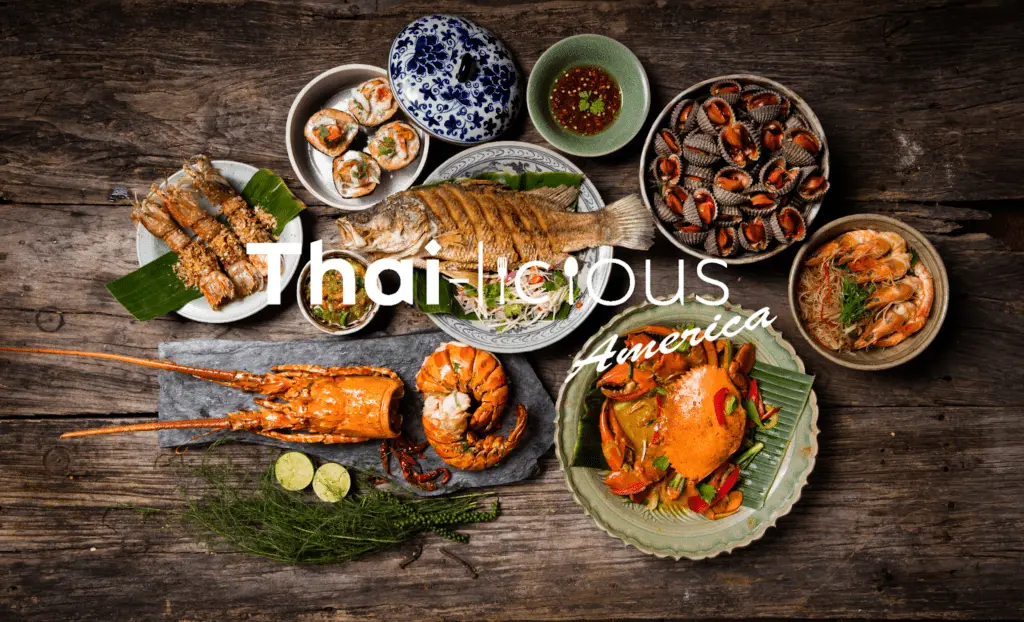
Prepare for a culinary journey across the USA with our new video series, "Thailicious America"! The USA showcases diverse destinations with specialties from every region of Thailand. In "Thailicious America," we present some of the best Thai dishes representing the various regions of Thailand, including Isan (Northeast Thailand), Southern Thailand, Northern Thailand, and Central Thailand.
You might be familiar with some Thai classics like Pad Thai or Pad See Ew, but Thai cuisine has so much more to offer. A typical Thai dish combines five main elements: salty, sweet, sour, bitter, and spicy. Discover some of the regional flavors we'll be sampling during our visit to some legendary Thai restaurants in the USA!
The two main flavor profiles in northern Thailand are the bitterness of herbs and a savory, salty taste. Sticky rice, also known as Khao Niaow, is a staple food in the north and northeast. One of the most popular accompaniments to sticky rice in the Isan region is papaya salad.
In Isan, many dishes are boiled or grilled rather than fried. Popular dishes include papaya salad, sticky rice, hot soups, and grilled meat. The food is presented simply but is full of flavorful ingredients.
In central Thailand, meals often consist of several dishes such as soup, a stir-fry, a spicy salad, curry, and vegetables. Thais enjoy eating with their families and sharing plates.
In southern Thailand, most dishes are characterized by intense aromas and spices. Seafood is plentiful in this region of Thailand, and curry dishes are very popular.
Join us on our culinary journey through Thailand in the USA in Thailicious America.
Thailicious America: Somtum Der's Gaeng Om Gai (Isan Thailand)
Founded in Bangkok in 2012, Somtum Der expanded to the US to showcase the distinctive flavors of the Isan region (northeast Thailand). This cozy New York restaurant celebrates the culinary culture of Isan with dishes like fiery papaya salads, tender grilled meats, and Isan sausages.
The first Somtum Der opened in Manhattan's East Village in 2013, followed by the second branch in Redhook, Brooklyn, in 2019. The Brooklyn location offers a charming outdoor ambiance where you can enjoy the flavors of Thailand in sunny New York.
Somtum Der takes its name from the famous Thai dish Somtum, also known as papaya salad. Somtum Der NYC has a warm and inviting atmosphere. At the Somtum Bar, the chef pounds the papaya salad with a mortar and pestle. The ceilings are adorned with unique pendant lights made from bamboo baskets that were originally used to cook sticky rice.
Thailicious America Episodes
In the Isan episode, we try a northeastern Thai-style chicken soup with local herbs called Gaeng Om Gai!
We joined Chef Yim in the kitchen and together we prepared the famous Gaeng Om Gai soup, an authentic Isan dish with herbs, chicken, and vegetables. This dish comes highly recommended by the chef, as it reflects the authentic culinary culture of Isan and tastes absolutely delicious! We wish you could smell it!
Gaeng Om Gai
2 cups water, 200g bone-in, skin-on chicken thighs (cut into bite-sized pieces), 3 tbsp "Khao Buea" (a mixture of "Khao Kua", toasted Thai rice flour, shallots, and lemongrass), 2 Thai eggplants (cut into bite-sized pieces), 3 red Thai chilies (thinly sliced), ½ tsp sugar (or to taste), 2 tbsp "Plara" (fermented Thai fish sauce), 1 tbsp "Nam Pla" (Thai fish sauce), Thai herbs (cut into bite-sized pieces), 3 sprigs fresh dill, 50g serrated coriander, 2 stalks spring onions, 80g kale
Preparation of "Gaeng Om Gai", a chicken soup in the Isan/Northeast Thailand style with local herbs
During our stay at Somtum Der, we also tried a number of dishes, including Suea Rong Hai with Khao Ji (grilled Thai sticky rice), duck larb, Sa Poak Kai Tod Der (Der-style fried chicken thighs), Thai papaya salad with salted eggs, and a refreshing lemongrass herbal drink.
Somtum Der offers many more dishes – the menu includes over 50 exquisite dishes that you should definitely try when visiting New York!
Thailicious America: Fish Cheeks Coconut Crab Curry (Southern Thailand)
Named after the lean, tender cheek meat of a fish, an Asian delicacy, Fish Cheeks is located in NoHo, New York City, and specializes in Thai seafood. The southern region of Thailand inspires the dishes, which offer a modern interpretation of traditional Thai cuisine. The diverse ingredients include dried bird's eye chili, tamarind, kaffir lime, and Sichuan peppercorns.
In this episode about southern Thailand, we enjoy Kaeng Pu, a southern Thai coconut crab curry!
Owner Khun Jenn and her co-owner and head chef Ohm recognized the lack of Thai seafood in New York City and opened this seafood-focused restaurant. Fish Cheeks changes its menu every few months, offering several new dishes.
We joined Chef Ohm in the kitchen and together we prepared a delicious coconut crab curry! What makes this dish special is that Chef Ohm makes his own Thai curry paste using a mortar and pestle! The dish is simply heavenly; you can almost taste it through the screen! At Fish Cheeks, we also enjoyed a refreshing lime paloma with Thai-style oysters, served with crispy shallots and a spicy seafood sauce. This was accompanied by khua kling and grilled sea bass wrapped in banana leaves!
Coconut crab curry
Ingredients for the curry paste:
7 g sea salt, 14 g dried red chili pepper, 7 g dried Thai bird's eye chili, 14 g fresh Thai bird's eye chili, 7 g garlic, 14 g fresh galangal, 30 g lemongrass, 30 g wild ginger, 14 g fresh turmeric, 30 g shrimp paste
Ingredients for the curry:
700 ml coconut milk, 240 ml chicken stock, 45 g shallot, 30 ml fish sauce, 30 g palm sugar, 30 g peeled lemongrass stalk, 30 g tamarind concentrate, 15 g fresh galangal, 4 fresh kaffir lime leaves (plus 2 finely chopped), 100 g crab meat, 2 betel leaves (roughly chopped)
1. Prepare the curry paste: Grind all ingredients together using a mortar and pestle. Start with the top ingredient and work your way down. Only add the next ingredient once the previous one has been ground into a paste. All ingredients should be ground into a smooth paste. 2. Prepare the curry: In a medium saucepan, bring the coconut milk, chicken broth, shallot, fish sauce, palm sugar, lemongrass, tamarind, galangal, and 4 kaffir lime leaves to a simmer over medium heat. Simmer for 15 minutes, stirring constantly, then strain and discard the solids. 3. Add the crabmeat, coconut curry, betel leaves, and 1 finely chopped kaffir lime leaf and bring back to a simmer, stirring constantly to prevent sticking. 4. Transfer to a bowl (1 cup per serving) and garnish with the remaining finely chopped kaffir lime leaf. Serve with rice.
Thailicious America: Lan Larb Chiang Mai's Zha Jein (North Thai)
Located in New York's SoHo neighborhood, the charming Lan Larb Chiang Mai restaurant serves authentic Northern Thai cuisine! Chef Kate, born and raised in Chiang Mai, has brought the unique flavors of family recipes to New York, creating complex and distinctive dishes. Here you'll find exquisite Thai dishes you won't find anywhere else in the city, such as Zha Jein, a Northern Thai beef tartare. We look forward to your visit!
In this episode about Northern Thailand, we try the delicious Lanna Thai specialty called "Zha Jein" (spicy beef larb, Northern Thai style), which you've probably never heard of!
"Zha" means raw and "jein" means meat. Traditionally, "Zha Jein" is eaten raw, but for this recipe, we've pan-fried the meat. Chef "Kate," born and raised in Northern Thailand and owner of the Lan Larb Chiang Mai restaurant, helped us in the kitchen prepare this quick and easy dish using a Northern Thai chili and herb mixture called "Prik Larb."
At Lan Larb Chiang Mai we also tried a table full of tasty dishes, including Short Rib Hung Lay, Larb Kua, Sai Oua, Nam Prik Num and Khao Soi, and of course we had to wash it all down with a refreshing Thai iced tea!
Zha Jein
280g flank steak, 2 tbsp Prik Larb (spicy chili and herb mix, northern Thai style), 30g pork blood (optional), 2 tbsp shallots, 2 tbsp mint, 2 tbsp spring onions, 2 tbsp coriander, 2 tbsp lemongrass, 2 tbsp sawgrass, 2 tbsp rapeseed oil (or another high-heat oil), 2 tbsp garlic, ½ tbsp salt
Stay tuned for more Thailicious America!
Our journey through the USA continues, with new episodes released every two weeks. Look forward to more culinary experiences at Thailicious America!




Community
Comments 0
Start the conversation.