Now that Phuket and Ko Samui are open to fully vaccinated international visitors, local tourism operators hope to welcome guests to a revitalized and more sustainable Thailand.
While the world stood still, operators across Thailand worked to improve infrastructure, protect the local environment, and develop more sustainable operating practices. Operators in Phuket and Koh Samui paid particular attention to their valuable coastal and marine environment.
Some improvements were deliberately implemented, most notably the closure of the tourist hotspots of Maya Bay, Ko Tachai, and Ko Yoong within the marine protected areas. Other changes have occurred naturally due to the absence of mass tourism, such as the return of endangered leatherback turtles to Phuket's sandy beaches to lay their eggs.
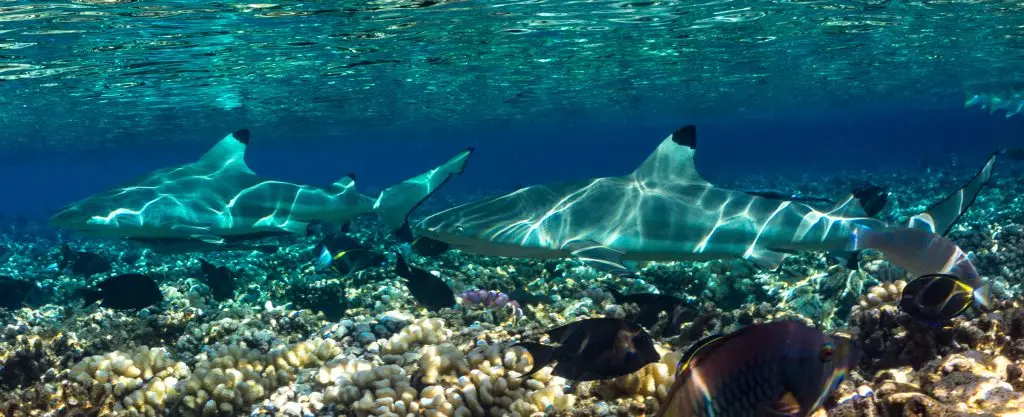
Sharks return to Maya Bay
Danny Boyle's film "The Beach" made Maya Bay famous. The depiction of a hedonistic, secret paradise in Thailand's hidden, crystal-clear bay triggered an enormous tourism boom. Although "The Beach" was originally intended to be set in the Gulf of Thailand, closer to Koh Samui, Koh Phang Ngan, and Koh Tao, Maya Bay was chosen as the filming location because of its imposing limestone cliffs and alluring turquoise waters. This fame came at a price: thousands of tourists flocked to the small bay.
With hundreds of speedboats and crowds of people thronging the bay daily, visiting the famous Thai landmark was no longer a pleasure, but downright unpleasant. Authorities closed Maya Bay completely in 2018 to regenerate and preserve it – with excellent results.
The closure of Maya Bay demonstrates Thailand's efforts to combat the negative impacts of tourism on marine life. According to the Thai National Parks Authority, Maya Bay is now home to well over 100 blacktip reef sharks – the largest shark population in Thai waters.
Leatherback turtles nest in Phuket
Due to beach closures during Phuket's first lockdown and the drastic decrease in tourist numbers and light pollution, rare leatherback turtles have returned to the beaches to lay their eggs. Leatherback turtles are the largest sea turtles in the world and are considered endangered in Thailand. Dr. Kongkiat Kittiwatanawong, director of the Phuket Marine Biology Centre, stated that this is the largest number of leatherback turtle nests on Thailand's beaches in 20 years.
Cleanup work by boat operators on Ko Tao
In the Gulf of Thailand, the small island of Ko Tao is particularly affected by the border closures; around 90 percent of the island's boatmen are now unemployed.
The UNDP Biodiversity Finance (BIOFIN) initiative has launched a new crowdfunding campaign to integrate 200 of the island's dismissed boatmen into an alternative field of work: cleaning up the island.
Ko Tao has struggled in recent years to cope with the estimated 30 tons of waste per day left behind by tourists, and this year's lull has given the marine ecosystems a much-needed respite.
“Without tourists, the coral reef ecosystem is recovering quite well,” says Niran Nirannoot, BIOFIN project manager in Thailand. “However, there are some areas where we need to support conservation efforts. The local government is aware that without preserving the ecosystem, it may not be able to win back tourists.”
Starting in December, the 200 boat operators will receive 3,000 THB (100 USD) per month – raised entirely through a crowdfunding campaign – to clean the island's beaches and waterways of trash and marine debris. They will also receive financial literacy training, sponsored by Krung Thai Bank (KTB), one of the project's main sponsors.
The campaign has raised 1.81 million THB (60,000 USD) so far, of which KTB contributed 583,000 THB (19,000 USD). Over 90 percent of the donations came from Thailand itself.
Sustainable diving: Andaman Sea
Holger Schwab, managing director of Sea Bees Diving, based in Phuket, says: “Pandemics are terrible, but they teach us valuable lessons. Most of these lessons concern how humans treat the Earth. It is possible that these insights will trigger a long-term change in nature conservation. Perhaps in the future this will mean a different tourism model – slower and more considerate of the ecosystem in which we live.”
Diving in the Andaman Sea, with its dazzling and colorful underwater world, often offers some of the best experiences in the world. Top dive sites include Richelieu Rock, Ko Ha, Hin Deang, and Hin Muang.
In the first phase of the region's reopening to tourism, Phuket can now offer visitors a much richer underwater experience, as the most sought-after dive sites are now much quieter and a pleasure to dive in.
"We are observing an increase in certain species; there are more anemonefish and barracudas in the Andaman Sea than ever before."
“A more sustainable approach to the use of our underwater world has long been needed, and we hope that the effects of the pandemic will have a positive impact on the marine parks in the Andaman region in this regard.”

Community
Comments 0
Start the conversation.