Not far from Phuket, Elephant Hills offers families an authentic Thailand experience: an ethical encounter with elephants and luxurious glamping in the heart of the rainforest. The Elephant Hills adventure – or safari – begins with a pick-up from your hotel in Phuket and a 2.5-hour drive to your first camp, an elephant sanctuary in Khao Sok National Park.
Surrounded by towering limestone mountains, the restaurant offers breathtaking views across the dense rainforest to the Sok River. The boat trip downstream on the Sok River to the elephant sanctuary is the first adventure.
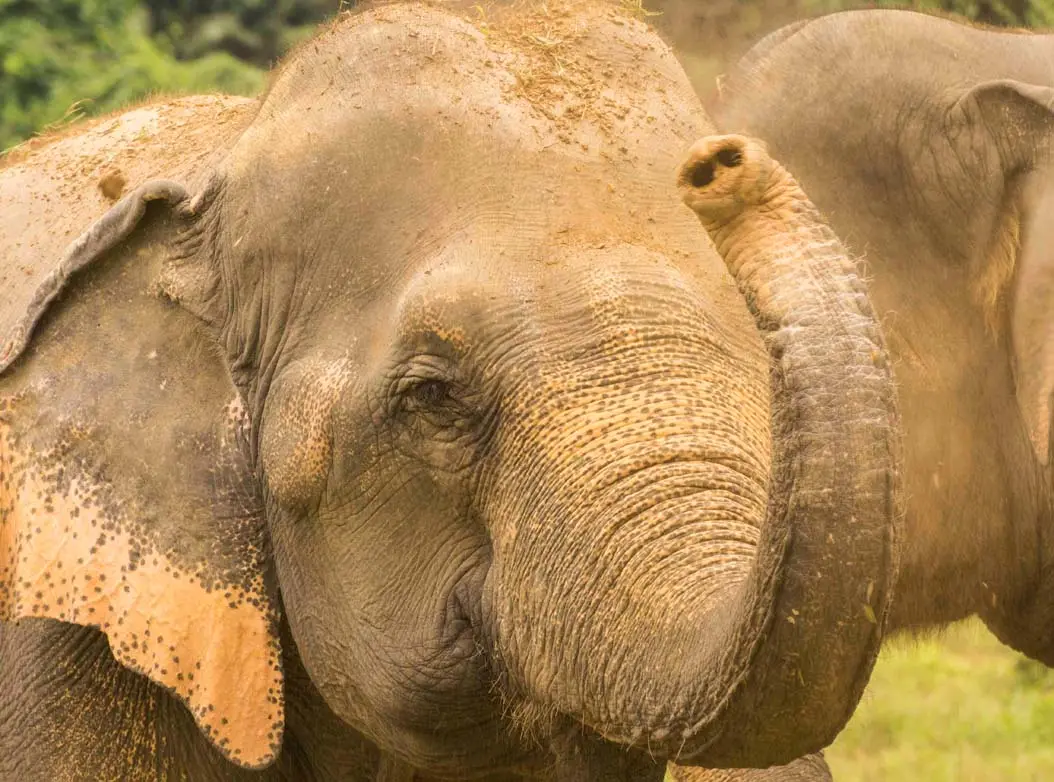
After a relaxing hour of rafting downstream, you'll encounter the elephants. The 14 elephants of Elephant Hills previously had a hard life in the logging industry or as riding animals for tourists. Each elephant has a mahout (male handler) and friends within the group. The income from tourist visits contributes to their upkeep.
During your encounter with the elephants, you will receive a comprehensive lesson about everything from their behavior in the wild to their use in the now-defunct timber industry, to what ultimately brought these animals here to a sanctuary in the far south of Thailand, far from their homeland.
Quite simply: there is hardly any natural habitat left for Asian elephants. Deforestation has left isolated patches of rainforest throughout Thailand. Therefore, it is difficult for elephants to survive as they used to. In addition, some of these animals have been domesticated for so long that they have forgotten their natural behaviors.
Thailand boasts numerous national parks today, the result of a grassroots environmental movement that began in the 1980s. Thais visit their own national parks more frequently than people of other nationalities – the parks are not exclusively for international tourism. Protecting nature is a value that aligns well with Buddhist philosophy. Following the success of the environmental movement in the 1980s, this principle was taught by Buddhist monks in Thai schools to the younger generation.
Most of the elephants in southern Thailand come from northern and central Thailand and bring their Karen mahouts with them, who, dressed in colorful traditional clothing, keep their cheeky charges in check with clicking, clucking, and slapping noises, while visitors learn how to scrub them before preparing a lunch of pineapples, bananas, sugar cane, and elephant grass.
Once the elephant food supplies are exhausted, a safari bus will take you back to camp where you can watch a documentary about elephants. Afterwards, there will be a cooking demonstration and a dance performance by local schoolchildren, financially supported by the resort.
The next day, your adventure continues at a second camp – a floating camp on Cheaw Lan Lake. The lake was created by the construction of the Ratchaprapa Dam, which provides hydroelectric power to the surrounding regions and has made this seemingly impenetrable mountain jungle accessible to visitors.
A longboat will take you across the lake to your floating tent, circling the steep limestone cliffs that define the lake – former mountain peaks now forming islands. This part of the adventure is a true jungle experience and begins with a three-hour hike to a large cave. Keep an eye out for gibbons, dark langurs, and, with a bit of luck, even a sun bear.
You'll fall asleep to the sounds of monkeys, cicadas, and birdsong, and the next morning you'll take a paddling trip around the islands to observe these sounds before returning to bustling Phuket. Click here for more information.
All photos by Pete McGee.




Community
Comments 0
Start the conversation.