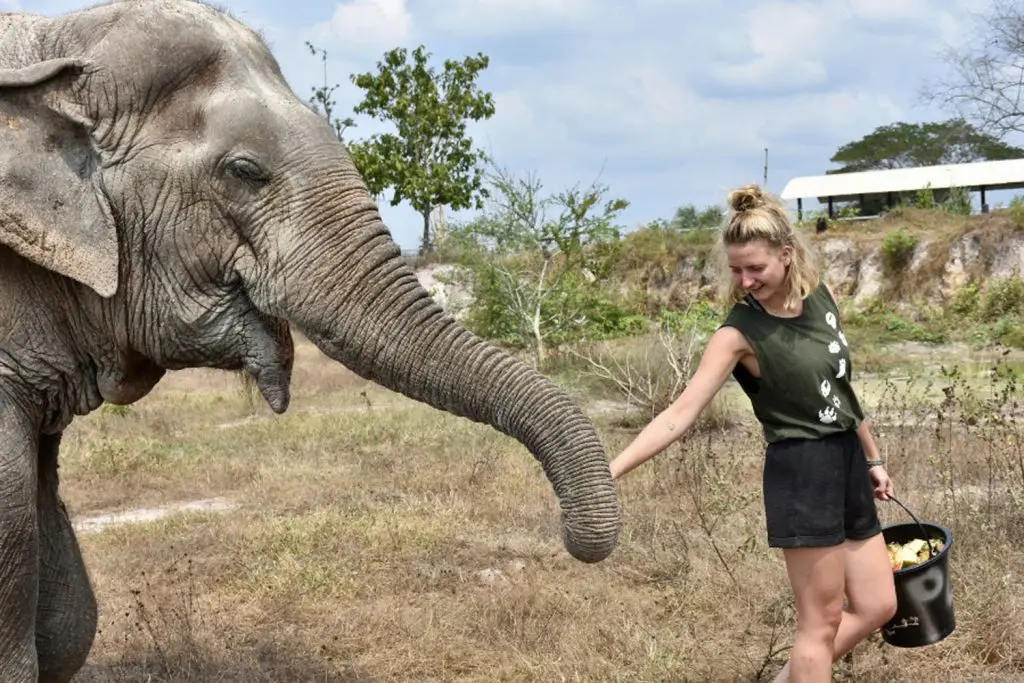
“It was a hobby that got out of control,” says Edwin Wiek – perhaps the biggest understatement of the decade. Edwin is the founder of the Wildlife Friends Foundation Thailand (WFFT), the largest animal rescue center in Southeast Asia.
Located about a thirty-minute drive from Hua Hin, the sanctuary had humble beginnings when it was established in 2001, but has since grown exponentially and become a major player in the fight to provide a refuge for abused, injured, displaced or orphaned animals where they can recover and rehabilitate before potentially being released back into the wild.
The center now covers an area of 200 hectares, is home to 900 animals from 69 species, and is the largest employer in the region. It provides jobs for 120 people and works with up to 70 volunteers from all over the world.
The standard of the animal enclosures is outstanding – they are more natural than anywhere else in Southeast Asia. The staff's knowledge and dedication are admirable, and the care and consideration with which the animals are looked after is first-rate (and very touching). I was also deeply impressed by the foundation's ability to respond quickly and effectively to crises. In the last 18 months, numerous tiger enclosures have been built to provide new homes for tigers urgently rescued from Phuket Zoo and a breeding farm near the Laotian border. Signs of new developments and construction projects are visible everywhere.
WFFT offers a variety of ways to get involved and contribute to the operation and continued existence of the rescue center. Half-day and full-day guided tours are offered, led by knowledgeable staff who bring the stories of the individual animals to life.
You can enhance the experience even further by staying at the foundation's "I Love Phants Lodge," which we thoroughly enjoyed. The lodge offers various accommodations overlooking the animal enclosures, and there's nothing better than waking up to the morning chatter of the white-handed gibbons.
Anyone who wants to experience the center and its inhabitants up close can volunteer. Volunteers from all over the world stay for anywhere from one week to several months to care for the animals firsthand. It's hard work, but according to the volunteers I spoke with, it's very rewarding. Costs start at €385 for one week and go up to about €1900 for three months.
A conversation with the WFFT team provides a good insight into the challenges they face in their efforts to improve the quality of life for animals in Thailand. The first problem is the sheer number of animals living in deplorable conditions. Given limited resources, the question arises: Which animals should be rescued? WFFT prioritizes old and sick animals.
Added to this is the problem of people's livelihoods. Some elephant owners depend on tourism income to earn money to support their families; coconut farmers need pig-tailed macaques to make the coconut harvest profitable – the farmer himself simply couldn't bring in the harvest quickly enough.
The answers are not simple and easy to find, and that is why WFFT works with the government, the local population and other stakeholders to develop long-term, structural solutions that deliver a good outcome for both people and animals.
Another problem is rehabilitation and release back into the wild. This is the ideal scenario, but only about 30% of rescued animals have a chance of returning to their natural habitat. Many of the animals are not native to Thailand; others were born in captivity and have lost the ability to survive in the wild. Some would cause too much harm to their human neighbors, while others are too badly injured or traumatized to have any chance of survival. These animals spend their lives at the WFFT, and the commitment to providing them with a species-appropriate and healthy life is a costly process.
The good news is: visiting, staying overnight, sponsoring or donating are all great ways to make your contribution.
I highly recommend a stay at the Wildlife Friends Foundation's rescue center. There you can actively participate in the recovery and care of these wonderful animals – it's a great way to make a difference!
Jenny Littlewood is a travel journalist at Little Wandering Wren and lived in Thailand from 2017 to 2022. You can find out more about her on Instagram at @littlewanderingwren and at www.littlewanderingwren.com.




Community
Comments 0
Start the conversation.