Author John Borthwick discovers that Chiang Mai, Thailand's historic Rose of the North, is far more than just a "mini-me" of Bangkok. Here are John's top ten sights and experiences in Chiang Mai.
1. Temple City
Chiang Mai is also known as the "City of 300 Wats." Place a pin anywhere on the map of the old city, and you'll find a Buddhist temple. These temples are open to everyone; just dress modestly and enter barefoot. The largest, Wat Chedi Luang, houses a massive, 600-year-old stupa, while the oldest, Wat Chiang Man, dates back to 1297. The absolute star, however, is Wat Phra That Doi Suthep, a 14th-century hilltop temple just a 30-minute drive from the city. Doi Suthep (as it's known) presents visitors with a challenge upon arrival: Will you climb the imposing 309-step "Stairway to Heaven" and earn spiritual merit? Or will you take the elevator? However you ascend, the summit resembles a dreamy Buddhist Camelot, populated by monks and pilgrims in golden robes. thainationalparks.com
2. Street marketing
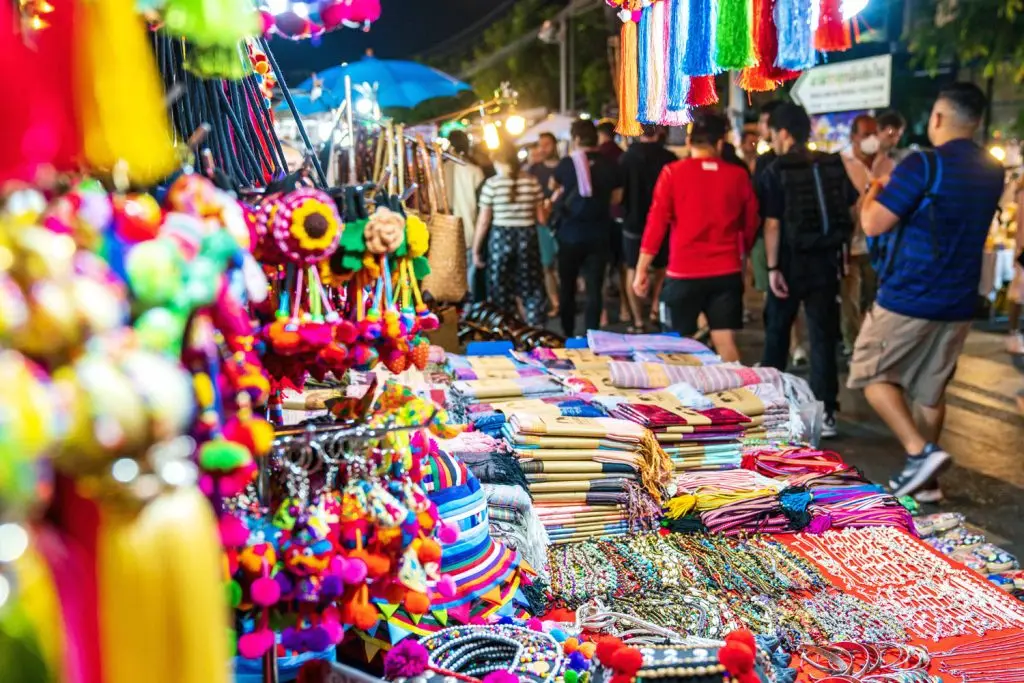
The night bazaar is a Chiang Mai institution, but the plush elephants, satin Muay Thai shorts, and other trinkets on offer there can be found at any market in Thailand. For something more original, visit the Sunday market in the pedestrian zone, which stretches through the old city from Tha Phae Gate to Wat Phra Singh. Along this lively kilometer, hundreds of stalls offer everything from artwork and fashion to foot massages and fried grasshoppers. And, of course, plenty of elephant souvenirs, if that's what you're looking for. Thais and tourists alike throng here, which can be a bit crowded, but is definitely fun. A quieter alternative is to head to Wualai Road near Chiang Mai Gate on Saturday afternoons or to the Anusarn Market (clothing, food, massages) on Chang Klan Road in the evening. tourismthailand.org
3-day tour
Chiang Mai is both a province and a city. Experience both on a guided day trip like the "Heart and Soul of Chiang Mai" tour. This tour begins amidst the authentic Warorot and Ton Lamyai markets on the banks of the Ping River, where you'll find the last remaining traditional samlors (three-wheeled bicycle taxis) in the city. The tour takes you on a unique half-hour ride in one of these taxis across the city to Wat Phra Singh and the massive stupa of Wat Chedi Luang. Next, it's a short trip to Doi Suthep Temple with its impressive Naga Staircase and breathtaking views. As the locals say, "If you haven't been to Doi Suthep, you haven't been to Chiang Mai." The tour continues inland to the mountain village of Doi Pui for lunch. Afterward, you'll visit a Hmong family's café and enjoy coffee overlooking the mist-shrouded mountains. chiangmai-alacarte.com
4. Shopping
Chiang Mai is no mini-Bangkok. While it lacks the capital's sprawling shopping malls, shopping here offers far more than just the hunt for counterfeit Louis Vuitton clothes and football jerseys. Like all modern shopping centers in the tropics, Chiang Mai's boasts an irresistible perk: five-star air conditioning. The most exclusive mall, Maya, located in the Nimman Hamin district (or simply Nimman), is just a short taxi ride from the Old City. Spread across six floors of brand-name stores, beauty clinics, and restaurants, you can find everything from brand-new Nikes to a spontaneously purchased Harley-Davidson. Diagonally opposite Maya lies an interesting alternative: the terracotta-colored lifestyle mall One Nimman. Imagine Tuscany in Thailand, complete with a Sienese clock tower. Here you'll find stalls selling handicrafts and designer fashion. Fixed prices, no fried grasshoppers. Meanwhile, in the small boutiques on the side streets off Nimman Hamin Road, individual creativity flourishes. They specialize in contemporary art, ceramics, and textiles from the hill tribes. onenimman.com
5. Superspa
For over 700 years, Chiang Mai was the capital of the northern Lanna kingdom. Today, it seems to be the massage capital. Which massage do you prefer: traditional Thai massage or oil massage? Leg and foot massage? Neck and shoulder massage? Nestled in a private garden with ancient banyan trees and nimble squirrels, the Oasis Spa surpasses all of these, offering exotic scrubs with Himalayan salt or golden silk cocoons. Or, skip the exotic and indulge in the two-hour signature treatment, "King (or Queen) of Lanna": a traditional oil massage enhanced with hot stones or compresses. Simply indicate your preferred pressure, and two skilled hands, or occasionally elbows, will begin their soothing work. The gentle background music is hypnotic (no shrill pan flutes or roaring rainforests). Time flies. Muscles relax, and tension in the neck and shoulders melts away. The old Lanna rulers would have loved it. oasisspa.net
6. Night movements
Chiang Mai's nightlife, known as the "Rose of the North," is considerably more refined than Bangkok's dizzying rooftop bars and boisterous go-go clubs. While Chiang Mai doesn't have a single standout hotspot (in fact, many venues receive mixed reviews), for rooftop drinks, the Rise Bar at the Akyra Hotel or the Myst Bar on the top floor of the Maya Mall are recommended. Both are located in the elegant Nimman district, as is the Warm-Up music club on the ground floor. For beer bars, a stroll along the somewhat wilder Loy Kroh Road is a must. More sophisticated cocktail bars include those at the historic 137 Pillars House Hotel, the House Lounge, and the North Gate Jazz Co-op. The Zoe in Yellow complex on Ratchawithi (Rajvithi) Road is bustling with activity in its live music and sports bars. Right next door, the open-air Lanna Square invites you to indulge in its traditional Thai and multicultural cuisine. 137pillarshotels.com
7. Historical Menu
During the teak boom a century ago, an imposing British consulate, complete with a stable for four elephants, stood on the banks of the Ping River. The teak cutters are long gone, but the 120-year-old consular residence still stands proudly on the grounds of the Anantara Resort. Begin your visit at the Brit Bar on the ground floor, with its comfortable leather armchairs and the intriguing house specialty, Anantara Gin. With a purported "14 secret botanicals"—including sticky rice (!)—it evokes memories of Colonel Sanders' adventures in the East, yet is surprisingly smooth. Next, head upstairs to the spy-themed restaurant, "The Service 1921"—in the style of "Her Majesty's Secret Service." Appetizers include roasted bone marrow, and the grilled dishes, such as Phuket lobster or New Zealand Wagyu beef, are first-rate. The Anglophilia panic reaches its peak when a waiter in 1920s-style breeches and suspenders presents a "candy trolley" overflowing with jelly beans and striped English sweets. anantara.com
8. Go for a hike
Doi Inthanon, the "Roof of Thailand," is the country's highest mountain. Located 100 kilometers southwest of Chiang Mai, the forests of its national park offer a rewarding year-round destination. You can drive almost to the summit and then hike along wooden boardwalks through the mist and rhododendrons to the 2,565-meter peak. There, a shrine commemorates Inthawichayanon, one of the last kings of the Lanna dynasty, after whom the mountain is named. Besides its cloud forests and waterfalls, Doi Inthanon National Park boasts the greatest biodiversity of forest and bird species of any Thai nature reserve. Local operators like Green Trails organize guided hikes on the Kew Mae Pan and Angka nature trails. On the way down, a visit to the roadside market is worthwhile, where local Hmong farmers sell a selection of exotic spirits such as mango vodka, lychee gin, and pomegranate wine—their colors as vibrant as the hangover they might cause. green-trails.com
9. Gymkhana Club
Before World War II, British companies held extensive logging concessions in northern Siam (as Thailand was then known). In 1898, a group of European and local loggers founded the Chiang Mai Gymkhana Club. Thailand's oldest sports club remains popular today. Giant rain tree canopies shade the clubhouse and the 15-acre park-like grounds. There's a golf course, a cricket pitch, a bar (of course), and a good restaurant—all open to the public. Visit the unique Foreigners' Cemetery, where a statue of Queen Victoria, orb in hand, gazes upon the scattered souls of those who remain here—consuls, warriors, loggers, wives, and even World War II airmen. In 1898, King Rama V granted this small piece of land in perpetuity to deserving non-Thais who were to die in this corner of his kingdom. chiangmaigymkhana.com
10. Hotel: Anantara Chiang Mai Resort
It's more than just symbolic. Where a foreign embassy once stood, a five-star Thai hotel now stretches along the Ping River. Designed by renowned Australian architect Kerry Hill, the low-rise Anantara Chiang Mai Resort boasts 84 rooms, with the luxurious Kasara Riverfront Suites offering breathtaking river views from sunrise to sunset. At the heart of the property is the former consular residence (a classic building made of golden teak), while an ancient meranti tree connects the resort to its history. Swimming pool, gym, cocktail bar, reading nooks, fish ponds, and shaded walkways—everything is there and immaculate. A giant banyan tree provides shade on the riverside Bodhi Terrace, where the best breakfast in Northern Thailand is served, thanks to the signature dish, Eggs Lanna Benedict with Nam Prik Noom. The only thing that can top that is a 90-minute Jao Ping River cruise in the morning, sailing under its bridges, past magnificent villas and markets, with a stop at one of the 300 venerable temples, Wat Ket Karam, to earn merit and receive a monk's blessing. anantara.com
Originally published in The Weekend Australian. Text ©2024 John Borthwick. Images ©2024 Tourism Authority of Thailand.




Community
Comments 0
Start the conversation.