Thailand developed as a nation along its mighty rivers. For centuries, the kingdom's waterways provided Thais with their staple foods of rice and fish, made possible by the abundant monsoon rains that fertilized the land. It's no wonder, then, that so many local ceremonies and traditions are connected to water.
The most important festivals in the Thai calendar are celebrated with water, most notably Songkran. For three days during the hottest month of the year, Thailand hosts the world's largest water festival. Every town and village sees a boisterous three-day water fight, with young and old participating – a welcome respite from the heat and a shared experience. Tourists love the exuberant atmosphere, but for locals, it's a family celebration. In homes and temples across the country, people gather to sprinkle Buddha statues with holy water – a kind of ritual bath. In Thailand's predominantly rural culture, this is a prayer for abundant rain in the coming growing season.
Later in the year, the Loi Krathong festival is celebrated in various ways. In the western province of Tak, it is called Krathong Sai. There, the krathongs are made from coconut shells, filled with wax, and set adrift on the majestic Ping River. In northern Chiang Mai, where Loi Krathong is called Yi Peng, lanterns are released into the sky, their lights reflecting the city's candlelit canals.
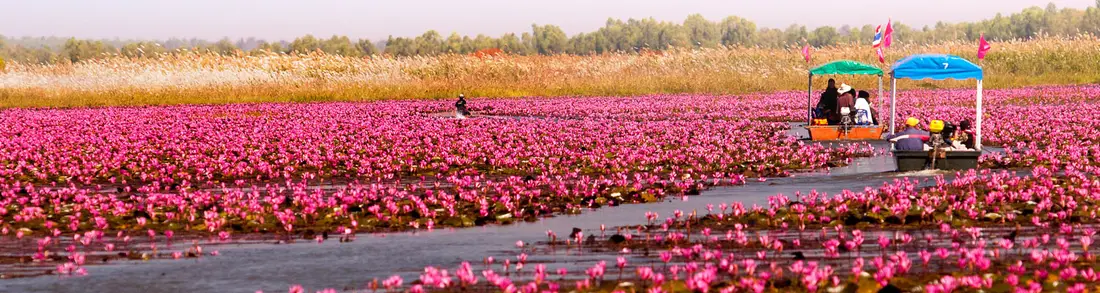
Water also plays a role in more personal Thai ceremonies. At weddings, water is sprinkled on the bride and groom's wrists to bless their marriage. And true water lovers can exchange vows at the famous annual underwater wedding off the coast of Trang. Other dreamy water weddings are available when couples float on the breathtaking Red Lotus Sea in Udon Thani province.
The mighty Chao Phraya River, which flows through Bangkok, is of course the most important river in the history of the kingdom. Three of Thailand's capital cities were built on the banks of this "River of Kings": Ayutthaya (1351–1767), which was both an administrative and religious center; Thonburi (1767–1782); and finally Bangkok, founded in 1782 and still thriving today.
As Thailand opened up to the world, the Chao Phraya River became the gateway to the kingdom. Traders and ambassadors followed the example of the locals and settled along the river. Bangkok grew from a network of canals, known as khlongs, and its inhabitants lived either on boats or on stilts over the water. By the 1840s, about 90 percent of the city's population lived on the canals, earning Bangkok the nickname "Venice of the East."
Today, the river pulsates with new life, characterized by trade and industry. Asiatique, The Riverfront, the most popular themed shopping center in recent years, built on the site of the former East Asian Company, is a popular attraction for domestic and international visitors who come to shop, dine, and enjoy the riverside atmosphere.
The Chao Phraya is above all a royal river and the setting for one of the most spectacular events in Thai culture – the Royal Barge Ceremony. In this ceremony, over fifty gilded barges are majestically rowed down the river by 2,200 sailors of the Royal Thai Navy. These days, the ceremony is rare, as the ornate barges are only used on special occasions. Those fortunate enough to be in Bangkok during this time will witness this unforgettable event.
Further afield from Bangkok, you'll find numerous floating communities. Thailand's famous floating markets, such as Amphawa in Samut Songkhram province, remain popular and offer an excellent opportunity to interact with locals, observe the preparation of traditional dishes, and soak up the unique atmosphere.
The Thai New Year festival Songkran takes place from April 13th to 15th, 2016, and is celebrated nationwide. Loi Krathong is observed nationwide on November 15th, with special celebrations in the ancient capital of Sukhothai. For the latest information, please visit www.tatnews.org.
Community
Comments 0
Start the conversation.