For those who want to discover a different facet of island life, travel journalist Julie Miller takes us on a journey off the beaten track to Ko Samui.
Coastal life on Ko Samui is idyllic: numerous elegant resorts, lively bars and restaurants, and exclusive boutiques are just steps away from pristine, powder-white sandy beaches. For many visitors, this is the recipe for an idyllic, luxurious vacation. But for adventurers, or those who simply want to discover more of the island, Ko Samui's interior offers a completely different side of island life – one that allows for a deeper connection to Thai culture and the landscapes that make Thailand such a captivating travel destination.
Samui is a relatively small, round island that is easily explored by rental car (motorcycling is only recommended if you have a driver's license). A main ring road leads to all the major sights and beaches. A detour from the main road into the densely forested, mountainous interior of the island offers spectacular views and a welcome respite from the hustle and bustle of the coast.
Before leaving the coast, be sure to visit two of Samui's most popular—if somewhat questionable—attractions. First, a mummified monk in orange robes and Ray-Ban sunglasses, displayed in a glass case in front of Wat Khunaram; second, two natural rock formations near Lamai Beach called Hin Ta and Hin Yai. Ta (Grandfather) is a squat phallus that provocatively juts out between some rocks by the sea; Yai (Grandmother), on the other hand, is a large, seawater-filled crevice that seems to be waiting for the grandfather's attention. A curious sight—but hey, we're in Thailand!
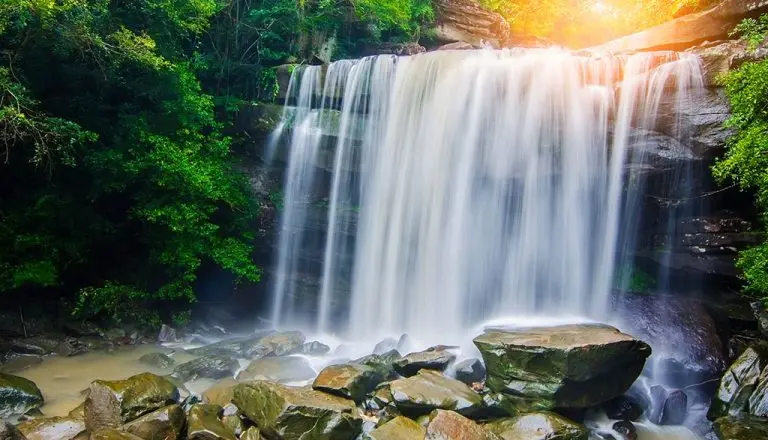
A popular day trip destination for families looking to relax and swim are the picturesque twin waterfalls Na Muang No. 1 and No. 2. They are located about 12 kilometers inland from Nathon Bay. The first waterfalls are just a short walk from the parking area, while the upper pools can be reached via a slightly more challenging hike, which rewards you with breathtaking views. There are stalls nearby selling snacks and drinks, so you can easily spend a whole day here refreshing yourself. The best time to visit is from September to November when the water level is at its highest.
Deep within Koh Samui lies a secret sculpture garden filled with depictions of deities from Buddhist mythology and fantastical creatures. The Secret Buddha Garden is the work of retired durian farmer Nim Thongsuk, who began creating the garden in 1976 and continued until his death in 2000 at the age of 91. Getting to this fascinating fantasy land can be challenging – the road is steep and best traversed by four-wheel drive. Alternatively, you can visit the garden as part of an adventurous day trip in an open jeep.
For an authentic Thai experience, head to Bophut on the island's north coast on Friday evenings. The fishing village transforms into a vibrant marketplace, bustling with activity. Dozens of stalls along the main street offer local handicrafts, jewelry, clothing, and delicious street food. Relax in one of the village's quaint bars or trendy restaurants like Café 69, 2 Fishes, or Happy Elephant.
Speaking of happy elephants… Bophut is also home to the Samui Elephant Sanctuary, one of two ethically run sanctuaries on the island, operated in partnership with renowned conservationist Lek Chailert of the Elephant Nature Park in Chiang Mai. Both the sanctuary in Bophut and the newly opened location in Chaweng Noi offer elephants, who have found respite from the harsh realities of the timber and trekking industries, a dignified and safe home for their retirement.
In both sanctuaries – accessible only through pre-booked tours – visitors can observe these gentle giants enjoying their freedom, playing in the mud, bathing in a specially designed pool, and roaming the forest in search of food. The program is largely based on gentle handling of the animals to ensure a stress-free life. However, guests can participate in the daily feedings and thus experience a close encounter with these impressive creatures.




Community
Comments 0
Start the conversation.