The Gulf of Thailand is home to three very popular – and very different – holiday destinations: Koh Samui, Pattaya, and Sihanoukville in Cambodia. Travel writer Sally Hammond visited all three on a recent cruise from Singapore.
Koh Samui, Thailand
Koh Samui lies off the east coast of the Kra isthmus in Thailand and is the country's second largest island after Phuket. It has 65,000 inhabitants but is visited by around 1.5 million tourists annually. Since Koh Samui is only a small island – about 25 km long and 21 km wide – a tour around the island with stops for sightseeing takes only a few hours.
Upon our arrival at the quay, we were naturally surrounded by people trying to sell us island tours by taxi. We opted for a young tour guide named Om, who proved to be an excellent driver and guide. He shared a wealth of information about the island with us and was incredibly patient with our photo requests.
There are many Buddhist temples on Koh Samui, and at least twenty-five of them are worth visiting if you have the time.
The graceful lines and colors of temples carry a deeper meaning. The use of ornate, multi-tiered roofs is reserved for temples, palaces, and important public buildings. Two or three tiers are most common, but some royal temples feature four.
Perhaps the most popular temple for visitors to the island is the Laughing Buddha at Wat Plai Laem.
On our journey around the island, we stopped at Wat Sila Ngu, a red terracotta temple with intricate carvings. Each of these patterns was crafted by artisans using blades and chisels, and the craftsmanship is impressive.
Wat Khun Aram houses one of the world's most bizarre relics. The mummified body of a highly revered former abbot of the temple, who was also a meditation master and could predict his own death, has lain in this glass case since the 1970s. Worshippers bring him flowers and incense as a sign of their veneration.
Back in the port of Nathon, we are reminded that many visitors come to Koh Samui not to visit Buddhist temples, but for the beaches and water sports. Others come to dive and snorkel around the more than forty breathtakingly beautiful islands in the surrounding area.
Pattaya, Thailand
Pattaya is located in the north of the Gulf of Thailand, more precisely in Bangkok Bay, about a two-hour drive east of the Thai capital. The northern part is home to the luxury district, the south is known for its nightlife, and the city center offers shopping malls for leisurely strolls.
Many people associate Pattaya only with its colorful side, but it has so much more to offer. At Wat Khao Phra Bat, the monument to Kromluang Chomphonkhetudomsak, the founding father of the modern Thai Navy, locals pray and burn incense. Nearby, loud fireworks are regularly launched from a brick tower as a sign of respect.
The view from Phratumnak Hill back across Pattaya Bay is fantastic, especially at sunset, which is so popular that sunset times are published here. Stay a little longer to admire the city lights reflected over the water.
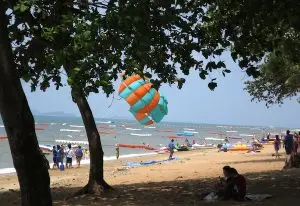
Jomtien Beach in the south of the city is popular with families and is ideal for parasailing or simply relaxing under the many shady almond trees. Those who love water sports and swimming should explore the numerous other bays around Pattaya.
Where large groups of people gather, there is always food to eat; street vendors line the beach selling snacks that are ideal for nibbling on the go.
Of course, it's not difficult to find the red-light districts, the ladyboy shows, and pretty much anything else you can imagine. The signs are clear, often in English, although many Russians have moved to the area recently, so don't be surprised to see Cyrillic characters on the signs. Love it or hate it, this city has something for everyone.
Sihanoukville, Cambodia
On the eastern side of the Gulf of Thailand in Cambodia lies Sihanoukville (pronounced Schnookville), named in 1964 after the reigning Prince Norodom Sihanouk. Decades of war and oppression are long gone, and Cambodia is once again enjoying growing popularity with tourists, having retained its tourist charm.
The best way to explore the city is to smile and give in to the enticements of the tuk-tuk drivers waiting at every city entrance. In our case, it was the port gates where we hired a man named Mr. Li to show us around.
Since I love markets, it was obvious to me to ask Mr. Li to take us to the city's main market, Psar Lu, where you can find everything from fresh produce to sparkling jewelry to delicious street food.
Cambodian cuisine is a flavor profile somewhere between Vietnamese and Thai. Create your own Cambodian salad, treat yourself to pandan jelly and coconut for dessert, and perhaps a slice of rice and sesame cake to take with you. For those with a bigger appetite, there's a selection of fried fish, meat, bread, noodles, and vegetables.
When our driver returned, he promised to show us some of the city's sights. The striking Golden Lion Monument (Vimean Tao Meas), built in 1996, is located in the middle of the roundabout between Sokha and Ochheuteal beaches. The surrounding gardens are a popular meeting place for locals, especially young people, in the evenings.
Ochheuteal beach is popular with tourists because of its shady promenade, where you can relax, eat cheaply, and even enjoy a massage. However, some claim that Otres beach is more beautiful.
The beach is known for its traders who carry their entire “shop” on a yoke over their shoulder: ingredients on the left and a charcoal stove on the right.
Finally, we visit the city's crown jewel, perched high on a hill overlooking the harbor and the surrounding area. The Buddhist temple Wat Leu is incredibly ornate, adorned with countless Buddha statues and more gold than most people see in a lifetime.
Undeterred, dozens of monks in saffron and chestnut robes stride through all of this, ignoring the tourists and their cameras as they go about their daily work and studies.
The full version of this article can be found on Sally's blog here.




Community
Comments 0
Start the conversation.