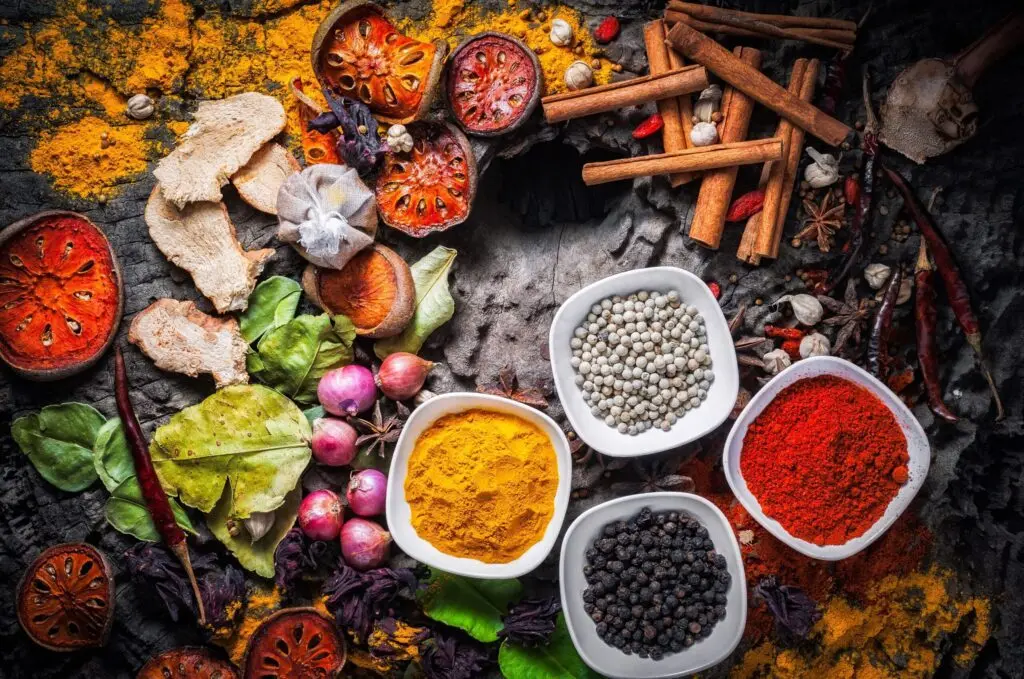
What's hotter than hot and timeless? Thai spices, of course! Spices are an essential part of Thai cuisine and boast a fascinating history. On this International Hot Food Day, learn more about Thai spices and their significance to Thai culture!
The history of Thai spices in Thai cuisine
The tradition of Thai cuisine in Thailand began centuries ago with the immigration of people from the southern Chinese provinces. Therefore, many Thai dishes show influences from Sichuan cuisine as well as Indian influences from Buddhist monks. More recently, Thai cuisine has also been influenced by European flavors, for example, through the introduction of chilies and mangoes by Portuguese missionaries and by Dutch traders who brought numerous foreign spices to Thailand.
Despite its multicultural roots, the use of Thai spices in Thai cuisine today forms a distinct style, with each dish possessing its own unique character. Thai cuisine is said to have five basic tastes: hot, sweet, sour, salty, and creamy – all combinations and intensities of these flavors can be incorporated into a single dish. Furthermore, each region of Thailand has its own distinct culinary style.
Northern Thai cuisine is milder than that of other regions of Thailand and has strong Burmese roots. Traditionally, northern Thai dishes are served at a "khan toke" (a small round table) where people eat together. Unlike the white rice common in other parts of Thailand, northern Thai cuisine uses sticky, sugary rice. This is formed into balls and used to soak up dips and sauces.
Northeastern Thai cuisine is influenced by Laotian flavors and can be very spicy. Soups are common in this region, but they are made with broth rather than coconut milk. Many dishes contain unusual proteins (including even frogs!). Pla ra is a thick, fermented fish sauce used in northeastern Thai dishes, which can take some getting used to for many. Freshwater fish such as river shrimp, snakehead, and catfish are also found here. The most popular type of rice is sticky rice.
Central Thai cuisine combines influences from all Thai cuisines, but is prepared with greater care and attention to detail. It was once considered "royal" cuisine and prepared for the nobility. Even today, Central Thai cuisine places great emphasis on pleasing both the palate and the eye, and many dishes from Central Thailand are true works of art.
Some of the most popular Thai dishes, such as Pad Thai, Tom Yam Goong, and Green Curry, originate from Central Thailand. The typical flavor profile of this region is characterized by a harmonious combination of sour, salty, spicy, and sweet. Coconut milk is frequently used to flavor dishes in Central Thai cuisine, and jasmine rice is traditionally steamed.
Southern Thailand boasts an abundance of seafood, coconuts, and pineapples, all of which are reflected in its cuisine. And be warned – southern Thai food packs a punch! The penchant for spiciness stems from diverse cultural influences, ranging from Indian to Chinese, as well as a belief in the health benefits of spice. Furthermore, southern Thais frequently use seafood – the more spices added, the less fishy the dish smells. The generous use of curry paste and chili peppers means that southern Thai cuisine is generally hot and sour, and less sweet than dishes from other regions.
Popular Thai spices
Thailand boasts a wide array of common spices used to season dishes such as stir-fries, curries, salads, and much more. The spiciness of these spices ranges from mild to fiery, and the same dish can vary significantly in heat depending on the region. For example, food in southern Thailand is generally considered spicier.
Here are just a few common Thai spices that help to highlight the aromatic flavors of Thai cuisine and definitely add some spice!
Galangal is a root very similar to ginger, but spicier and more intense in flavor. It is sometimes called Thai ginger. Galangal is a common ingredient in Tom Kha Gai, as well as in curry pastes used for famous Thai curry dishes. Galangal is also said to fight inflammation, increase male fertility, and possibly even help prevent various types of cancer.
Turmeric is another popular ingredient in Thai cuisine. It is frequently used in Thai curries (such as Massaman and Yellow Curry) and chicken satay, and is characterized by its bright yellow color and slightly bitter, earthy flavor. Turmeric contains curcumin, which is known for its anti-inflammatory and anti-allergic properties. It is also said to lower cholesterol and contribute to clear, healthy skin.
Ginger is another frequently used spice in Thai cuisine. It has a strong, spicy aroma and is usually served raw in Thai dishes, but can also be used as a powder or paste. Ginger is also a popular ingredient in tea. A well-known Thai dish featuring ginger is Gai Pad King, a stir-fry. Among the health benefits of ginger are the relief of nausea and the improvement of symptoms of arthritis and menstrual cramps.
Garlic is popular worldwide, especially in Thai cuisine. It plays a key role in many Thai recipes, either as the main ingredient or as a component in numerous other dishes. In Thailand, garlic is served raw or used in dishes like Gai Pad Gratiem Prik Thai. The health benefits of garlic are well-known globally, ranging from lowering blood pressure and cholesterol levels to protecting against colds, as well as brain and prostate cancer.
Lemongrass is an aromatic, citrusy grass that grows in Thailand and is used to flavor dishes such as Thai curries and the famous Tom Yum soup. It is even available as an essential oil, which can be diffused for relaxation or used as a massage oil. In Thai cuisine, lemongrass is used to relieve headaches and fever, as well as to soothe the stomach. Lemongrass extract is also a popular mosquito repellent in Thailand.
Many people immediately think of chilies when they think of spicy food. Thai chilies are no exception. In fact, there are said to be 79 different varieties, all derived from just three species of the Thai chili plant. Thai chilies cover a wide range of heat levels, from 50,000 to 100,000 Scoville units. For comparison, an average jalapeño chili has 2,500 to 8,000 Scoville units! Even the mildest Thai chili is therefore about 15 times hotter than a jalapeño!
Popular Thai chili varieties include:
Around 40 different varieties of pepper grow in Thailand, including black and green peppercorns. Peppercorns can be ground or used whole in some dishes. Whole green peppercorns, for example, are a common spice in many dishes, but they don't overpower the flavor unless you bite into them directly. However, if you accidentally bite into one, you'll definitely feel the spiciness.
Peppercorns are rich in antioxidants and offer numerous benefits, including lowering blood sugar and cholesterol levels, as well as improving brain and gut health.
In Thai cuisine, cinnamon is used in both sweet and savory dishes. It is a key ingredient in Massaman curry and in desserts like rice pudding. Cinnamon is known for its many health benefits, including lowering blood sugar levels and helping to prevent diseases such as cancer and heart disease.
The Thai spice scale
When dining at a Thai restaurant, you may have heard of the spice scale, which allows you to specify the desired level of spiciness for your dish. The scale ranges from one to five, where one is mild and five is very spicy. Here are the definitions of each level:
In Thai cuisine, level one is considered mildly spicy. Although the dishes still have some heat, it gives them a characteristic Thai flavor and is therefore ideal for those who are unfamiliar with Thai cuisine or don't like spicy food at all.
A mild spiciness is classified as "medium", for example by adding extra Bird's Eye chilies or Dragon chilies.
Medium-spicy dishes can be somewhat unpleasant for those unaccustomed to spicy food. If you are new to Thai cuisine, it is recommended to gradually work your way up to medium spiciness before opting for spicier dishes, as these can be very hot for the uninitiated!
Level 4-5: Thai-spicy
Level four is the spice level most Thais are used to and by far the spiciest way their food is prepared. Some even claim that a single spicy Thai dish can cause a burning sensation in the mouth all day long! So, if you want to enjoy the full, authentic Thai dining experience, you should definitely choose the spicy option!
View this post on Instagram. A post shared by Official Thailand Tourism (@thailandinsider)
Where to find Thai spices in the United States
If you'd like to try preparing Thai dishes yourself, you can find traditional Thai spices in many places. Asian supermarkets offer a wide selection of fresh Thai herbs and spices, including chilies, lemongrass, and galangal. Some Middle Eastern or Indian grocery stores also sometimes carry traditional Thai ingredients.
The internet offers a huge selection of dried Thai spices. From Asian specialty shops to common retailers like Amazon, Thai ingredients are often readily available ground, as a paste, or pickled.
For hard-to-find ingredients, such as rare varieties of peppers, cooks can use locally available varieties often used in Thai cuisine. Cayenne pepper, habanero, and even banana peppers are suitable substitutes. A simple Google search will help find a suitable alternative if the required variety isn't available locally.
Try these in Thailand
This famous chili sauce, made in California, is available in supermarkets and restaurants worldwide. But did you know that Sriracha originally comes from Thailand? It all started in 1949 in the coastal town of Si Racha with the creation of a woman named Thanom Chakkapak. After serving the sauce to her friends and family, Chakkapak was encouraged to sell it and began bottling it. Over the years, there were many attempts to recreate Chakkapak's sauce, and eventually, the recipe made its way abroad, where it became an international success.
While the Si-Racha-style sauce can still be found in many Thai restaurants in the Si-Racha region and beyond, the country now sells bottled versions in most supermarkets, with many different brands available for the discerning diner to try.
Ready for fiery moments? Thailand offers a huge selection of spicy dishes. Whether you just like it a little hotter or are looking for the full Thai spice experience – in Thailand there are countless opportunities to experiment!




Community
Comments 0
Start the conversation.