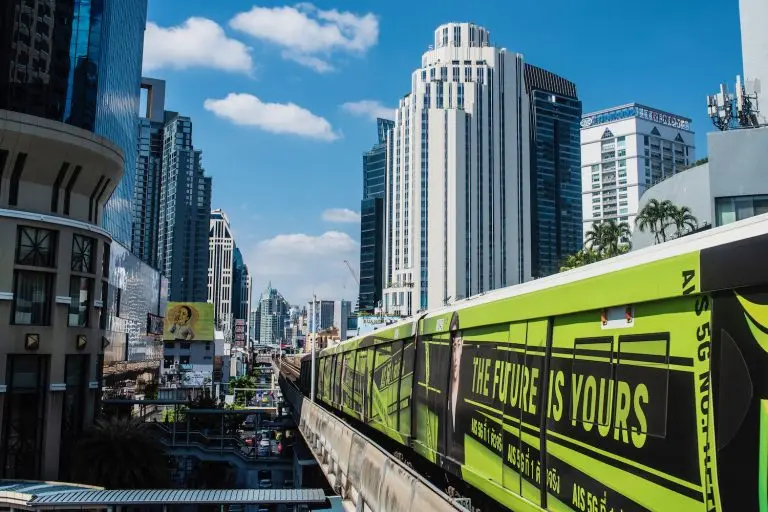
When I tell people that I (almost) never take a taxi in Bangkok, most are shocked. Depending on the person, there are two main reasons for this.
Foreigners (especially those who haven't spent much time in the capital) don't understand how I do it – many aren't even aware of how extensive Bangkok's train network is. Locals, in turn, don't understand why. They say it's better to be stuck in traffic in your own car than to speed through it in a crowded train.
I'm not here to argue about whether Bangkok's public transport is useful or not. My goal, however, is to help you compare the BTS and MRT and understand the best ways to use both systems.
Why all of Bangkok's urban rail systems are necessary
It's not about whether you take the BTS or the MRT – to explore Bangkok to its fullest, it's advisable to use all modes of transport. Since the two BTS lines only meet at one station (Siam), it's often more practical to transfer to the MRT to get a direct connection between the stations of the two BTS lines. Asok (Sukhumvit) and Sala Daeng (Silom) are prime examples of this.
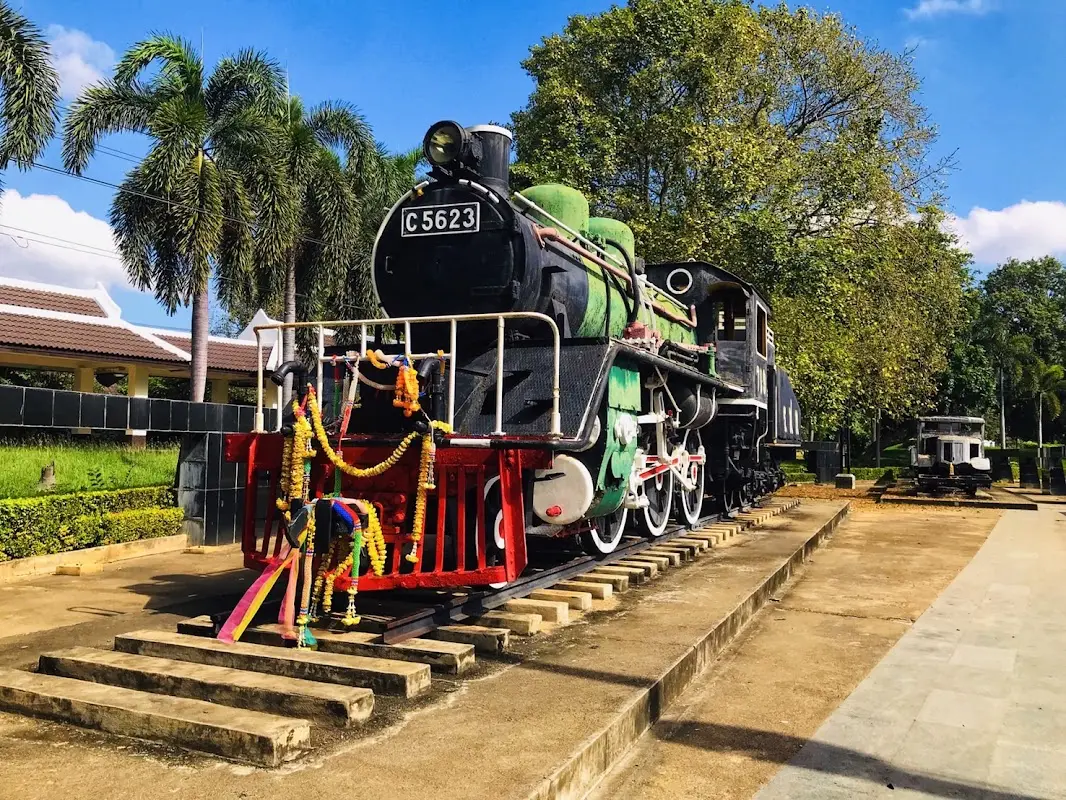
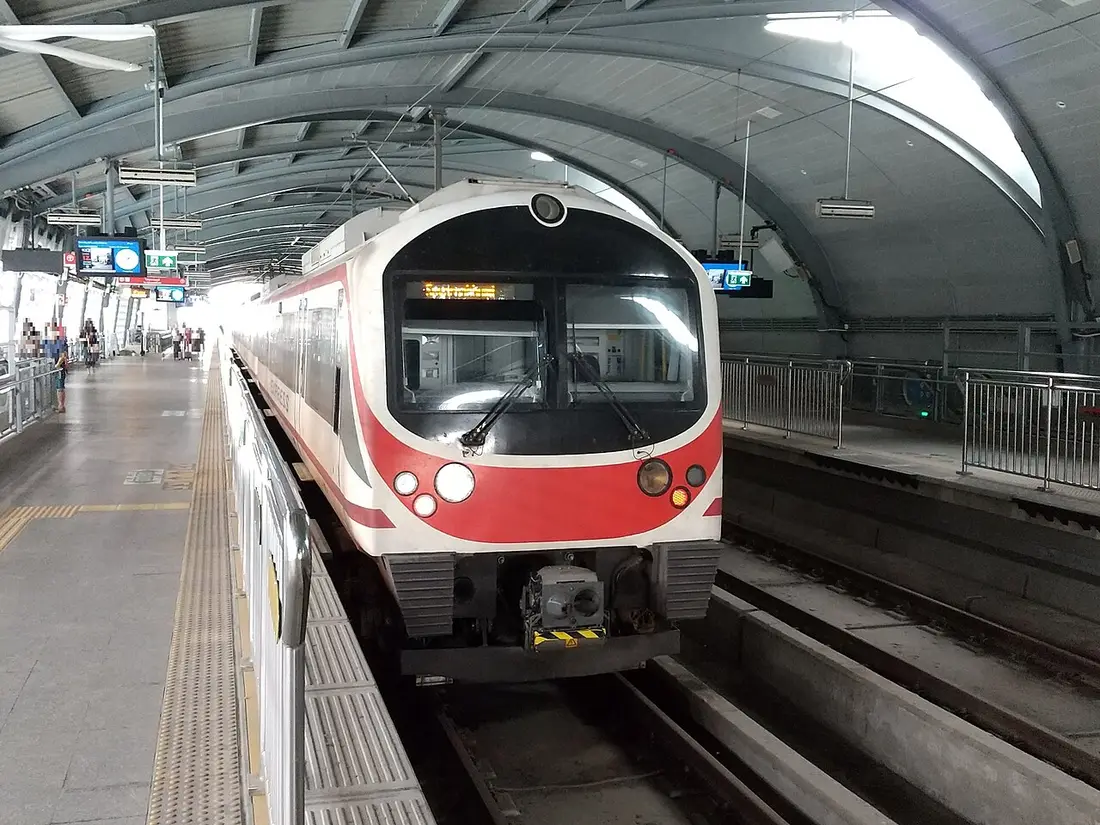
Furthermore, Bangkok's transport network extends far beyond the SkyTrain and subway. Those wishing to travel to Suvarnabhumi Airport must take the Airport Rail Link (ARL), which connects to the BTS at Phaya Thai station. Other rail lines (such as those of the Thai State Railways SRT) are less convenient for foreigners, as is the Bus Rapid Transit (BTS). Bangkok's canal and river boats, on the other hand, are extremely useful but are rarely used.
Ways to compare the BTS in Bangkok with the MRT
network
From 2025, both the BTS and MRT will have two lines relevant to most tourists: the BTS lines Silom (dark green) and Sukhumvit (light green), and the MRT lines Blue and Purple, with the Blue line being significantly more useful than the Purple. More MRT lines are planned, and while the Pink and Yellow "monorail" lines are technically operational, they offer limited use to foreign tourists.
Train stations
Another difference between the BTS and MRT? The BTS, also known as the SkyTrain, floats high above the ground and offers open-air stations with fantastic views of the city. The MRT, on the other hand, lies deep underground. Its atmospheric stations made of concrete and glass appear both functional and futuristic – and are kept pleasantly cool by excellent Thai air conditioning.
Onboard environment
The travel experience on BTS and MRT trains is quite similar: there's plenty of seating and standing room, LCD screens displaying advertisements and travel information, good cleanliness, and friendly fellow passengers. Visually, the MRT appears more colorful; moreover, one can enjoy views of the city from the train, which isn't possible on the more central, underground sections of the MRT (although it does run above ground in some outlying areas).
Price and Payment
You'll likely use both the MRT and the BTS, but payment methods differ. The BTS has more restrictions: you must either purchase single tickets with cash or via QR code, or buy and load a Rabbit Card (theoretically possible with a credit card, but in practice only cash is accepted). In contrast, the MRT accepts EMV Visa and Mastercard. However, note that the turnstiles are not equipped with NFC technology, so Apple Pay is not supported.
usefulness
The usefulness of Bangkok's urban rail system depends partly on the destination. The MRT is the only system that runs through the old city of Rattanakosin; the BTS is the main option for east-west travel along Sukhumvit Road. Generally speaking, the best way to explore Bangkok comprehensively is to use both systems and learn how they work together.
Why isn't there a single public transport ticket in Bangkok?
When I lived in Bangkok from 2017 to 2019, the long-awaited Mangmoom card (spider) finally seemed to be becoming a reality. Had it been introduced, this card would have allowed users to access all public transportation in Bangkok and potentially even pay in taxis or supermarkets. It's comparable to PASMO or Suica in Japan or the EasyCard in Taiwan. Unfortunately, it's still not available as of the end of 2025.
The blame doesn't lie with the distinction between MRT and BTS, but quite clearly with BTS management. More precisely: with the Rabbit Card and their refusal to abolish it. I've often wondered why they didn't simply extend the card to MRT, ARL, buses, boats, and regular trains instead of replacing it with something else. But anyway, this blog is about traveling in Thailand, not the kingdom's often enigmatic business practices.
More frequently asked questions about Bangkok's MRT vs. BTS
Which is cheaper, the MRT or the BTS in Bangkok?
The MRT is slightly cheaper than the BTS, by a few baht per station. However, this difference is mainly noticeable for working-class locals and tourists on a very tight budget. For the average traveler, using Bangkok's public transport network is generally a bargain.
Is the MRT in Bangkok good?
I absolutely love riding the MRT in Bangkok. From the pleasant air conditioning in the stations to the futuristic feeling of being so deep underground, the MRT is one of my favorite ways to get around Bangkok. On the other hand, with only two subway lines scheduled to open in 2025, it's not yet as convenient as it will eventually be.
Is the Sukhumvit line an MRI or a BTS line?
The Sukhumvit Line, also known as the light green line, is part of the BTS SkyTrain system. It should not be confused with Sukhumvit Station, which is located on the MRT Blue Line and is connected to the BTS Asok Station via an escalator and a pedestrian bridge.
Conclusion
Comparing the BTS and MRT is one of the best ways to get to know Bangkok and its transportation options. The BTS is extremely convenient in modern districts like Silom and Sukhumvit. The MRT, on the other hand, connects Bangkok's futuristic center with the historic districts of Rattanakosin and Thonburi. Combined with other modes of transport—the Airport Rail Link (ARL) and Bangkok's various public boats—it's easy to explore the city without taking a single taxi. In almost two decades of traveling here, I've hardly ever used one. How can you benefit from my nearly 20 years of Thailand travel experience? Request a personalized Thailand itinerary today!

Community
Comments 0
Start the conversation.