a guide to Samut Sakhon and Samut Songkhram
These provinces are located where inland waters and rivers flow into the Gulf of Thailand, leaving farmers plenty of land for their orchards and farms.
The rustic beauty of the Thai landscape may be fading, but it hasn't disappeared entirely. About 100 kilometers southwest of Bangkok, in the two small coastal provinces of Samut Songkhram and Samut Sakhon, you can experience nature up close and immerse yourself in the local way of life.
Arrival
Samut Sakhon and Samut Songkhram are located about 90-150 kilometers south of Bangkok, making them ideal destinations for day trips and weekend getaways.
The train is the most comfortable and affordable way to travel from Bangkok to Samut Sakhon and Samut Songkhram. Over a dozen trains depart daily from Wongwian Yai Station in Bangkok and Maha Chai Station in Samut Sakhon (10 baht/hour). From there, you can reach Tha Chalom on the other side of the Tha Chin River by tuk-tuk (20 baht) and ferry (3 baht). The local train runs four times daily (7:30 a.m., 10:10 a.m., 1:30 p.m., and 4:40 p.m.) from Ban Laem Station to Mae Klong Station (10 baht/hour).
There are also public minibuses that depart hourly from Victory Monument and Mo Chit bus station in Bangkok. If you are traveling with a bulky suitcase, using such a minibus is not recommended.
Activities in Samut Sakhon and Samut Songkhram
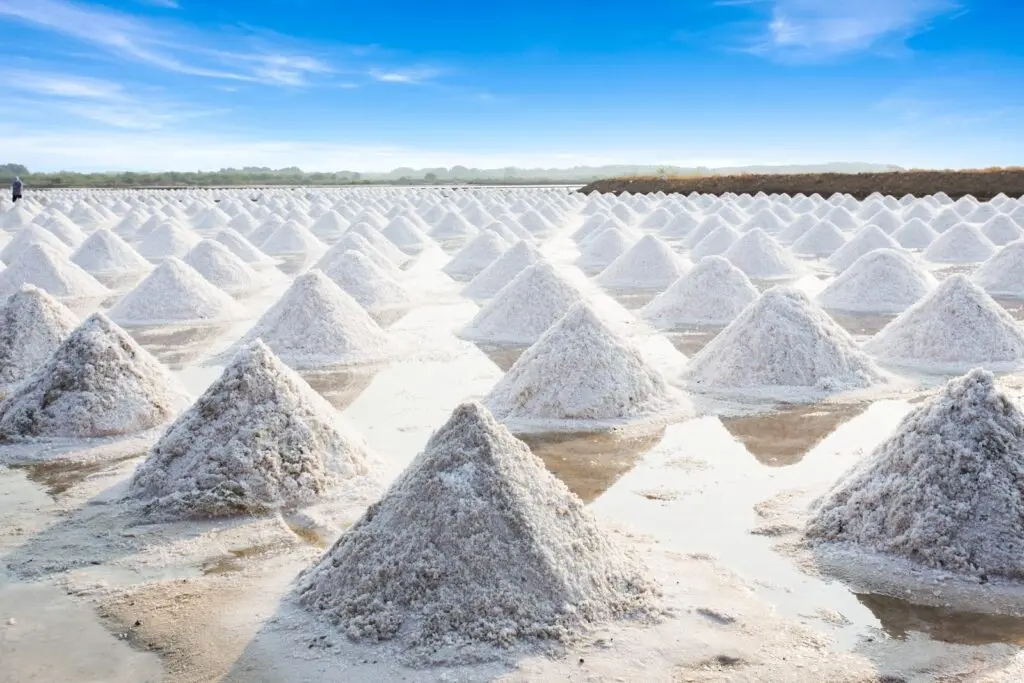
Samut Sakhon is one of Thailand's leading provinces for sea salt production. A visit to the salt farms at the right time of day offers a breathtaking sight, as the vast, glittering salt flats shimmer in the dawn light. At sunset, the landscape takes on a special magic, with the salt mounds standing out against the red-orange sky. The peaceful atmosphere reflects the harmonious coexistence of humankind and nature.
The best time to visit is from January to April (summer in Thailand) and from November to December (winter in Thailand). With a bit of luck, you can watch the salt farmers working in the fields at dawn and late in the evening. Harvesting sea salt is less labor-intensive than pumping seawater into large, square fields and then drying it in the sun. However, the salt harvest itself is a fascinating experience and offers fantastic photo opportunities.
In Samut Sakhon, salt is harvested by hand, just as it has been for centuries. The sun's heat causes the seawater in the salt flats to evaporate, which is harmful to the salt farmers' health. To prevent heatstroke, the farmers work in the fields from 6 to 9 a.m. and then again in the late afternoon. For the harvest, they pile the dry salt into small white mounds and then shovel it into wicker baskets. Using two baskets per carrying pole, they transport the salt to the drying yard.
Thanks to the Thai artisan community of Don Kai Dee, the guardians of classic Chinese porcelain art, pottery has become a popular hobby. In contrast to the pure white and blue of the famous Ming porcelain, Thai Benjarong porcelain (meaning "five colors") is vibrant in black, red, white, green, and yellow. Floral motifs and sometimes Buddhist art adorn the traditional Thai porcelain, which is especially popular with wealthy families and the nobility. The revival of painting Thai Benjarong porcelain is thanks to a group of women in Don Kai Dee. After being laid off from a ceramics factory in the 1980s, these women elevated the art and trade of Benjarong porcelain to a new level through stylish and modern designs.
For visitors who want to try their hand at making Benjarong porcelain, three-day and one-day courses led by porcelain artists are offered. A longer porcelain course with overnight stays in host families and simple accommodation is also available, making Don Kai Dee the ideal place for an artistic retreat. Even those who prefer not to participate in the craft will find the village perfect for a day trip. In the narrow lanes of Don Kai Dee, visitors will find porcelain wares in various shapes, sizes, and designs, all tempting to purchase.
Don Kai Dee Benjarong Village, Krathum Baen, Samut Sakhon, about 45 minutes from Bangkok
Trains to Don Kai Dee run daily (10 baht/hour) from Wong Wian Yai station in Bangkok to Maha Chai station in Samut Sakhon. From there, Don Kai Dee can be reached in about 15 minutes by tuk-tuk. For maximum comfort and less stress, a private tour with a driver is recommended.
Hidden away at the southern tip of Moo Baan Pramong (Fishing Village) lies the Red Bridge, an ideal spot for a culinary break during a scenic coastal drive. Stretching across the marshland against a backdrop of blue sky, the red bridge is enchanting. On weekends, it attracts many day-trippers who come to enjoy a walk in nature, the open spaces, the fresh air, and the breathtaking sunset. The best chance of spotting dolphins is between November and January, when the animals seek out the warmer sea waters for the winter. Bryde's whales can also be seen along the tranquil coastline, and visitors can book a whale-watching tour with one of the local boats. For hungry travelers and seafood lovers, there are numerous restaurants in the area – including the Krua Baan Pramong Seafood Restaurant (Tel.: +66 98 589 2550) – serving deep-fried red snapper with a sensational sauce and a variety of seafood soups.
The Red Boardwalk Bridge is located 16 kilometers from Maha Chai Station.
Canals, boat trips, wooden houses, atmospheric cafes, and the picturesque boat traffic make Amphawa's floating market so unique and famous. On weekends, visitors flock here to reminisce about a bygone era. From tropical fruits like mangosteen, rambutan, and coconut to local produce, everything is sold and hawked from small wooden boats that ply the canals. Vendors typically grill large prawns, fresh scallops, and crab, along with noodles, ice cream, and coffee, which are served from the boats. Unlike Damnoen Saduak's floating market, here you don't have to hop into a boat and paddle through the canal to buy mango and sticky rice—but that doesn't mean it's any less of an adventure. After lunch, a longtail boat trip is highly recommended to explore the canals that wind through villages and orchards. Once aboard a longtail boat, you'll quickly forget the leisurely pace of the commercial vessels. With its powerful engine, the longboat can zip through the canals at breakneck speed. For an hour, it takes visitors through large and small canals, mangrove forests, coconut plantations, and rice paddies, before the tour concludes with a visit to a temple.
Located an hour's drive from Bangkok (15 minutes from Mae Klong Station), Amphawa is easily accessible by car. Trains run regularly from Wong Wian Yai Station in Bangkok to Maha Chai Station. From there, cross the river to Ban Laem Station, where four trains regularly depart for Mae Klong Station.
Imagine watching thousands of fireflies swarm and glow along the canal from dusk till dawn. If you want to see fireflies, Amphawa is the place to be. Firefly watching tours start early in the evening and combine a nighttime boat trip with a touch of the Far East. Enjoy the tranquility of nature as you glide through the canals and mangroves, the night illuminated by tiny lights. Firefly watching tours are available year-round, but the best time is from May to October, especially during the waning moon. You can book a firefly tour at the tourist information offices of the Amphawa Police Station, the Amphawa Floating Market, and the Sri Amphawa Bookstore. Prices for a one- to two-hour tour range from 60 to 80 baht per person, or 600 baht for a private boat. You can also ask at your hotel if they can arrange a tour for you.
Alms around the canal
Almsgiving is widespread among the locals. They earn merit by offering food and flowers to Buddhist monks. Early in the morning, the monks travel around on small sampans to make their daily alms round and collect provisions for the day. Booking accommodation in one of the hotels or lodges along the riverbank is the best way to experience local life along the waterways. Here are five of the best riverside lodges where you can participate in the morning alms-giving.
Chotika Riverfront (+66 34 751 042) is a unique and beautiful wooden house complex situated directly on the riverbank, nestled between two waterways. Here you can discover Thai culture along the rivers. The guest rooms, each with a bedroom, bathroom, and spacious courtyard, offer the perfect place to feel at home in Amphawa.
The Thanicha Resort (+66 34 725 511) is a 100-year-old wooden house that has been converted into a beautiful hotel, showing great respect for the rustic beauty and tranquility of Amphawa.
Baan Pitumata (+66 94 083 8459) is a charming guesthouse with four rooms located directly on the banks of the Mae Klong. Nestled in a traditional riverside community, Baan Pitumata invites you to enjoy a relaxed lifestyle without any unnecessary fuss.
The Rim Rabeang Amphawa Cafe & Suites (+66 89 613 7838) is located in the heart of Amphawa's floating market. Situated high above the Mae Klong River, this stylish hotel combines a traditional wooden house with a modern building featuring polished cement and wood floors.
The Chabar Baan Cham Resort (+66 81 984 1000) lives up to its name, which means "Chinese Rose in Full Bloom". This playful riverside hotel, where rustic, faded wood and exposed concrete walls blend seamlessly, elevates relaxation to a whole new level.
Day-trippers from near and far flock to the river communities of the Amphawa district in Samut Songkhram. Here, they can enjoy canal cruises, floating markets, tropical gardens, and the sweet treat of coconut. A stay with local families in a peaceful setting inspires further exploration of the area. Located directly on the Klong Philok (Ghost Canal), Baan Rim Klong Homestay offers guests the opportunity to share their stilt houses, wooden cottages, and traditional Thai houses. Nestled in a tropical garden and situated right on the water, this accommodation provides the perfect setting for a relaxing getaway amidst a dreamy canal landscape. An early morning sampan ride on the canal reveals a variety of birdlife, while at night, thousands of fireflies illuminate the swampy mangroves, transforming the otherwise tranquil canal into a magical paradise. The community is renowned for its excellent coconut sugar and delicious food. Every morning, buckets of coconut juice are delivered to the farm, where it is processed into sugar granules. Guests can playfully learn how to make coconut blossom sugar or climb coconut palms. The food is fantastic: the hosts serve their delicious, homemade dishes at a long dining table. Must-try treats include spicy Tom Yam Kung (shrimp soup in coconut milk), deep-fried mackerel with chili paste, and stir-fried Pad Thai noodles.
Baan Rim Klong Homestay is located an hour's drive from Bangkok (10 minutes' drive from Amphawa Floating Market).
Telephone: (+66 89 170 2904)
Website: www.baanrimklong.net
Watching the vendors at the Mae Klong Railway Marketplace (Talad Rom Hoop) is quite an experience. The popular marketplace stretches along both sides of a 100-meter section of track. Here, vendors display their wares, stretching retractable umbrellas and awnings over the tracks. Business continues as usual until the train whistle blows. Smartphones and cameras in hand, visitors are well-prepared to capture the perfect moment. As soon as the train approaches, the vendors swiftly fold up their stalls, some pull their goods off the tracks, and everyone leaves the market as the train passes. Once it's gone, everything is back in place. Business resumes as if the train had never been there. The train passes through the marketplace seven times a day – on the Mahachai to Mae Klong line and back.
Game times: 6:20, 8:30, 9:00, 11:10, 11:30, 14:30 and 15:30
When it comes to trips to floating markets, Thailand offers many authentic experiences and opportunities to haggle. But nothing compares to the Thaka Floating Market in Amphawa. Nestled in a tropical garden, this market exudes authentic charm. On weekends, farmers and traders gather with boats laden with bananas, lotus flowers, mountains of young and ripe coconuts, local ingredients, and food, to name just a few. Street vendors are also a common sight. Treat yourself to a crispy oyster omelet, aromatic grilled chicken skewers, or the traditional Thai dumplings, "Thung Thong." The Thaka Floating Market is the perfect place for a short break in the countryside, away from the tourist crowds. It's just a short boat ride from the Amphawa Floating Market or an hour's drive from Bangkok (20 minutes from Amphawa). Arrive early to soak up the local atmosphere and sample the specialties.
Thaka's floating market is open from 7:00 AM on Fridays, Saturdays, and Sundays. A private car with a driver is recommended for getting there. A driver is also helpful if you plan to explore the surrounding area. Alternatively, you can take a tuk-tuk from Mae Klong Station or the Amphawa floating market to the market.
For over 100 years, Samut Songkhram – or Mae Klong – has provided its residents with fresh and dried seafood, salt, palm sugar, fish sauce, coconut milk, vegetables, and seasonal tropical fruits. These ingredients come from the Mae Klong River and the Gulf of Thailand. Wherever you go in Samut Songkhram, the food is excellent. For an unforgettable culinary experience, we recommend the following dishes, which you should definitely try during your visit.
Tom Yum Kung Mae Klong (spicy Mae Klong king prawn soup) is a sensational taste experience with sweet and sour, creamy, and herbaceous notes. The fresh, firm river prawns become even more flavorful and succulent in the spicy soup with fresh kaffir lime leaves, lime juice, fish sauce, galangal, and crushed bird's eye chilies.
Mae Klong mackerel (Pla Tu Mae Klong) is considered one of the most delicious fish in the Gulf of Thailand. For a family meal, fried mackerel with "Nam Prik Kapi" (chili dip with shrimp paste) and steamed vegetables is unbeatable. Simply spoon some Nam Prik Kapi onto the crispy mackerel and enjoy with rice. As soon as the aromas of lime, chili, palm sugar, shallots, and garlic unfold, no one will leave the table until the last piece of mackerel has been eaten.
Pad Thai Kung Mae Nam (Pad Thai with Mae Klong freshwater king prawns) will delight you with its impressive display of freshwater king prawns. This stir-fried noodle dish is mildly spicy, slightly sour, and slightly sweet. The king prawns lend this classic dish a creamy and buttery flavor.
Do you enjoy foraging for food? Then grab a mudboard and some lime powder and head to Don Hoi Lot to hunt for razor clams and secure a meal. Hidden away in the south of Samut Songkhram province, Don Hoi Lot is the mouth of the Mae Klong River where it meets the sea. At low tide, an endless, muddy sandbar emerges, teeming with razor clams – a paradise for collectors (and hungry travelers). The search for razor clams is a traditional one: locals use wooden boards to scuttle across the mud, catching the clams one by one. The animals burrow at least 60 cm deep into the sand, but the locals are skilled collectors. The slippery mud is sticky, so moving around can be a bit of a chore. By the way, razor clams are excellent in a delicious stir-fry called "Phad Chaa," with green peppercorns, red chili, and aromatic basil leaves. If you'd rather not get your hands dirty, you can enjoy this dish at a seaside restaurant. Some restaurants offer prime seating overlooking the sandbank, allowing you to enjoy sizzling fried razor clams while watching the clam gatherers at work. Don Hoi Lot is just an hour's drive from Bangkok (a 15-minute drive from Mae Klong Station).
Krua Wang Poo, a family-run seafood restaurant in Khlong Khon, serves sensational seafood in a cozy, rustic stilt house setting. Its name translates to "Crab Kitchen" in Thai, and the restaurant lives up to its name. Poo Neung—steamed crab legs with a spicy seafood sauce, lime, chili, and garlic—is one of the restaurant's signature dishes. Kaeng Som Bai Cha Khram—sweet and sour shrimp soup with sea salt—is a must-try for foodies eager to discover the flavors of the Thai Gulf and coast. Also worth trying are the aromatic shrimp cakes, the fiery Tom Yum Kung soup, deep-fried sea bass with the restaurant's signature spicy and garlicky seafood sauce, and stir-fried blue crab with Thai chili paste. The restaurant is a 30-minute drive from Mae Klong Station.
Telephone: (+ 66 92 586 1529)
A visit to Amphawa is incomplete without a trip to Wat Amphawan Chetiyaram temple. Located near the King Rama II Memorial Park and just a short boat ride from Amphawa's floating market, this graceful temple is believed to stand on the site of the former family home of Rama II, or King Phraphutthaloetla Naphalai, the second king of the Chakri dynasty. Queen Amarintharamat, who married King Rama I and was the mother of King Rama II, once resided behind this beautiful temple. It is also believed that King Rama II was born on the spot where the pagoda now stands within the temple grounds. The chapel, built in the early Rattanakosin style, houses some of the finest murals. The temple underwent several restorations between the reigns of King Rama III and Rama V.
Telephone: +66 34 725 547
Selected articles about Samut Sakhon and Samut Songkhram
Do you need travel information?
Discover everything you need to know before your trip – from visa requirements and entry guidelines to essential travel tips and frequently asked questions.




Community
Comments 0
Start the conversation.