Chiang Rai, the lesser-known sister city of cosmopolitan Chiang Mai, is definitely worth exploring, writes guest author Michael Cullen in this comprehensive travel guide for this northern Thai region.
Thanks to its more relaxed style, visitors experience breathtaking temples, lush nature, culinary routes with organic products, cultural insights into the hill tribes and have easy access to the Golden Triangle region, to name just a few of the offerings.
A self-guided road trip is a great way to discover the lesser-known northern Thailand and, especially for couples, to create unforgettable holiday memories through shared experiences.
Given the wide range of options, the region around Chiang Rai can easily be explored for seven days (or longer). An ideal starting point is to spend a few days in this small, friendly city before exploring the surrounding area.
Ancient capital of the Lanna and gateway to the Golden Triangle
Thailand's northernmost province borders Myanmar and Laos. The tripoint lies just under 70 kilometers northeast of Chiang Rai. The provincial capital, Chiang Rai, is easily accessible via direct flights from Bangkok. Alternatively, Chiang Mai, about 200 kilometers southwest, offers a convenient entry point.
The region has a long history of smaller kingdoms, while the city of Chiang Rai was founded in 1262 by King Mengrai. It was temporarily the capital of Mengrai's Lanna Kingdom until it was replaced by Chiang Mai.
The region, covering approximately 11,700 square kilometers and predominantly mountainous, features peaks rising up to 1,500 meters above sea level. Ethnic hill tribes such as the Akha, Lahu, Karen, and Hmong, as well as Chinese settlers, live in the highlands. The CIA coined the name "Golden Triangle" for the overlapping mountain ranges of the three bordering countries. From the 1950s until the beginning of the 21st century, it was one of the world's largest opium-growing regions.
The city of Chiang Rai lies in the alluvial plains along the banks of the Kok River. The fertile soils of these plains produce a wide variety of vegetables and fruits, while coffee, tea, nut, and fruit plantations cling to the mountain slopes. In recent years, the conversion to organic farming has significantly improved the region's agricultural reputation.
Highlights of the city of Chiang Rai
Temple in the city center
Within a radius of approximately two square kilometers around the city center, there are seven Buddhist temples and numerous markets. Here are our top recommendations.
Near the clock tower is one of the city's most interesting temples, Wat Ming Muang, as it differs significantly from all the others. It is said to have been founded by Queen Ta La Mae Sri, not her husband, King Mengrai. Legend has it that the 14th-century stupa of Wat Phra Kaew was struck by lightning, revealing the highly revered Emerald Buddha, which is now enshrined at Wat Phra Kaew in Bangkok. A small museum with a replica is located on the temple grounds. Also dating from the same period is Wat Phra Singh, next to the post office, which houses a replica of the sacred statue of Phra Buddha Sihing. The original is now located at Wat Phra Singh in Chiang Mai.
Markets
Markets offer a fascinating glimpse into regional products, the people, the local food culture, and everyday life. They are a vibrant hustle and bustle, a riot of color, a deafening din, and awaken curiosity and sometimes even confusion.
The Ngam Mueang Market (5:00 AM to 6:00 PM) on Ruangnakron Road is covered and offers everything from fresh seafood, meat, fruits, and vegetables to clothing and haberdashery. Also covered is the Municipal Fresh Market 1 (6:00 AM to 9:00 PM). About 600 meters from the gleaming golden clock tower is the bustling Sirikorn Fruit and Vegetable Market, with its picturesque flower stalls nearby.
Chiang Rai boasts two night markets located in pedestrian zones. Thanalai Road transforms into a bustling night market every Saturday from 4 pm until late into the night, offering everything from delicious Thai street food and handicrafts by local artists to dancing and a relaxed atmosphere to enjoy the festivities. The Sunday night market on Sankhongnoi Road (also known as Happy Street) is renowned for its excellent local crafts and delectable street food and is slated to reopen as visitor numbers increase. The night bazaar behind the central bus station takes place every evening and is the most touristy, and therefore less authentic, market in Chiang Rai.
Local restaurants and cafes
Chiang Rai offers a wealth of dining options, from street stalls and simple, family-run noodle restaurants to restaurants serving local and international cuisine.
Popular northern Thai dishes include Gaeng Hung Lay Curry, Sai Oua Sausage, Nam Prik Noom Kab Moo, the noodle and pork dish Kanom Jeen Nam Ngiew, and the most famous dish – Khao Soi.
Khantoke, a tray on a wooden base, is another northern Thai tradition where guests sit on the ground with the tray in the center serving as a table. The Toke-Tong restaurant offers this unique experience in a charming, inviting garden. Indulge your palate and enjoy convivial hours sharing and feasting on a selection of northern Thai dishes, including the specialties mentioned above.
For a sundowner high above the rooftops of the Hotel Riverie and a breathtaking sunset, The Peak is an absolute must – the perfect place for cocktails, a romantic dinner and to take fantastic photos.
Coffee lovers, take note! The beans grown and roasted in Chiang Rai make fantastic coffee in the hands of experienced baristas. In the city center, I recommend Arabitia Cafe, Akha Hill Coffee, and Doi Chaang Coffee, and a little further south is The Roast Coffee – my personal favorite.
Museums
The Mae Fah Luang Arts and Culture Park, under royal patronage, houses the region's most extensive collection of Lanna artifacts in two impressive traditional teakwood halls. This well-maintained and fascinating museum is complemented by beautifully landscaped gardens, ponds, and a high-quality gift shop.
The Oub Kham Museum houses the extensive and remarkable collection of museum curator Julasak Suriyachai, whose lineage can be traced back to a Shan royal family from Kengtung in Burma (Myanmar). The exhibits include royal regalia, handicrafts, and artifacts, displayed in buildings set amidst beautiful gardens and courtyards.
Insider tip: Very close by, on Ratyotha Road, is the “Khaosoi 100 Year Café” with excellent Khao Soi.
Road trip north of the river
This short road trip, covering approximately 30 km, follows the Kok River and includes a must-see café on the riverbank, unique temples, a museum visit, and a view of the rural surroundings.
Wat Huay Pla Kang, with its enormous, gleaming white statue, dominates the landscape and houses three impressive structures: the Phop Chok Dhamma Pagoda, which blends Thai, Chinese, and European design influences, and an all-white Thai-style sermon hall (inside and out). The imposing white statue of Kuan Im, the Goddess of Mercy, can be reached by elevator to the 25th floor, where you can enjoy breathtaking views of the surrounding area – from the goddess's perspective. The temple complex cares for over 500 orphans. You can support it by purchasing items to raise funds.
Baan Dam (or Black House) is a museum dedicated to the Chiang Rai-born artist Thawan Duchanee, who lived on the grounds until his death in 2014. Numerous artworks and objects by Duchanee, including animal bones, hides, and skulls, are displayed in various classic teakwood buildings and more unusual igloo-style structures. The museum is situated within a peaceful, well-maintained setting.
Insider tip: Make a detour to Ruk Raek Coffee right next to the museum entrance and the parking lot for excellent organic coffee or tea and a small snack.
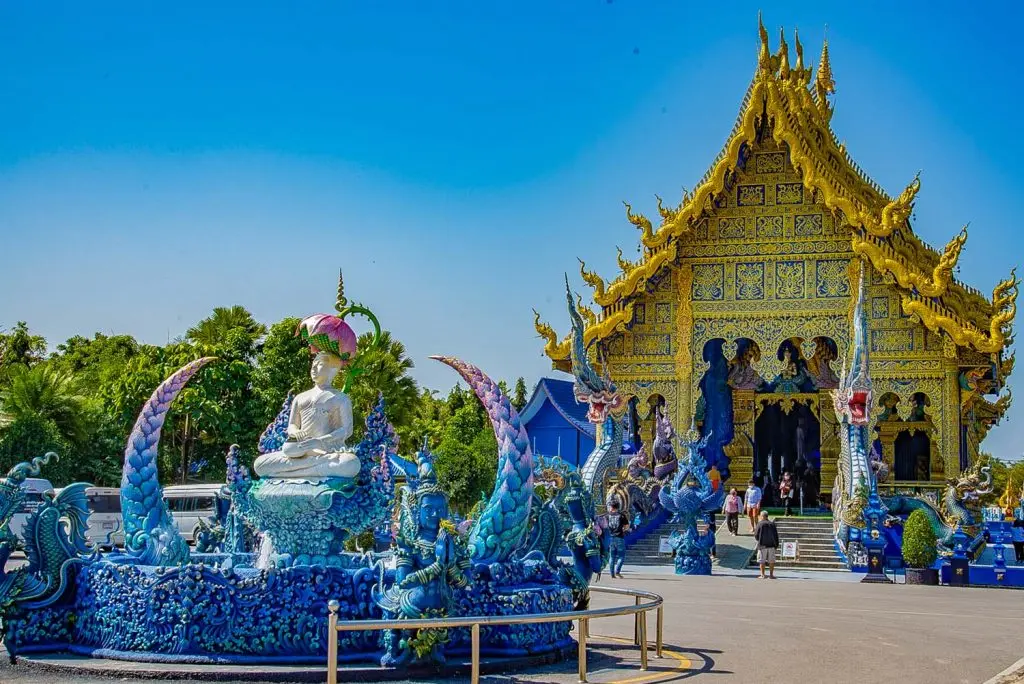
Wat Rong Sear Tean (Blue Temple) enchants with its vibrant blue hues and golden accents on the roof and eaves. The temple is intricately designed and rich in Buddhist motifs, including a gigantic, magnificent white porcelain Buddha. Murals adorn the interior walls, while elaborate designs wind around the blue pillars. The ceiling is a work of art in itself.
Chivit Thamma Da Coffee House & Bistro is located just 300 meters from the Blue Temple, right on the banks of the Kok River. This café and bistro is an absolute must-visit when visiting Chiang Rai.
Road trip to the south – White Temple, waterfall & Singha Park
Wat Rong Khun (White Temple) is located approximately 13 km south of Chiang Rai. Designed and built in the style of a Buddhist temple complex by the Thai artist Chalermchai Kositpipat, this art exhibition is a striking example of the fusion of contemporary and traditional Thai architecture and a unique temple building. Kositpipat's artwork is sold in the adjoining gallery.
About 15 km southwest lies Nam Tok Khun Kon National Park. Take a beautiful 30-minute walk along winding paths to Khun Kon Waterfall, surrounded by rainforest and towering bamboo. With a drop of 70 meters, it is the highest waterfall in Chiang Rai. Outside of the rainy season, swimming at the base of the waterfall may be possible, but you should contact the park officials beforehand.
The final leg of this 60 km drive is a visit to Singha Park, a 14 square kilometer leisure paradise. Visitors here have a wide range of activities to choose from: extensive hiking and cycling trails, water sports for families, climbing, and ziplining.
For Instagram enthusiasts, the expansive fields of pastel-colored flowers and the gently rolling tea plantations are an absolute must-see. Cafés and restaurants invite visitors to linger in this popular park. For a truly romantic and unforgettable experience, a hot air balloon ride is a great option, or you can visit the park during the annual balloon festival.
'Road Trip' East for Cloud Seas
About 90 km east of Chiang Rai rise the mountains bordering Laos, most notably Mount Phu Chi Fah. Most visitors stay overnight there and hike the 760 meters up a dirt path to the summit to experience the sunrise from the viewpoint. In winter, a sea of clouds drifts through the valleys, creating a mysterious yet impressive spectacle. It can be quite cold in the early morning hours. Another 12 km from Phu Chi Fah lies the less-visited viewpoint of Phu Chi Dao, offering a magnificent view of the Mekong River and the Laotian lowlands below.
Insider tip: On your way there or back, make a detour to the impressive organic farm Rai Ruen Rom with its restaurant and glamping site. Enjoy a healthy meal in the café, browse the shop for unique gifts and souvenirs, and stroll through the gardens and around the farm.
Golden Triangle Round (3-5 days)
This extensive tour will take you through many of the highlights of the Golden Triangle region, including Chiang Saen, 60 km northeast of Chiang Rai, the Golden Triangle viewpoint, Doi Tung, Mae Salong and more.
Chiang Saen, one of Thailand's oldest cities, was founded in the early 14th century. It was a strategic border post of the Lanna Kingdom, an important center of Buddhism, and a key stop on the ancient trade routes between China and Siam. After a turbulent history, including conquest by the Burmese and later destruction by King Rama I, Chiang Saen fell into ruin as a ghost town for several centuries.
Today's Chiang Saen is a tranquil place, its historical past and the ruins of the ancient city adding to its charm. During your stay, visit the Chiang Saen National Museum and some impressive temples such as Wat Pa Sak, Wat Phra Chao Lan Thong, and Wat Phra That Pha Ngao. Stroll along the banks of the Mekong River, explore the sights by bicycle, and enjoy the inexpensive and delicious local cuisine at the street food stalls. Birdwatchers will appreciate Chiang Saen Lake, especially during the migration season. The sunsets over the lake are also spectacular.
To delve deeper into the local history, a stay at the family-run boutique hotel Athita The Hidden Court is highly recommended. Located just 70 meters from the Mekong River and right next to the 700-year-old Wat Athi Ton Kaew temple, the hotel's family is happy to share their cultural heritage with guests – making it an ideal base.
Golden Triangle Viewpoint: About 11 km north of Chiang Saen lies the village of Ban Sop Ruak, the tripoint of Laos, Myanmar, and Thailand. Here, the Ruak River forms the border between Thailand and Myanmar and flows into the Mekong. Numerous photo opportunities abound, including a golden Buddha (Phra Chiang Saen Si Phaendin) enthroned on a specially constructed metal and glass boat on the riverbank. Longboat trips on the Mekong are also available.
Just a few kilometers from here is the sprawling Opium Hall, a highly recommended visit. The museum tells the story of how royally supported initiatives, including special programs by Her Royal Highness the Princess Mother, transformed the region's barren mountains from illicit poppy cultivation and opium production into areas of positive and inclusive community development. These programs continue to have a positive impact on local communities many years later.
Golden Triangle mountain communities
Mae Sai
From the tripoint, travelers can drive about 50 km northwest to the lively border town of Mae Sai, Thailand's northernmost point. At the border crossing, there's an opportunity for a short detour into Myanmar to take photos. Approximately 12 km south of Mae Sai, slightly off the main road, lies the Tham Luang – Khun Nam Nang Non National Park. It was there, in mid-2018, that the now-famous cave rescue operation took place, lasting over 18 days. The national park administration has installed an information panel documenting the rescue operation.
Doi Tung – Mae Fah Luang region
If time is short, a direct trip from the Mekong (40–50 km) to the Doi Tung (Tung Mountain) region is recommended. This region is the heart of many of the change initiatives presented at the Opium Museum. For 30 years, the Doi Tung Development Project (a social enterprise) has been driving transformation in this area. This has resulted in a region with sustainable communities focused on cultivating high-value crops such as coffee and macadamia nuts, as well as a thriving (and internationally award-winning) ceramics, textile, and handicraft industry.
Among the absolute highlights is the spectacular, 4-hectare Mae Fah Luang Garden with its temperate climate. Visit the Royal Villa, a Swiss-style chalet built for the late Princess Mother during her stays in the region. In the Hall of Inspiration, learn how the royal family positively impacted this region and its hill tribes. When open, venture onto the suspension bridges of the Doi Tung Treetop Walkway. Indulge in the boutiques of Doi Tung, savor Doi Tung coffee, and, if you wish to stay overnight, the highly acclaimed, romantic Doi Tung Lodge perfectly complements your mountain experience.
Mae Salong
From Doi Tung, you can drive over the mountain peaks to the tea-growing region of Mae Salong (approx. 45 km) and be rewarded with sensational, green views as you drive along the winding roads.
Mae Salong (also known as Santikhiri) has long been a settlement of the Akha hill tribe. Its population grew due to the arrival of several thousand ethnic Chinese nationalists who fled their homeland in 1949 following the communist revolution. The Thai government granted them citizenship on the condition that they establish themselves as trusted members of the community and promote the cultivation of oolong tea, mushrooms, and other agricultural products. The town stretches along a narrow, winding ridge from which lanes and streets branch off.
Tea production undoubtedly plays a major role in this region, as a visit to Tea Plantation 101 or the Wang Put Tan Tea Plantation demonstrates. Several Chinese teahouses in the city offer tea tastings and packaged tea to take away. Coffee is also grown in the region and is worth a visit for coffee lovers.
Other attractions include the Museum of the Chinese Martyrs, which tells their story and how the Chinese immigrants, as part of their settlement agreement, supported the Thai army in suppressing the communist uprising in Thailand. The Phra Boromathat Chedi (a Thai-style stupa), perched on a hill, offers breathtaking views of Mae Salong village and is well worth the trip. This magnificent temple (wat) was built in honor of the late Princess Mother and invites visitors to linger and relax.
The early morning market is ideal for discovering local produce and purchasing handicrafts from the Akha hill tribe. The surrounding restaurants offer delicious dim sum and Yunnan-style noodle dishes – well worth a visit. Stroll along the main street (the ridge) and admire the murals depicting humorous stories from the region. Mae Salong offers a wide range of accommodation options. We particularly enjoyed our stay at this small, family-run guesthouse with its fantastic views of the town and surrounding area.
Mae Salong to Chiang Rai
The return journey from Mae Salong to Chiang Rai is about 60 km long and passes through regional communities and farmland before rejoining Highway 1, which leads back to the city and Chiang Rai Airport.
Chiang Rai and the Golden Triangle region have so much more to offer if you take the time to explore. We hope the information provided here inspires you to travel and discover the charms of northern Thailand for yourself.
Text and images: Michael Cullen.




Community
Comments 0
Start the conversation.