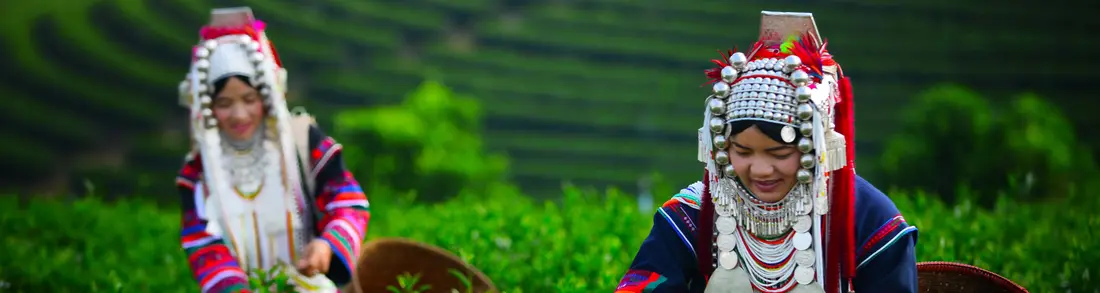
Located in the heart of the so-called Golden Triangle and about a three-hour drive from the more famous neighboring city of Chiang Mai, Chiang Rai has undergone one of the biggest transformations in all of Thailand thanks to the Doitung Project.
Anyone visiting the region today would find it hard to imagine that the people of Doi Tung led a completely different life just 30 years ago. Their opium economy at that time was based on the cultivation of opium poppies. Forests were cleared, human trafficking was rampant, and addiction was widespread.
Around 1988, the Princess Mother, Princess Srinagarindra, became involved. She developed the Doi Tung Development Project, which aimed to create a sustainable industry and a sustainable lifestyle for the population so that they could live in a better place and in a better way.
Under the patronage of the late Princess Mother, the Mae Fah Luang Foundation (MFLF) was established to implement development projects and improve the quality of life for ethnic minorities in the Doi Tung region of Thailand. These projects included securing livelihoods, such as the reforestation of watersheds, and developing various social enterprises for the benefit of the local population.
The aim of the project was to create self-sufficient communities that could operate independently of external support and be well-equipped to adapt to the changing environment.
The princess mother recognized that cultivating drug plants was a symptom of poverty and lack of opportunity, which can drive people to crime – she believed that no one inherently wants to do evil. Once the population's health was ensured, she believed development should focus on empowering people to help themselves by creating viable and sustainable livelihoods. Education, she argued, would then lay the foundation for long-term development.
“For development to succeed, basic needs must first be met. Without sufficient income, people have no choice but to clear land through illegal logging and engage in other illegal activities such as opium cultivation and prostitution.” This was part of the speech given by the late Princess Mother in 1988, when the vocational training center, along with the reforestation project, was opened as an alternative source of income for the local people.
Following the death of the Princess Mother, His Majesty the King assumed patronage of the foundation and appointed his daughter, Her Royal Highness Princess Maha Chakri Sirindhorn, as its chairman.
One of the king's greatest challenges was figuring out which crop would be most beneficial to the farmers so they would abandon opium cultivation. Today, the hills teem with life, for here grows the world's most popular legal drug – caffeine. Locals cultivate coffee plantations, and alongside them thrive the world's most expensive nuts: macadamia nuts.
Thanks to the program, the 29 villages, home to members of six different ethnic groups, now live peacefully, harmoniously, and self-sufficiently. Without the program, the children would never have been able to play in the streets as they do today.
Not far from there is the Mae Fah Luang Garden, which was originally built as a summer residence for the Princess Mother. Today it houses a museum documenting her efforts to improve the living conditions of the local hill tribes.
Just around the corner from the royal villa lies the beautiful village garden. This was once the site of a village, but the Princess Mother asked the residents to relocate, as it was a center of the opium trade. Instead, she wanted to create a garden with European flowers, since many Thais would never have the opportunity to travel to Europe. A visit to this garden allowed them to experience the wonders of the world in one place.
Further information about the Doi Tung development program can be found at www.doitung.org.




Community
Comments 0
Start the conversation.