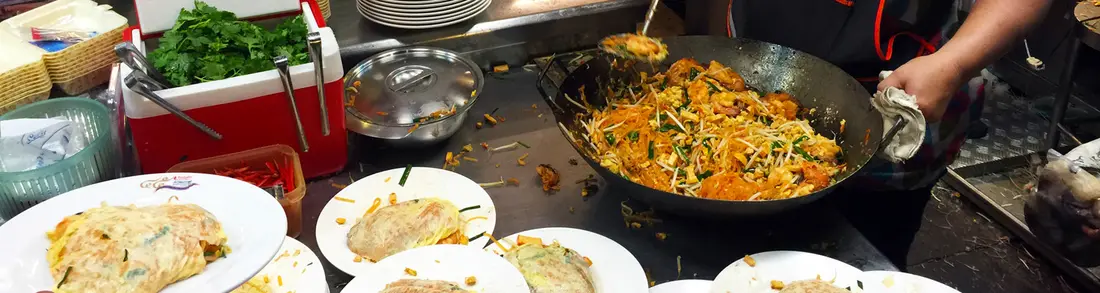
The Tourism Authority of Thailand (TAT) office in Sydney would like to reassure travelers that Bangkok remains one of the world's best street food destinations. This comes in response to recent media reports that the Bangkok Metropolitan Administration (BMA) is planning to ban food stalls from Bangkok's main streets. Rest assured, this is not the case!
The Tourism Authority of Thailand (TAT) contacted the Bangkok Metropolitan Administration (BMA) and determined that while measures exist to control food stalls and enforce regulations, selling street food is not prohibited. The BMA further acknowledges that food stalls are an important part of Bangkok's identity and have contributed to CNN's ranking of Bangkok as one of the 23 best cities in the world for street food.
The BMA has announced that it will provide advice and practical support to the city's street vendors to help them raise hygiene standards, improve food safety, and comply with proper waste disposal procedures.
To ensure the safety and comfort of all road users and pedestrians, the BMA also implements measures regarding sidewalk and road blockages and works with the Metropolitan Police Bureau and its traffic division to ensure that key pedestrian walkways are clear of the food carts, chairs and parasols used by many street vendors in the city.
This means that in the busiest areas of Bangkok, traders have been required to move to designated zones and nearby markets in order to conduct their business.
Popular tourist streets like Yaowaraj Road and Khao San Road in Chinatown are not affected. However, special attention is being paid in these areas to ensuring that vendors comply with international hygiene standards.
To this end, and subject to government approval, the BMA intends to implement the following measures:
Community
Comments 0
Start the conversation.