Travel writer John Borthwick considers all aspects of traveling with Thailand's transport systems – from joy to occasional despair.
Bicycle (city)
Bangkok is pure masochism. The traffic in the metropolis is omnipresent and intimidating; it's the law of the jungle, and two wheels are "wrong" unless they're on a motorcycle. Traffic in Chiang Mai is safer.
Bicycle (touring bicycle)
Exploring Thailand by bicycle, on the other hand, is a delight, especially if you choose a flat, sparsely populated province like the coastal province of Prachuap Khiri Khan. There are numerous cycling tour operators such as Spice Roads and Grasshopper Adventures.
You can also participate in cycling tours to raise money for Thai charities, such as those organized in Australia by Hands Across the Water.
Public transport, Bangkok.
The capital boasts a constantly expanding network of well over 60 BTS SkyTrain and MRT subway stations, allowing you to travel quickly and conveniently above or below street traffic. The trains are clean and air-conditioned, though often crowded. A day pass for the SkyTrain costs 150 baht, making it ideal for visitors; alternatively, a day pass for the MRT is available for 120 baht.
Canal boat
Narrow canal boats zip along Bangkok's khlongs, making only brief stops at the commuter docks. Hop on and off – almost literally – at any stop. The conductor collects fares on board. A super-cheap tour through Bangkok's hidden waterways.
car
Large international companies like Hertz, Budget, and Avis, as well as local providers, offer newer vehicles (all right-hand drive) for self-drive rental. However, for greater comfort and sightseeing, hiring a car with a driver is recommended. Be sure to check the insurance terms and always carry your passport, national driver's license, and international driving permit with you.
Coach or bus
Long-distance buses crisscross the entire country. They are large, air-conditioned, economical, colorful, have assigned seating, and operate according to a timetable (often on the hour). Departure points are large bus stations in the suburbs, such as the Ekamai (in the east) and Mo Chit (in the north) terminals of Bangkok.
Island ferry
Popular islands like Chang, Krabi, Kood, and others are reached by large ferries – some transport vehicles, others only passengers. Smaller islands are accessed by speedboats (see below). For some ferry routes, such as between Hua Hin and Pattaya, official identification is required; for foreigners, this is a passport.
Longtail boat
Rua hang yao are narrow-hulled boats with a noisy diesel engine and a long, sweeping propeller shaft—the so-called "longtail." You'll find them everywhere, from city canals to island beaches. Crouch down, hold on tight, wear a life jacket if you have one, and be prepared for spray.
motorcycle
Rental motorcycles are popular in most tourist areas and therefore a frequent cause of injuries and fatalities among foreigners. Important: Helmets are mandatory! (It's the law, even though many Thais don't wear them.) Ride sober (what could possibly go wrong? – You'll lose your insurance, to name just one example). Never assume you have the right of way. Always carry your passport and driver's license with you (and never leave them as collateral for the motorcycle). Question: Does your travel insurance cover you? Probably not, unless you have a valid motorcycle license from your home country. (Note for Australians: A car driver's license is not sufficient for motorcycle insurance.)
Motorcycle taxi
The moto-si riders hang around street corners like buddies, wearing their numbered safety vests. Tell them your destination. Then agree on a fare – prices start at around 60 baht for a short ride, depending on the destination. Put on your helmet! Sit back and enjoy the slipstream, the close proximity of the other riders, and the breathtaking view of the traffic chaos. It's insane fun!
Airplane
Thailand has an extensive domestic flight network served by reputable airlines such as Nok, Thai Smile, Air Asia and Bangkok Airways.
river ferry
Bangkok has several ferry services. The local Chao Phraya River Express is fast, often crowded, and inexpensive. It serves numerous piers, and a conductor on board collects fares. The Chao Phraya Tourist Boat caters to tourists and stops at piers near all the major sights—a day ticket for 200 baht is recommended. The main departure point is Sathorn, also known as Central Pier, at the Saphan Taksin Bridge. A new electric ferry called My Smart Ferry now operates between the Rama V Bridge and the Sathorn/Central piers, offering weekend cruises.
Songthaew or Baht bus
In many areas, the songthaew – a small pickup truck with a canvas cover and two inward-facing bench seats in the back – is the most popular and cheapest way to get around. They usually operate on local routes, and passengers can hop on and off at any stop for a fixed fare. In Pattaya (where they are also called "baht buses"), for example, a ride costs 10 baht for both Thais and foreigners. Longer journeys cost 20 baht. In other tourist centers like Koh Samui, foreigners may have to pay twice as much.
speedboat
Large passenger boats with canopies and powerful outboard motors serve smaller islands and offer day trips. They are fast and reliable, but can be a bit cramped. Bring and wear a life jacket. Book in advance.
taxi
Bangkok has numerous and affordable metered taxis. Many drivers speak limited English, so it's advisable to have your destination written down in Thai script. Make sure the meter is switched on (base fare: 35 baht). If the driver doesn't switch it on ("Sorry, it's broken"), simply get out – the next taxi will arrive in about a minute. The situation is more difficult on some popular tourist islands, as most taxis don't use the meter and charge inflated fares. In this case, try using your hotel's transfer service.
Tuk-tuk
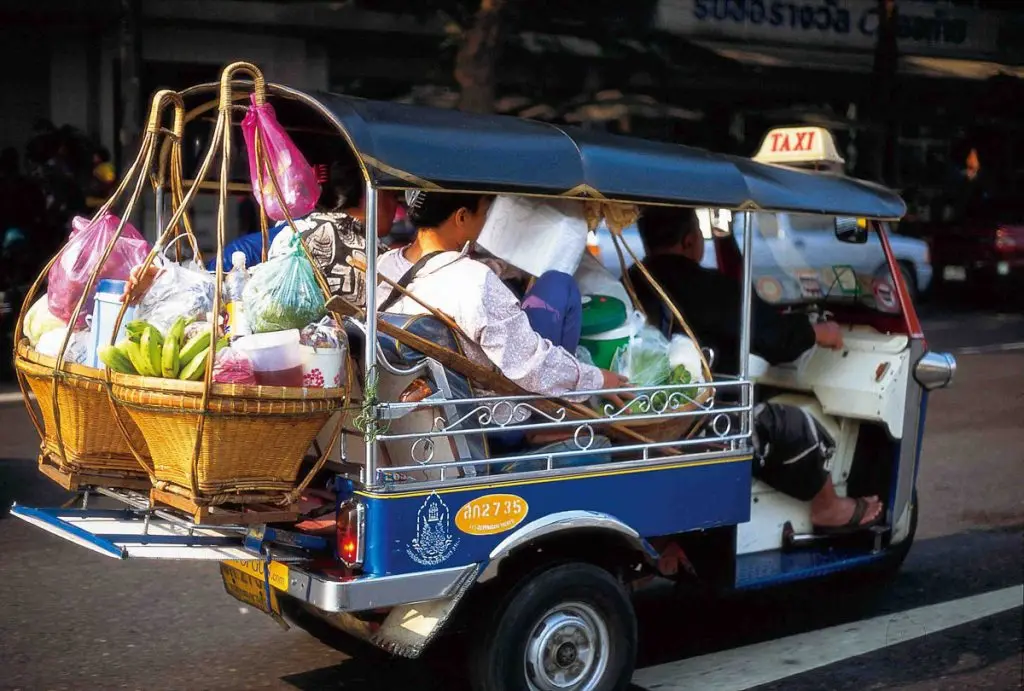
The iconic tuk-tuk (actually samlor, "three-wheeler") doesn't have a meter, and drivers charge what they deem appropriate. It's usually more expensive than a metered taxi. Don't set off without agreeing on the fare beforehand. Modified tuk-tuks are sometimes called skylabs, as is the case on Koh Si Chang.
Van
Intercity minibuses are fast, frequent, and risky. In a country with one of the highest traffic fatality rates in the world, they have a questionable safety record. Be careful when flying! Take the bus or train instead.
Train
Thailand has a well-developed rail network, and train travel is an excellent way to explore the country and meet Thai people. The trains are punctual and clean, although the carriages are somewhat dated. The Bangkok–Chiang Mai Express is a classic rail journey: a 750 km overnight trip on the narrow one-meter gauge track, which is a truly unique experience. Reserve your seat in advance, especially if you are traveling near holidays. For added comfort and a small fee, it's best to book through a travel agency.
Text and photos © John Borthwick 2023




Community
Comments 0
Start the conversation.