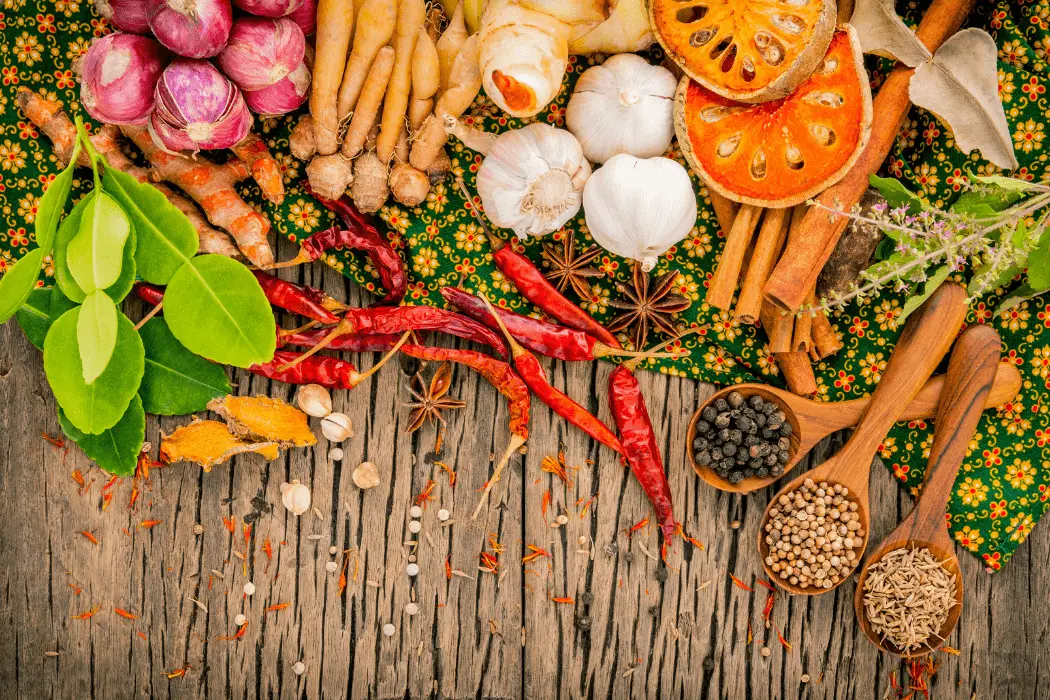
What comes to mind when we talk about Thailand? We bet Thai food is one of the first things that springs to mind. The variety of Thai cuisine is simply incredible, and Thai food is famous worldwide. You can enjoy it almost anywhere, as Thai restaurants can be found all over the globe. But it tastes best in Thailand itself, where you'll find the unique atmosphere amidst the local communities. A typical Thai meal consists of a selection of dishes to share with family and friends. The shared meal is part of the appeal, offering a tantalizing array of flavors and textures and creating a convivial atmosphere.
How well do you know Thai cuisine?
Let's rewind to the origins of Thai cuisine.
Thai cuisine originated with immigrants from the southern Chinese provinces who arrived in what is now Thailand many centuries ago. Historically, it was heavily influenced by Sichuan cuisine, but over the centuries, numerous other influences shaped Thai cooking. In the distant past, Buddhist monks brought Indian influences, and the cuisine of southern Muslim countries impacted the cuisine of southern Thailand. Much later, Thai cuisine was influenced by European cuisine through contact with Portuguese missionaries and Dutch traders. During this period, there were even Japanese influences. Today, Thai cuisine is unique and characterized by a special blend of the five tastes: sweet, sour, bitter, salty, and spicy.
The defining characteristic of Thai cuisine is that every meal consists of four basic tastes: hot, sweet, sour, and salty. The heat comes from chili peppers, the sweetness from cane sugar or palm sugar. Tamarind or lime juice provides the acidity, while saltiness is achieved through various ingredients such as soy sauce, fish sauce, or shrimp paste. Vegetarians should be aware that some dishes contain fish sauce or shrimp paste and are therefore not vegetarian. Thai gastronomy is incredibly diverse regionally, with each of the kingdom's five regions boasting its own distinct cuisine. Sometimes, entire areas and cities within a region are renowned for their specialties. A must-do for tourists!
Brief, interesting facts
Was Thai food spicier and more flavorful in the past?
Interestingly, Thais have historically been very adept at integrating foreign culinary influences. In fact, chili peppers only appeared in Thai cuisine in the 17th century, when they were introduced by Portuguese missionaries who had developed a taste for them during their travels through South America. As a result, Thais used more and more hot spices, and the food became increasingly spicy. More recently, however, Thai cooking has shifted: fewer hot spice blends are used, while fresh herbs like lemongrass are increasingly incorporated into most dishes. Over the years, Thai cuisine has become less spicy and more aromatic.
How do Thai curries differ from other South Asian curries?
Since coconut milk is used extensively in Thai cuisine, Thai curries are generally much thinner than, for example, Indian curries. Traditionally, many ingredients are also mixed together in Thai curries, even in meat dishes. Unlike other South Asian curries, where meat and vegetables are served separately, Thai meat curries also contain plenty of vegetables. Another difference lies in the use of spices: In Thai cuisine, spices are mostly used in paste form. This reduces the cooking time compared to Indian curries, as the spices are pre-cooked. Furthermore, a more intense aroma develops because the spices have had time to marinate and mature.
Thai cuisine can be defined in many ways. In this article, however, we will only focus on the following aspects:
Why street food is so famous in Thailand
Visitors to Thailand quickly realize that street food is practically part of everyday life there.
Given that many households are not equipped with fully equipped kitchens and raw ingredients can be more expensive than ready-made meals, it is not surprising that eating out is more common than eating at home.
What can you expect from Thai street food?
First of all, it's undeniable that Thai street food is very cheap and delicious compared to other countries! Even street vendors frequented by many tourists usually don't charge more than 30-60 baht (2-5 AUD) for their food.
If your main goals while traveling are experiencing the culture, enjoying the food, or saving money, the Thai street food scene is a dream come true. While Bangkok is considered the mecca of street food, there are countless stalls, carts, and markets throughout Thailand.
From noodles to curries, from roti to sticky rice, from Thai salad to Thai skewers – you could spend weeks trying Thai cuisine. Among the most popular street food dishes in Bangkok and other parts of Thailand are Pad Thai, Pad See Ew, Massaman curry, papaya salad, banana roti, and mango sticky rice.
Although street food in Thailand (and many other countries) is no riskier than restaurant food, there is a higher probability of getting fresh food and being able to observe its preparation – both of which contribute significantly to a healthy lifestyle.
A big advantage of street food is that you can often watch the food being prepared – so take advantage of this opportunity!
No problem if you're not a fan of spicy food!
As in Thailand, the food can be spicy. Even if you enjoy spicy food at home, I recommend starting with mild or medium levels of spiciness until you have a better idea of what to expect.
And if you don't normally like spicy food, make sure your food in Thailand is as mild as possible.
Some food stalls that prepare food fresh will ask you how spicy you'd like it. Even if you don't order anything else, you can always make a special request. Simply say "Mai sai prik" (no chili) or "Mai pet" (not spicy) when ordering. Of course, it's possible that a dish that's "mai pet" to the food stall will taste completely different to you!
Restaurants with menus often list the spiciness level of each dish, and many stalls also offer sauces in various spice levels for you to season yourself. Keep in mind that two of the most popular dishes, Som Tam (papaya salad) and Tom Yum (a special soup), are naturally very spicy.
Knowing how to communicate about your allergies.
If you have allergies or other intolerances, eating street food in Thailand can be particularly complicated. Before heading to the food stalls, check online to see if the dishes contain any ingredients you can't tolerate. Of course, not every vendor uses the same recipe, but this will give you an idea of which dishes you should be cautious with.
Thai iced tea (Cha Yen) is an absolute must-try in Thailand and is easy to find throughout the country. This creamy, orange-colored drink is simply heavenly and could change your life. However, Thai iced tea (my favorite) or Thai iced coffee can be very sweet, as it usually contains a lot of sweetened condensed milk. It's best to ask for a small amount of sweetener first, taste it, and then order more if you like.
Don't forget to try the Thai street food breakfast!
The breakfast menu typically includes savory dishes such as pork or beef with sticky rice, fried eggs, congee, and fried dough sticks. If soup isn't your thing for breakfast, you can choose fresh fruit, a fruit smoothie, or a Thai iced coffee.
Thailand is a large country with diverse geography, which has led to the development of regional differences in cuisine over the years. Currently, there are four main cooking styles in Thailand.
Northern Thai cuisine is generally milder than in the rest of the country. Sticky rice is particularly popular and is traditionally rolled into small balls with the fingers. There is a strong influence from neighboring Myanmar, as seen in popular dishes like Kaeng Hang Le, a pork curry with ginger, turmeric, and tamarind.
The cuisine of the northeast is influenced by Laos; it is generally highly spiced, and sticky rice is the preferred staple food. Although meat dishes are plentiful, meat was historically scarce in the villages, and shrimp and freshwater fish were the main sources of protein. These were often fermented to extend their shelf life.
The cuisine of the Central Region lies stylistically between northern and southern influences, with fragrant jasmine rice being preferred to sticky rice. What makes the cuisine of the Central Region truly special is its royal cuisine. This culinary tradition, originating in the royal palace, encompasses more elaborate dishes prepared with complex techniques. It is more than just ordinary cooking – it is a true art form.
Southern Thai cuisine is the most popular outside of Thailand, as this is the country's main tourist region. Coconut milk is used extensively in many southern Thai dishes. Coconut replaces ghee for frying, and seafood plays a significant role. Appetizers in the south often include cashew nuts from local plantations, and coconut meat is a common seasoning.
The epitome of Thai flavor! A robust, refreshing blend of fragrant lemongrass, chili, galangal, lime leaves, shallots, lime juice, and fish sauce defines this classic soup, giving it its legendary herbal taste. Succulent, fresh shrimp and straw mushrooms complete the dish. A versatile dish that complements almost any meal: its distinctive aroma is reminiscent of an exotic perfume, while its invigorating, tangy-spicy flavor is quintessentially Thai!
This unusual dish from the northeastern state of Isaan is divisive – some love its spiciness, others can't stand it – and it's truly unique. Garlic, chili peppers, green beans, cherry tomatoes, and grated raw papaya are finely ground in a mortar, creating a well-rounded, sweet-sour-spicy flavor that lingers long in the memory. Regional variations include peanuts, dried shrimp, or salted crab, the latter having a stomach-cleansing effect that surprises many first-time visitors!
This milder version of Tom Yum soup combines fiery chilies, thinly sliced young galangal, crushed shallots, lemongrass stalks, and tender strips of chicken. Unlike its more watery counterpart, the spiciness is tempered by plenty of coconut milk. Garnished with fresh lime leaves, it is a wonderfully fragrant, creamy, and irresistible dish.
From Cape Town to Khao San Road: the international staple of Thai cuisine! In a blazing hot wok, small, thin, or wide noodles (your choice) simmer steaming for a minute with crunchy bean sprouts, onions, and egg before being transferred to the next plate. A truly interactive dining experience, half the enjoyment (and flavor) of which comes from then topping the noodles with four condiments – fish sauce, sugar, chili powder, and finely ground peanuts.
Basil stir-fried pork is an incredibly popular dish, perfect for lunch or dinner, and undoubtedly ranks among the most beloved Thai meals. It's cooked in a steaming hot wok with plenty of basil leaves, large fresh chilies, pork, green beans, soy sauce, and a touch of sugar. The minced, fatty pork is beautifully oily and blends with the steamed white rice to create a delicious and satisfying meal. It's often topped with a fried egg (kai dao); you'll most likely be asked if you'd like one. Keep in mind that most Thais like this dish spicy. If you prefer it less hot, order your pad krapow (slightly spicy).
Massaman curry was recently included in a list of the 50 most delicious dishes of all time and is considered "the best food in the world." This coconut-based meat curry is dubbed the "king of curries and perhaps even the king of all dishes" due to its intense flavors – the dish masterfully combines spicy, coconutty, sweet, and savory flavors.
Despite the global popularity of Thai cuisine, Bangkok long struggled to be taken seriously as a cosmopolitan foodie destination. While locals and tourists alike enjoy Pad Thai and Tom Yum Goong, Bangkok lacked the variety, quality, and consistency that the esteemed Michelin Guide inspectors traditionally sought. The introduction of the red guide to the City of Angels underscores the profound transformation Bangkok's culinary landscape has undergone in recent years.
Recently, the MICHELIN Guide explored new areas in southern Thailand, in addition to Bangkok, to discover the best restaurants and hotels. Enthralled by Phuket's culinary scene and hospitality, characterized by its unique and fascinating blend of diverse cultural influences, the MICHELIN inspectors look forward to discovering and presenting the finest dining experiences and accommodations.
The expansion of the MICHELIN Guide to Phuket and Phang-nga is part of the Michelin Group's commitment to raising global awareness of Thai gastronomy and hospitality and making travel more enjoyable for everyone – perfectly in line with the Michelin motto: "A Better Way Forward." Phuket's local cuisine is distinctive and flavorful, beautifully blending influences from India, Malaysia, China, and the Peranakan culture. In short, it offers an almost endless array of flavors waiting to be discovered.
Phuket is also known for its excellent, freshly caught seafood. Similar to Bangkok, the "Pearl of the Andaman Sea" offers an unparalleled culinary experience with traditional and innovative creations at all price points – from elegant restaurants to street food stalls. Both cities are popular tourist destinations and offer visitors a wide range of accommodation to suit every taste and budget, from hotels with international standards to simple guesthouses.
Furthermore, the jovial Michelin inspector awarded a total of 20 stars at a well-attended ceremony: 14 restaurants received one star, while the list of approximately 400 two-star restaurants worldwide was expanded to include three stars. At the first awards ceremony in Thailand, no three-star restaurants were honored, which many interpret as a sign of future growth.
Here is the list of Michelin stars in Thailand << Links
Thai desserts reflect Thai cuisine in their use of specific ingredients, particularly rice, coconut, and fruit. They are called "khanom" in Thai, which means something like "sweet snacks." We find that khanom is an excellent way to end a meal and soothes the palate after spicy Thai dishes.
Thai desserts essentially consist of two local ingredients: sticky rice and coconut. Beyond these, however, there are many other unique treats that you absolutely must try in Thailand. So let's enjoy these delicious and popular Thai desserts.
Sticky rice is a very special staple food in Thai cuisine. It is mainly grown in Southeast Asia from a special type of rice (with opaque grains) that sticks together after cooking!
Many traditional Thai desserts are made with sticky rice. Here are the three most popular sticky rice-based desserts.
It is prepared with fresh, sliced mangoes arranged on a bed of sticky rice. Sweet coconut milk is then poured over the mango and sticky rice. Finally, the dessert is sprinkled with roasted mung beans.
Mango sticky rice is best found at the local market. While it's also available in restaurants, the prices are exorbitant.
This is another variation of the previously mentioned Thai dessert. This time, the mango is replaced by the famous durian fruit. Durian is often called the "king of fruits" in Southeast Asia. It is also a popular filling in Vietnamese desserts. Durian sticky rice is prepared in the same way as mango sticky rice, although the fruit is usually sliced beforehand.
This is another famous Thai dessert that you shouldn't miss when visiting Thailand. Sticky rice is roasted over charcoal on bamboo skewers. There are various versions, for example with black beans, sesame seeds, or other types of sticky rice, such as black sticky rice.
The rice absorbs the aroma of the bamboo, giving it a unique flavor. Ultimately, it's the experience of eating bamboo sticky rice that makes this dessert so appealing!
The best way to eat it is to break the bamboo from the top and then slowly peel off strips. Once you've removed a few strips, you can take a piece of sticky rice and eat it with your hands.
This unique Thai sweet isn't easy to find. The best place to find it is at street festivals or certain markets. We ate it at the Warorot Market in Chiang Mai, near the sweets section.
This delicious Thai dessert consists of sticky rice with coconut milk and a filling. It is said that Khao Tom Mud symbolizes the life of a couple, as two Khao Tom Mud are traditionally tied together with a strip of bamboo.
We ate it with black beans, tamarind, and banana. It's also available with taro. Wrapped in a banana leaf, it's wonderfully sweet and slightly chewy.
This popular Thai dessert can most likely be found in the markets.
These small, triangular banana leaf pastries immediately catch the eye when browsing street stalls in Thailand. Inside, they contain a creamy filling and a brown, tamarind-flavored center.
The consistency of this Thai dessert is similar to jelly on the outside, while the tamarind filling is somewhat firmer. It's excellent as a snack, not too sweet, and the tamarind flavor perfectly balances the coconut note.
This traditional sweet can most often be found in local markets or at street stalls.
Coconuts are used in many Thai dishes, so it's not surprising that they also find their way into desserts. This ice cream is unique in that it's made exclusively from coconut milk.
Thais, like most people in Asia, don't tolerate lactose (milk sugar) well. Since coconut ice cream is lactose-free, it can be enjoyed without the usual side effects of dairy products.
These Thai-style coconut pancakes are a popular street food. They are cooked on a hot griddle and served warm. The pancakes are made with rice flour and flavored with coconut and palm sugar. They are light, moist, and have a fluffy texture.
You can find vendors offering them at popular street corners.
No. 3 crispy Thai pancakes – Khanom Buang
The base of the crispy pancake is made from rice flour and mung bean flour. Coconut cream is spread onto the small pancakes before topping. There are two types of toppings: sweet and savory.
The sweet filling contains desiccated coconut and golden threads (strips of egg yolk). The savory filling contains desiccated coconut, chopped spring onions, and strips of shrimp.
No. 4 Round Egg Yolk Drop – Tong Yord
These little balls, made from egg yolks, sugar, rice flour, and jasmine water, are a special treat for parties and celebrations. They taste delicious, but are extremely sweet.
You can find this treat in the confectionery section of local markets throughout Thailand.
NO 5. Roti Sai Mai – Unusual Thai dessert with cotton candy crepes
Roti Sai Mai are typically associated with the ancient kingdom of Ayutthaya. They are small, thin, colorful pancakes, pan-fried and flavored with pandan, strawberry, or banana. Each roti or crepe is filled with Thai cotton candy, which comes in various colors. Served warm, the cotton candy melts in your mouth.
Roti Sai Mai is sold in and around Ayutthaya by street vendors, mostly of Thai-Muslim origin. The crepes are prepared right in front of the customers.




Community
Comments 0
Start the conversation.