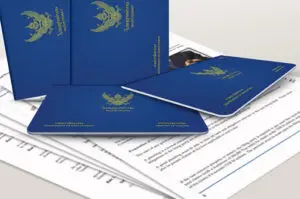
Required documents for company registration in Thailand
Obtaining a non-immigrant visa
If you wish to work in Thailand, you will need a work permit. However, before you can apply for or obtain a work permit, you will need a nonimmigrant visa. This is a prerequisite for applying for a work permit. Ideally, you should apply for it before arriving in Thailand. Law firms like Siam Legal International can assist you with the application process in your home country or in a neighboring country of Thailand. They can also help you convert a tourist visa into a nonimmigrant visa within Thailand. This conversion process can take one to three months.
Requirements for obtaining a nonimmigrant visa from outside the country:
Application for a work permit
Documents provided by the employee:
Thai authorities may require these documents to be authenticated by your country's embassy (this requires you to personally present your diploma, CV, license, or certificate to the embassy to have its authenticity and originality verified; you will also need to pay an authentication fee to the embassy). Furthermore, a translation of these documents from your foreign language into Thai may be required.
Documents provided by the employer:
Thai authorities require that all documents bear the company stamp on every page and display the notarized signature(s) of the managing director(s) next to the stamp. Furthermore, authorities have previously requested official copies of registration documents, shareholder lists, licenses, and certificates issued by the relevant authorities within the 90 days prior to the work permit application.
Approval of the work permit
A job description is often crucial for the approval or rejection of a work permit. If the written job description does not require qualifications that a Thai national is unlikely to possess, the application will be rejected. Our licensed lawyers are experienced in drafting professional and accurate job descriptions to help you obtain a swift permit. The Ministry of Labour often seems intent on limiting the number of permits actually issued to demonstrate its commitment to protecting Thai jobs. Therefore, if your company applies for three permits, you may only receive one or at most two. You need professional assistance to ensure all your applications are successful.
Signing your new work permit application
Your first and only appointment for applying for a work permit is a personal visit to the employment office after it has been approved. You must appear in person with your passport and sign the work permit booklet in the presence of the employment office staff. The employment office will stamp your passport upon receipt.
Restrictions on your work permit
The work permit issued entitles you to work at the specified company and location. A new work permit is required if you change employers or workplaces. If you resign, are dismissed, or are laid off, you must return your work permit to the employment office within 10 days, as required by law. Do not assume your company will do this for you; returning it to the employment office is your responsibility.
The tax identification card
Once your work permit is granted, your company must next apply for a Thai tax identification card. This card contains a tax identification number that you must include in your tax documents.
Extension of stay vs. re-entry permit
The visa is issued outside of Thailand by the Thai embassy or consulate where you apply for entry into Thailand. After arrival, the immigration officer stamps the date in your passport. This is called your "extension of stay".
The "extension of stay" refers to the period during which you are permitted to remain in the Kingdom of Thailand. This is usually the date stamp in your passport, issued either by an immigration official after your arrival via a border crossing or by the immigration police after you have applied for an extension of stay.
Many people misunderstand the difference between a stay extension and a re-entry permit – often to their own disadvantage. The crucial point is: the stamp on your stay extension is decisive. Everything depends on this date. With your re-entry permit, however, you can enter and leave Thailand once or multiple times, depending on the type of permit.
Your re-entry permit is only valid until the date of your departure, as shown in your passport. Any re-entry permit expires when your extended stay expires. If you leave the country without a re-entry permit, both your extended stay and your work permit will be revoked.
This is the crucial difference: After applying for an extension of your stay and work permit, please ensure you have a re-entry permit before leaving Thailand. Siam Legal International will gladly assist you in applying for a single re-entry permit or a multiple re-entry permit (unlimited use until your visa expires).
Renewal of your visa and work permit
Your work permit expires when your residence permit extension expires.
You must extend your stay in Thailand before you can extend your work permit. This can be done in Thailand, but in some cases, you will need to leave the country. If you cannot obtain the extension in Thailand, you will need a new non-immigrant visa from a Thai embassy or consulate abroad, as described above. If you have a valid multiple-entry visa, you simply need to cross the border and then return. If you need to travel to Thailand to apply for a new visa, you will need copies of your work permit, a new letter of recommendation from your company, extracts from the commercial register, and financial and tax reports from the embassy or consulate. Siam Legal International can assist you with your visa extension thanks to its global presence in any country. Please note that all of this must be done before your work permit expires.
Report your stay every 90 days.
Those with a long-term stay extension must report to the immigration police every 90 days. Those with a multiple-entry visa can leave Thailand after each 90-day stay and apply for an extension.
Contact us
Contact our corporate lawyer in Thailand to learn more about the process. Our team of legal experts will ensure that your company registration in Thailand runs smoothly.
Leave us a message
For information and support in setting up your business in Thailand, please fill out the form below and send it to us.




Community
Comments 0
Start the conversation.