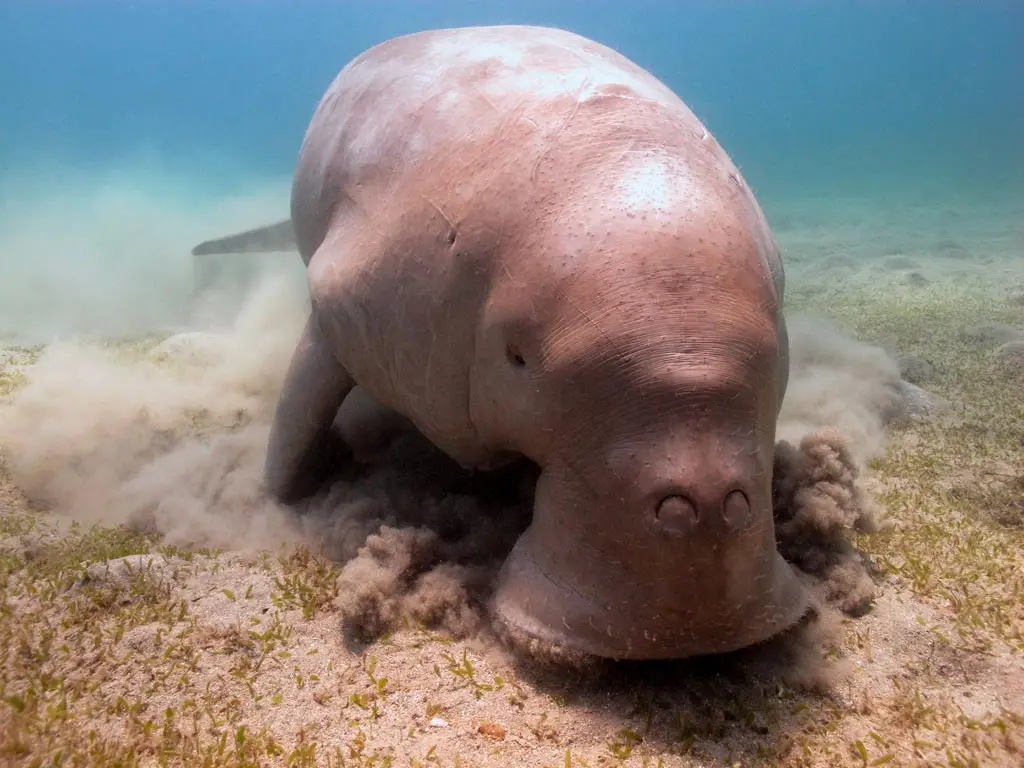
Not far from Phuket, in Si Kao you can experience unique encounters with one of the most endangered animals in the world: Dugongs.
These lovable "cows of the sea" are sadly threatened with extinction, mainly due to habitat loss. Their seagrass meadows are being destroyed by coastal development. The Anantara Resort Si Kao Resort has developed a new ecotourism offering to help protect them.
Si Kao is located in the southern Thai region of Trang, a coastal town about an hour's drive south of Phuket, known for its dugong population. They are the main tourist attraction, but unfortunately, their numbers are declining. Recent estimates suggest there are only about 150 animals left.
Several marine conservation organizations are working tirelessly to preserve this dwindling population and are now being supported by the Anantara Si Kao Resort. In addition to supporting local conservation projects, the resort's sustainability manager, Mark Isenstadt, offers guests a day trip to see the dugongs. There, they learn everything they need to know about these fascinating animals, their habitat, their behavior, the threats they face, and how we can all contribute to their protection.
The longboat tour begins with a lesson about seagrass – which is far more interesting than you might expect, as Mark is a passionate storyteller. Seagrass is the dugongs' primary food source, and sadly, seagrass meadows are disappearing worldwide due to coastal development. But that's not the only threat to dugongs. As Mark explains, many become entangled in fishing nets or are injured by boats in the busy waterways around Trang and the islands in the southern Andaman Sea.
A marine sanctuary has been established at Koh Libong. This is the next stop on the tour, where you can see the adorable dugongs that once misled nearsighted sailors, who mistook them for mermaids. The boat glides gently through the sanctuary while the attentive captain keeps a lookout for dugongs. And although it's hard for children to be quiet, the quieter you are, the greater your chances of spotting these animals.
After about an hour of dugong watching, the tour takes you to a small fishing village for lunch before continuing with the next part of your adventure. This time, you'll travel by tuk-tuk, a traditional Thai mode of transport, to the base of Point Dugong, a high limestone cliff with a viewing platform accessible via a cave system. There aren't many places where you can climb a mountain from the inside; the hike through the caves and the ascent along narrow paths past towering stalagmites and stalactites is an adventure in itself.
The view from the top is spectacular, the perfect vantage point to observe dugongs, and it shouldn't be long before you spot one or two in the clear water far below.
The view is breathtaking, but from this height it also becomes clear that the marine sanctuary is too small. Local conservation groups are campaigning for its expansion, and a key part of these efforts involves educating villagers about the benefits. The Anantara Resort is also supporting this initiative. It is building a dugong education center where locals and school groups can learn all about dugongs, how they can contribute to their protection – and perhaps even benefit from dugong tourism.
Further information can be found on the Anantara website.




Community
Comments 0
Start the conversation.