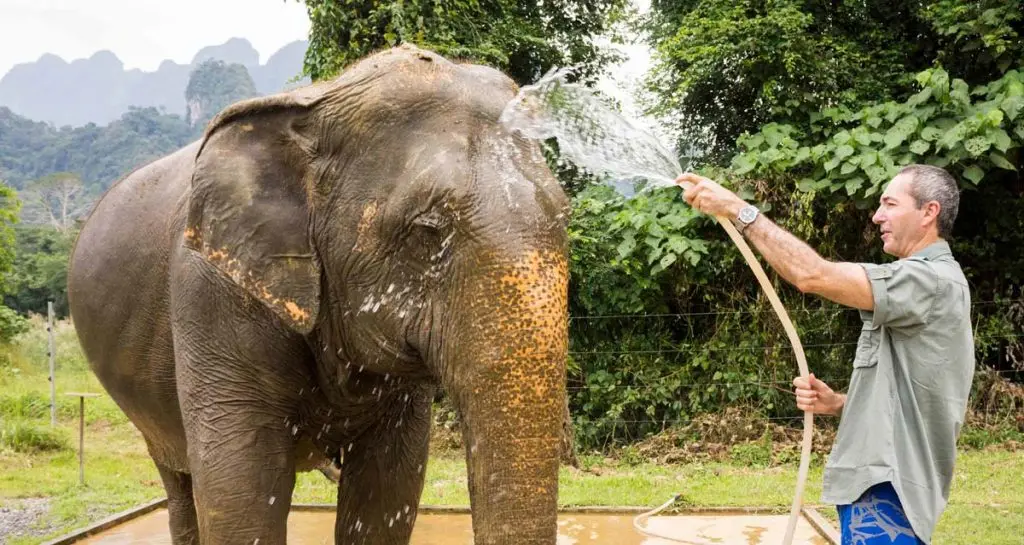
Elephants are an integral part of Thai history and culture, and encounters with them are high on most visitors' wish lists. These days, travelers to Thailand treat elephants with greater respect and specifically seek out sanctuaries that treat the animals humanely and respectfully. Here is an overview of the best ethical elephant encounters in Thailand.
Elephants are an integral part of Thai history and culture and attract numerous tourists. In fact, elephants have been used in tourism since the late 1980s, when logging was banned in Thailand and the mahouts and their families, including the elephants, sought new employment opportunities.
Over the years, people flocked to Thailand to ride elephants and watch them perform in shows. These intelligent animals were taught to paint pictures for tourists, shoot basketball hoops, and even play soccer.
But attitudes have changed significantly since the 1980s. Globally, we have more respect for animals – and we know more about how these animals are trained. Animal welfare studies have also shown that many of these practices are indeed cruel and degrading.
Our fascination with elephants remains strong, but support for elephant camps offering trekking and shows is changing. Thailand now offers a growing number of wildlife reserves where you can observe these gentle giants without riding them. There, you can learn more about their history and welfare, and in some cases, even volunteer to help care for them. Here are a few examples.
1. Elephant Nature Park – Chiang Mai
On the outskirts of Chiang Mai, this rescue and rehabilitation center provides a safe haven for over 30 elephants, many of whom have been abused. The park offers visitors a wide range of programs, from day trips to seven-day volunteer placements.
During a one-day visit, you will learn how to care for elephants and can simply watch them being elephants, interacting in their herd, playing together, and bathing in the river.
The park also offers a volunteer program for those who want a longer, more intensive experience and don't mind a bit of hard work. There's even a program for visiting veterinary assistants and veterinary students.
The park is now also supporting other regions in Thailand and Cambodia in converting former elephant trekking camps into sanctuaries. Projects in Surin, Kanchanaburi, and Cambodia are looking for volunteers to participate in programs lasting from one to seven days. elephantnaturepark.org
2. Elephant Port, Kanchanaburi
Under the direction of Lek Chailert of Elephant Nature Park, a sanctuary has been created in Sai Yok, 130 kilometers west of Bangkok, on what was formerly an elephant trekking camp. Lek encouraged the owners to remove the chains, and Elephant Nature Park now supports the new park by organizing day trips and overnight stays. Visitors can walk with elephants and watch them play in the mud and swim in the river. elephantnaturepark.org
3. Golden Triangle Asian Elephant Foundation, Chiang Rai
The camp at Anantara Golden Triangle Resort provides a home and work for over 30 former street elephants, their mahouts, and their families. Resort guests can help with the elephants' daily care, bathe them in the river, and participate in a forest walk with the animals, accompanied by a veterinarian or biologist. helpingelephants.org
4. Phuket Elephant Sanctuary, Phuket.
This sanctuary was created in collaboration with Mr. Montri Todtane, the owner of an elephant camp in Phuket, conservationist Lek Chailert, founder of the Save Elephant Foundation, and Louise Rogerson, founder of EARS Asia. Lek Chailert also founded the Elephant Nature Park in Chiang Mai.
"We offer a retirement home for sick, injured, tired or old elephants who previously worked hard for tourism, entertainment or in the timber industry."
Here, visitors can feed the elephants, walk with them, and watch them as they roam the sanctuary, play together, bathe, and cover themselves in thick mud – just like in the wild. phuketelephantsanctuary.org
5. Phang Nga Elephant Park, Phang Nga.
The family that runs this elephant park has a very close relationship with the animals. For over 150 years, they have cared for them at home and worked in their fields. Here, visitors can bathe and feed the elephants, and even ride them bareback.
“We will not tolerate practices such as elephant dancing and circus tricks and are working intensively to raise public awareness and improve the care and welfare of elephants in Thailand.”
"We are passionate about the interaction between humans and elephants and want to inform our visitors about the significance of elephants in Thai culture. Many of our elephants previously worked in the timber industry and now enjoy a happy and fulfilling life with their mahouts." phangngaelephantpark.com
6. Elephant Mountains, Khao Sok
This eco-resort and elephant sanctuary is located in Khao Sok National Park on the Thai peninsula. Transfers for a two- to three-day "safari" are offered from resort locations on the east and west coasts, including Phuket, Krabi, and Koh Samui.
Accommodation is in luxurious safari tents. The activities offered provide insights into Thailand's culture and ecology. These include a presentation and film about the history and conservation of elephants, a cooking class, a cultural performance by local school children (sponsored by the resort), a canoe safari, and the Elephant Hills Elephant Experience, where you'll learn about elephant care. elephanthills.com
7. Elephant Seaside Retreat.
Visit an elephant family in their home by the sea. The former elephant trekking camp has been restructured and now provides its elephants with a peaceful retirement. The focus is now on education and conservation rather than touristy riding excursions. Visitors receive an introduction to elephant conservation before they are allowed to feed the animals bananas.
Afterwards, you'll head to a nearby stream where you can change into your swimwear, jump in the water, and scrub your elephants. Following the elephant spa experience, you'll have the opportunity to contribute to the conservation of the reserve's mangroves by planting a mangrove seedling. The experience concludes with Thai coconut pancakes and rosehip tea. ecokhaolak.com




Community
Comments 0
Start the conversation.