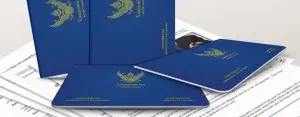
(Last updated: January 25, 2021)
A foreigner can apply for a work permit if they have a non-immigrant visa or a residence visa such as a spouse visa, an employer can provide the required documents, the upper limit for the capital paid in is observed, and the activity they wish to perform is not prohibited for foreigners.
If you are a foreigner intending to work in Thailand, you must ensure that your intended job and qualifications do not fall into categories generally reserved for Thai nationals.
Requirements for a Thai work permit
The following are the steps for applying for a work permit.
Steps to applying for a work permit
Step 1: Applying for a non-immigrant visa
To obtain a nonimmigrant visa, you must provide the following:
Furthermore, you must apply for a non-immigrant visa at least 30 days before your departure for Thailand. The consulate or consular office will request copies of your company's registration documents and financial statements. These documents must be issued by the company.
If your application is approved, you will be permitted a temporary stay in Thailand for a maximum of 90 days.
Step 2: Applying for a work permit
You will need to submit the following documents:
The Thai government may require that these documents be authenticated by your home country's embassy. A translation from the foreign language into Thai may also be required.
Documents provided by the employer:
All these documents must bear the company stamp on every page and the certified signature(s) of the managing director and/or directors next to the stamp. These documents are required by the authorities processing the application.
The granting of a work permit does not depend solely on the submitted documents. The job description is usually the decisive factor. This must contain a detailed description of the qualifications required for your position, qualifications that Thai nationals typically do not possess.
You and your employer must explain why the Thai government should grant you a work visa. Once your work permit application is approved, you may work for the same company and at the same location. If you change employers or locations, you will need a new work permit. You may not perform any work other than that for which your work permit was issued. Likewise, you may not work for any employer other than the one you specified in your application.
When your employment ends, you must return your work permit to the employment office. This is necessary in order to apply for a new work permit with another company.
While your work visa is being processed, your company is required to apply for a Thai tax identification card for you from the Thai tax authorities. This card contains a tax identification number that you will need to complete your tax forms.
Step 4: Applying for the Thai visa extension and re-entry permit
A misunderstanding regarding the difference between extending one's stay and obtaining a re-entry permit can lead to certain consequences.
The date stamped on your residence permit extension is decisive. This means that your length of stay depends on this date. Your work permit and your re-entry permit are also dependent on the date of the residence permit extension.
However, if you leave Thailand without a re-entry permit, both your stay extension and your work permit will be cancelled.
If you were unable to obtain an extension of your stay despite having a Thai work permit, you can apply for a one-year non-immigrant visa (category B) at a Thai embassy. This visa allows multiple entries and does not require a re-entry permit.
Step 5: Renewal of your visa and work permit
Before you can extend your work permit, you must first extend your stay in Thailand. You can do this either directly in Thailand or abroad by submitting the application to the Thai embassy or consulate in another country.
If you need to leave Thailand before you can extend your work permit, you must provide copies of your work permit, a new letter of recommendation from your company, the company's registration documents, and financial and tax reports to the Thai embassy or consulate.
For long-term extensions, you must report to the Thai immigration police every 90 days. Holders of a one-year multiple-entry visa (non-immigrants) can simply cross the border into another country and return to Thailand to extend their stay.
With the support of your Thai employer, you can apply for a work permit. Further information can be found on the Siam Legal page "Applying for a Thai Work Permit".




Community
Comments 0
Start the conversation.