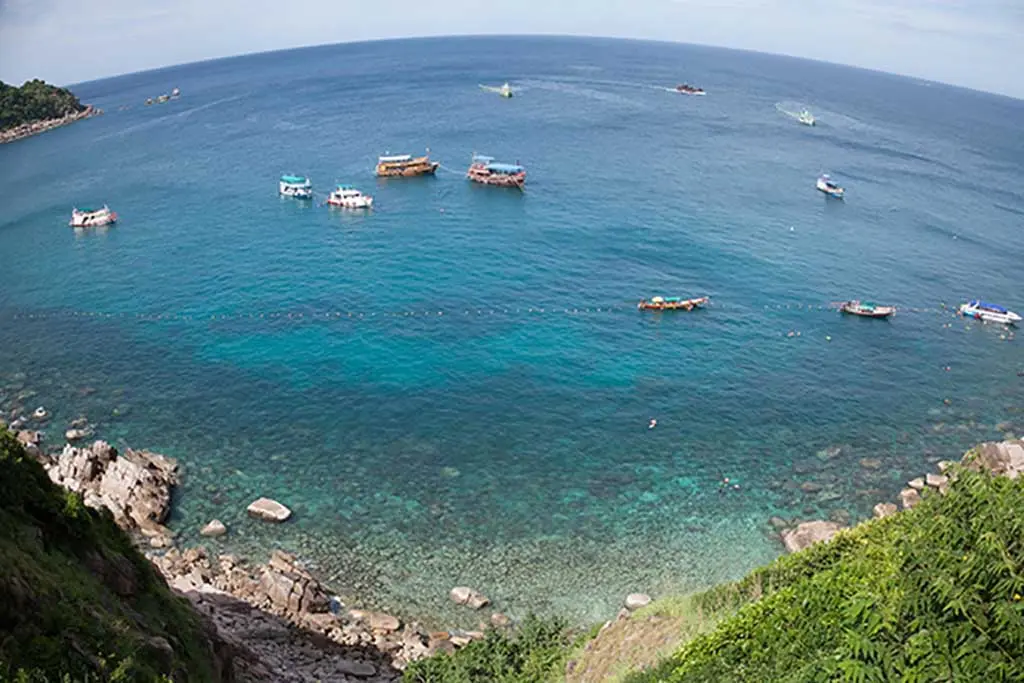
Divers are drawn to Ko Tao for its pristine marine environment, coral reefs, rich marine life, and frequent whale shark sightings, while other tourists come for its beautiful white sand beaches. Therefore, protecting the island's fragile marine environment is of paramount importance.
The Thai government is contributing to the promotion of ecotourism, but the real work is being done by the tour operators themselves at the local level.
Together, the private sector developed the “5Rs”, which are dedicated to reducing, reusing, repairing, recycling and rejecting:
Other informal groups include the "Save Ko Tao Club," whose work dates back to 2000. The club promotes environmentally friendly products and best practices, such as refillable bathroom items, energy-saving light bulbs, line drying, and the use of recycled wood in the construction and maintenance of the holiday villas. The club also collects and uses rainwater with a filtration system to provide drinking water from the tap, thereby reducing the number of plastic bottles brought to and used on Ko Tao.
"Trash Hero" is a community initiative on Koh Tao that aims to eliminate current litter and find ways to prevent waste in the future by promoting long-term behavioral changes. Visitors send an important message when they see the Trash Hero team cleaning Sairee Beach twice a week.
"Get Involved Ko Tao" is a community-based conservation initiative to protect Ko Tao's natural resources and environment. The dive centers have joined forces to organize monthly clean-up events, removing trash and encouraging locals and tourists to get involved and avoid using plastic straws, cups, and bags.
Ban's Conservation Learning Centre Ko Tao is another community-based conservation initiative – an environmentally friendly organization dedicated to preserving the island's natural resources. It operates a waste sorting facility for recycling paper, aluminum cans, bottles, and plastic, and also maintains a composting facility where grease residues are fermented into fertilizer by mixing them with grass and organic waste.
The center has a wastewater treatment plant that processes greywater so that it can be used for plants and vegetable gardens, and regularly holds workshops demonstrating simple craft techniques for recycling waste, such as making candles and liquid soap from recycled materials.
Divers are generally among the most environmentally conscious people in the world and know that responsible diving means avoiding any contact with plants and marine life. What would hardly occur to a responsible diver is to pollute the sea with items that should be brought ashore for proper disposal. Unfortunately, reality is different: trash and pollution are commonplace at many dive sites.
Whether it is due to irresponsible fishermen, passing tourists, or garbage deposited on the seabed – it is something that cannot be ignored or accepted in order to ensure the preservation of marine resources for future generations.
Thanks to these ongoing, community-based initiatives, the island's marine environment is hopefully well-equipped to handle future generations of environmentally conscious divers and tourists.




Community
Comments 0
Start the conversation.