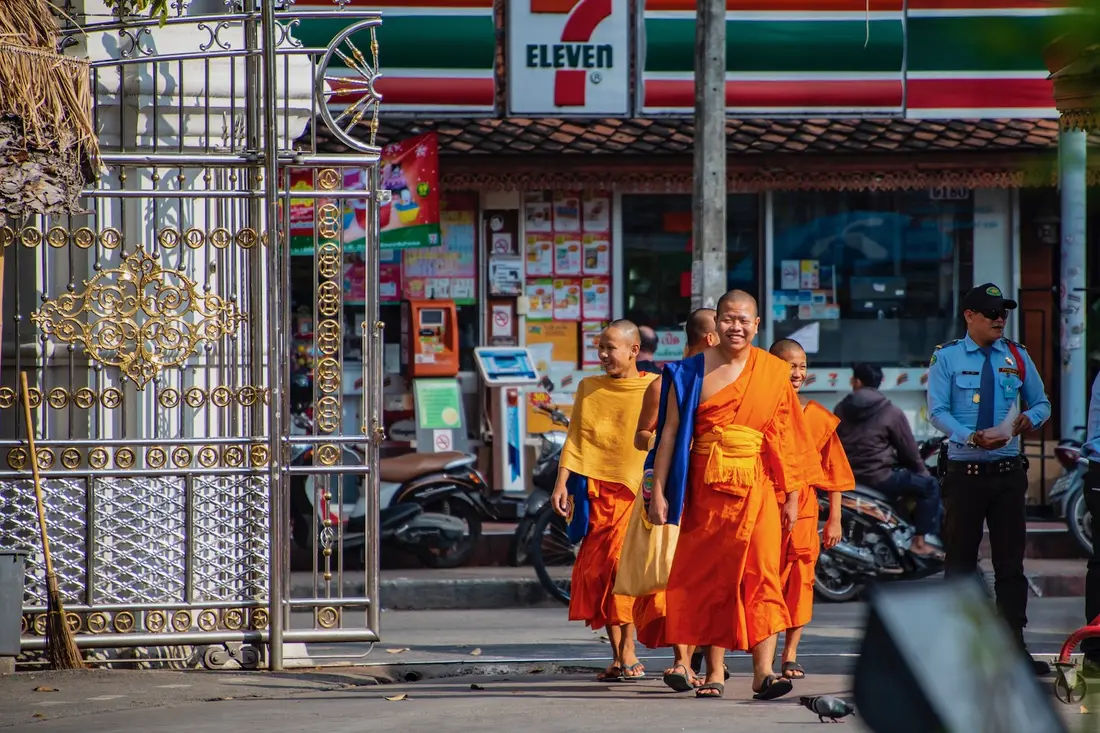
I first visited Chiang Mai in 2012, but didn't write my first Chiang Mai travel guide until many years later. The simple reason? To be honest, I didn't particularly like central Thailand.
At least not initially. It took several visits, and quite deliberate ones at that. My affection for the city suffered a major setback only recently, when I traveled here during the annual lantern festival, Loy Krathong. More on that in a moment!
My love for Chiang Mai is deeply personal, but it has allowed me to speak more general truths about the capital of the former Lanna Kingdom in Thailand. Over the past decade and a half, I have amassed more than enough knowledge to help you put together a specific Chiang Mai itinerary.
Accommodation in Chiang Mai
Before I go into the details of my trip to Chiang Mai, I'd like to briefly discuss accommodations in the city. Generally, I prefer hotels within the old city walls; boutique hotels are more my style than large hotel chains. In this regard, I can recommend, for example, the 99 The Heritage Hotel and the Pingviman Hotel. I also like the iLanna House, even though it's located on the western edge of the city wall.
Many of the more luxurious hotels in Chiang Mai are indeed located a bit outside the city center. The Siripanna Villa Resort, for example, is situated on the east bank of the Ping River, about a 15-minute walk from Chiang Mai's night bazaar. This is perfectly pleasant—it's a quiet and luxurious place to stay—but not as centrally located as the other hotels I've mentioned.
TIP: No matter where you live in Chiang Mai, a scooter can make your life easier, provided you have a driver's license and some riding experience. You can rent a scooter completely online – and in just a few minutes – through CityGlide, who will also deliver it to you anywhere in Chiang Mai.
The best things to do in Chiang Mai
Lose yourself in the old town
Chiang Mai boasts as many temples as it does fantastic local specialties – more on that later. However, once you enter the old city walls (assuming you're not staying within them), there are a few sights you should definitely make a mental note of: Wat Phra Singh, whose golden stupa is arguably the city's most famous landmark. Wat Chedi Luang, on the other hand, is so impressive precisely because of its partially ruined state. Another of my favorite temples in Chiang Mai is Wat Phra That Doi Suthep, perched atop the mountain of the same name, west of the city.
Discover Lanna's cuisine
Food is an essential part of any trip to Chiang Mai, no matter your preferences. If you're not visiting the Chiang Mai Night Bazaar (or Sunday Walking Street on weekends) to sample authentic northern Thai-style Khao Soi, you can grab a seat at one of the many restaurants. Since the eateries and cafes here open and close so frequently and quickly, I usually recommend looking around on the street to find the best place – Google Maps is notoriously unreliable. In any case, Chiang Mai is the perfect place to discover fantastic Thai food.
Elephants enjoy themselves (but in an ethical way)
When searching for a Chiang Mai travel guide online, you might wonder if some of the city's elephant camps are ethically questionable. Elephant Nature Park is not only a place where elephant rides are prohibited, but also a licensed rehabilitation center. Visitors here must (mostly) keep their distance from the elephants being nursed back to health by trained professionals. Whether you choose this location or another in the Mae Rim district, nature is best enjoyed from a distance!
Visit Thailand's highest peak
If a visit to Doi Suthep (which, let's be honest, is quite high!) doesn't provide enough altitude for your Chiang Mai trip, you should consider an excursion to even higher elevations. More specifically, to Doi Inthanon, the highest mountain in Thailand. While it takes a lot of luck to be up there on a truly cold day, the King and Queen Pagodas (an absolute must-see on any Doi Inthanon tour) are always worth a visit. You'll also likely visit waterfalls near Chiang Mai, including Namtok Mae Ya and the famous "sticky" Namtok Bua Tong waterfall.
TIP: If you really want to delve deep into the nature of northern Thailand, consider a trip from Chiang Mai to the rural province of Mae Hong Son or even further afield to Lampang, Phayao or Nan.
Come to Loy Krathong and Yi Peng
A visit to Chiang Mai for the Loy Krathong and Yi Peng lantern festivals, held throughout Thailand every November, is not for the faint of heart. You have to book your hotel weeks or even months in advance and be prepared for almost apocalyptic crowds. But there's nothing quite like the experience of seeing the lanterns float on the water (during Loy Krathong) or rise into the sky (during Yi Peng). An absolute must on any trip to Thailand!
How many days does it take to visit Chiang Mai?
The question of how many days to spend in Chiang Mai is controversial – many tourists (myself included, as mentioned) don't stay long enough; some (the thousands of expats who live here) have probably already grown weary. In reality, one has to find a healthy middle ground. To do this, one must first understand a fundamental fact: Chiang Mai is both a destination in its own right and an ideal base for exploring the province of the same name.
In this sense, while you can see everything within the old city (and even the immediate surrounding area) in a day or two, exploring the larger yangwat (districts) requires considerably more time – especially if you don't have your own vehicle and are dependent on a rental car with a driver (or, heaven forbid, public transport). Not to mention the onward journey north to Chiang Rai, which, although often lumped together with Chiang Mai, is a completely separate destination.
More frequently asked questions about visiting Chiang Mai
When should you avoid Chiang Mai?
In my opinion, there's no bad time of year to visit Chiang Mai – each has its own charm. However, most travelers avoid the hot months of April (at least after the Songkran festival) and May, the rainy season between roughly June and October, and the increasingly heavy smog season from about mid-December to early March.
Is Chiang Mai worth a visit?
Chiang Mai is absolutely worth a visit! Even though the old city (and its sights) can quickly become overrun with tourists, don't let that put you off. Attractions in the surrounding area, such as Doi Suthep Temple and the mountains of Doi Inthanon and Doi Luang, offer lush landscapes and a relaxing atmosphere. Furthermore, Chiang Mai is the ideal starting point for an ethically sourced elephant trek on your next trip to Thailand.
When is the best time to travel to Chiang Mai?
The best time to visit Chiang Mai is during the dry, cool months between November and March. November, with its annual lantern festival Loy Krathong, is a particularly special month to visit. If you travel in December or January, you can still experience genuinely cold weather in the mountains surrounding Chiang Mai, where a Southeast Asian cherry tree species blossoms in late January or early February. However, keep in mind that in recent years, the cooler season has coincided with an increasingly heavy smog period.
Conclusion
Some of you have come to this page to create a complete Chiang Mai itinerary – I hope you leave with a fantastic plan for your trip. For others, this Chiang Mai guide offers insights and inspiration, whether for exploring the temples of the Old City, discovering rural attractions like the pagodas of Doi Inthanon and the elephant sanctuaries of Mae Rim, or continuing your journey to Mae Hong Son, Lampang, and beyond. Need personalized assistance in incorporating Chiang Mai into your Thailand trip? Request your tailor-made Thailand itinerary today!




Community
Comments 0
Start the conversation.