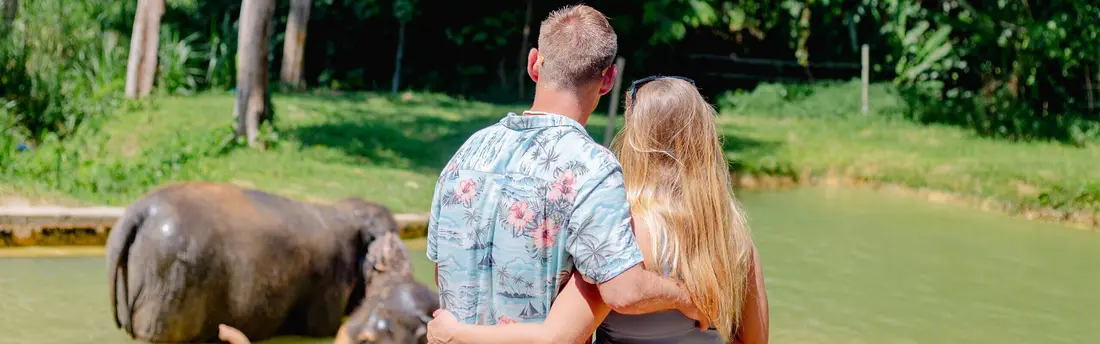
In Chiang Mai there are more than 50 elephant sanctuaries, many of them with similar names, similar promises and very similar opening hours.
Almost every place describes itself as "ethical" or as a "safe haven," which makes it surprisingly difficult to understand what really goes on behind the scenes and which places are worth your time.
Our team in Chiang Mai visited over 20 elephant sanctuaries. I personally visited nine of them, including the three I recommend below.
That's how I would proceed.
Short answer: The three I would recommend
Of the more than 20 elephant sanctuaries our team visited in Chiang Mai, these are the three I would recommend for different types of travelers:
All three forgo elephant riding and staged shows, but offer very different experiences.
What we pay attention to when visiting an elephant sanctuary
During our visits, we focus on two things: how elephants are treated and what experiences travelers have.
These are the five things we pay attention to:
Which excluded most of them
After visiting over 20 elephant sanctuaries, I kept noticing the same problems. These were the main reasons why some of these places didn't make my list.
Three elephant sanctuaries I would recommend
1. Elephant Nature Park: For travelers who want to learn and observe
The Elephant Nature Park is the most famous elephant sanctuary in the Chiang Mai area and also one of the largest.
The park is home to over 100 rescued elephants and other rescued animals. It offers half-day and full-day visits, overnight stays, and longer volunteer programs.
After my visit to the Elephant Nature Park, I particularly remember their restrained approach.
Elephant riding is not offered, and bathing the elephants is not part of the experience. If you wish to interact with the animals, feeding them is the primary activity.
And for those who want to experience the observation even more intensely, they can try the SkyWalk and observe the elephants from above.
The downside is that it's very popular. So if you're picturing a secluded mountain retreat with only a handful of people, this probably isn't the right experience for you.
2. Kanta Elephant Sanctuary: For travelers who want more interaction
Kanta is quite different from Elephant Nature Park. Activities include feeding, walks with elephants, and bathing. It's better suited for travelers who want a more intimate encounter with the animals.
Some travelers, especially families with children, don't just want to watch from afar.
I don't believe the solution is to avoid all contact. Instead, I prefer to recommend places where I've personally experienced the program and where I feel comfortable with how it's handled.
Therefore, Kanta remains on my list.
In Kanta, you first prepare food such as bananas, sugar cane, and herbal vitamin balls before meeting the elephants. Afterwards, you feed them, walk with them through the forest, and bathe them.
Feeding them was interesting. The elephants quickly realized I had food with me. Before I knew it, a trunk had politely but very confidently extended over my bag to see what was inside.
When I offered them a long piece of sugar cane, I was surprised to see them break it into smaller pieces themselves before eating it.
Another highlight was the walk alongside them through the grassy landscape – peaceful, leisurely.
3. ChangChill Elephant Sanctuary: For travelers seeking a quiet, undisturbed experience
ChangChill is the most unusual of the three. It's the reserve I would recommend to travelers who are comfortable with the idea that elephant watching can be the main focus of their entire experience.
Only four female elephants live there, in a wooded area in the hills.
Unlike many elephant experiences where visitors walk directly towards the elephants, ChangChill asks visitors to walk more slowly and look for the elephants in the forest.
During our visit, we hiked along the paths on the hillside in search of the elephants. They were somewhere among the trees, moving about in their natural habitat.
There is no direct hand-feeding or bathing of the elephants. Instead, we help prepare their food, which includes corn, sugar cane, grass, and bananas, and then fill it into feeding tubes.
We simply sit on the viewing platform and watch the elephants come out of the forest, slowly walk down the slope, some even running down it.
What I also appreciate about ChangChill is the atmosphere.
Many elephant experiences feel hectic, as visitors rush from one activity to the next. On my visit, the afternoon group consisted of only three people. The elephants had plenty of space, and so did we.
The downside is that the forest paths are hilly and can become muddy after rain. If you have limited mobility or prefer direct access to elephants, this might not be the right choice.
But for those who prefer a more relaxed pace and want to observe elephants, ChangChill offers something completely different.
For a more immersive experience: The Chiang Mai Bush Camp
Most travelers visit an elephant sanctuary for half a day. They arrive, participate in the program, and then leave again.
If you have enough time in Chiang Mai, I would recommend staying overnight. This way you can experience the sanctuary when there are fewer visitors and spend more time observing the elephants.
The Chiang Mai Bush Camp is the accommodation option I would recommend. It has ten safari tents and ten elephants, and there are no day visits. This creates a much quieter atmosphere for both guests and elephants.
During your stay you will have more time to feed and observe the elephants, and can participate in activities such as making elephant dung paper, peeling rice and cooking traditional northern Thai dishes with the Karen community.
I visited the camp in early September 2024 and was thrilled. Only six guests shared the experience with ten elephants. I had never experienced anything like it in any other elephant sanctuary.
The accommodation was another highlight. The safari tents offered a unique experience surrounded by nature. When I showed my friends the photos, they actually thought I had been to Kenya.
If you are looking for an even quieter experience, you should consider the off-season months (April to May and September to October).
Things to know before booking
1. How much time should you allow?
A half-day visit is usually sufficient to get to know elephants, learn their stories, and observe them. A full-day excursion is recommended if you prefer a more relaxed pace and would like to spend more time with the elephants.
In many sanctuaries, the additional time allows you to participate in more elephant care activities, such as preparing special food, making herbal remedies, or learning more about daily elephant care.
2. When is the best time to travel?
Having visited at different times of the year, I would recommend the off-season. Personally, I enjoyed my visit in September more than expected. The fewer visitors and the greener surroundings made for a much more relaxed experience.
The most pleasant time of year is from November to February, however this is also the peak season, so popular nature reserves can quickly become fully booked.
From March to May it is warmer, but the crowds are usually smaller.
The months of June to October are often overlooked. The forest is greener, prices are often lower, and the atmosphere is quieter, although rain and muddy paths are possible.
3. Traveling with children?
Most elephant sanctuaries welcome families, but the best choice depends on your child's personality. If your children want more interaction, a place like Kanta might be more suitable.
For children who like animals and can spend more time observing them, ChangChill offers a calmer experience.
For younger children, it's important to note that a visit to an animal shelter usually involves a long journey, time outdoors, and several hours of activities. A shorter program might therefore sometimes be a better choice.
4. Do I need to book in advance?
Yes. Two to three days is the practical minimum, and during the peak season from November to February you should book four to six weeks in advance.
Are you planning a trip to Chiang Mai that includes an elephant experience?
Tell us who is traveling and when, and we will help you choose an elephant experience that suits your travel style, whether you prefer to learn and observe, seek closer contact, or prefer a more distanced experience.




Community
Comments 0
Start the conversation.