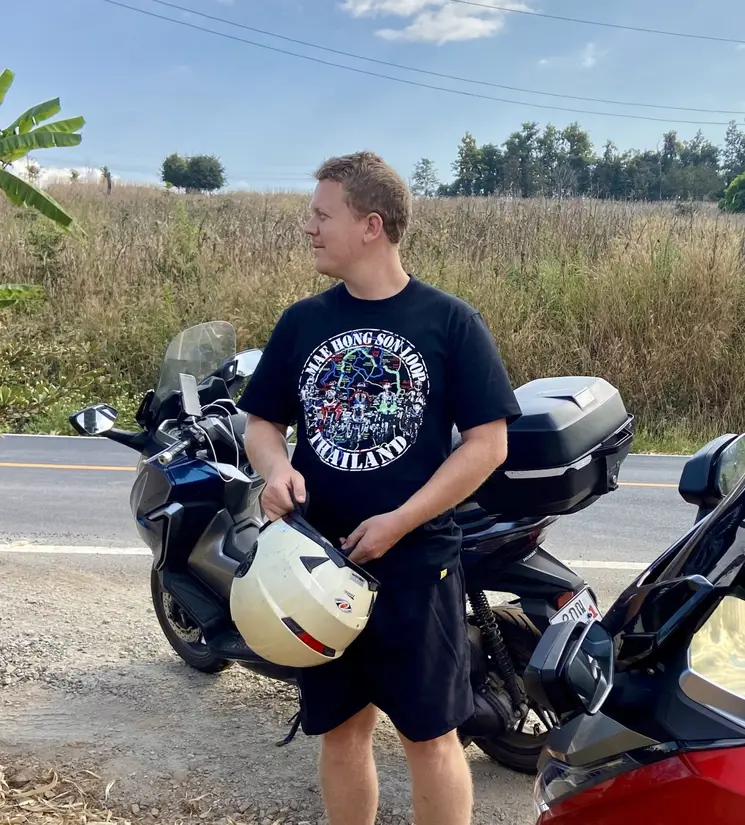
We've done several motorcycle tours in Southeast Asia, but nothing compares to the Mae Hong Son tour. This 600-kilometer tour starts and ends in Chiang Mai and leads through the unusual mountain landscapes of northern Thailand – with countless hairpin bends, mist-shrouded valleys, remote villages, and cultural treasures to discover along the way.
Some travelers prefer a leisurely pace and need 7–10 days for the tour, but most find that 5 days is perfectly sufficient. There are various side trips to choose from, allowing you to customize your trip. That's exactly what we did on our Mae Hong Son tour, selecting destinations we were particularly keen to see, such as Pai, Ban Rak Thai, and Doi Inthanon.
The more traditional route runs clockwise, first south to Mae Sariang and then in a loop via Mae Hong Son and Pai back to Chiang Mai. For many, this route makes the most logistical sense, as the drive gradually becomes more challenging. We, however, chose the counter-clockwise route, starting with a bang in Pai and tackling the 762 curves of the mountain pass Highway 1095.
The Mae Hong Son circuit has over 1,800 curves to navigate, some gentle, others tricky switchbacks. That might sound daunting, but the roads are in excellent condition. As long as you maintain a safe distance, are patient when overtaking, and take regular breaks, you'll enjoy a very pleasant drive.
Map of our Mae Hong Son tour
Mae Hong Son Circular Trail: The perfect 5-day plan
Day 1: From Chiang Mai to Pai (The 762 Curves)
Like all our adventures in Mae Hong Son, our trip to Chiang Mai began with a few days of relaxation and – most importantly – preparing our motorcycles. We checked out several rental companies and finally opted for a small, local operator called Toon's Bike Rental & Tours (who were great, by the way). We chose two 300cc automatic motorcycles, as Cam's parents were coming along, and booked four nights' accommodation in advance: two nights in Pai, one night just outside Ban Rak Thai, and another in the Mae Chaem district.
It's worth spending at least two or three nights in Chiang Mai before embarking on the Mae Hong Son tour, as this city is simply incredible – definitely one of our favorite places in Thailand. Once you've arranged a motorbike and packed your bags, leave the city limits on Highway 107 and then turn onto the legendary Highway 1095. Keep in mind that the city is quite spread out, and you can encounter traffic jams on the outskirts. However, if you set off early in the morning, you should have a clear run.
Before you know it, the cityscape transforms into a tranquil landscape and the climb begins. Then you reach Highway 1095 – a real baptism of fire. Trucks hurtle wide around the curves, motorcycles overtake incessantly, and cars whiz past. The 762 curves demanded so much concentration that we had to take a long break at the top. But as soon as we started descending, everything changed. The traffic almost completely disappeared, the road opened up, the Pai Valley appeared before us, and it actually felt like skiing in powder snow (and not on ice).
The route from Chiang Mai to Pai is only 130 kilometers, but depending on how many breaks you take, the drive can easily take four to five hours. And stopping is definitely worthwhile, as there are some stunning viewpoints along the way. We arrived in Pai somewhat exhausted but full of adrenaline, knowing that we had just conquered one of Thailand's most legendary roads.
762 curves of the motorway 1095
Once we reach the top, we stretch our legs.
Day 2: Spend the whole day in Pai
Pai was a wonderful place for a two-day stay. On our day off, Cam decided to stretch his legs and burn some calories after indulging in delicious Thai food. He discovered a hike to Mae Yen Waterfall, which looked quite impressive. The hike was supposed to take two hours each way, but after two hours of trekking through the jungle and crossing the river several times, we still had two hours left.
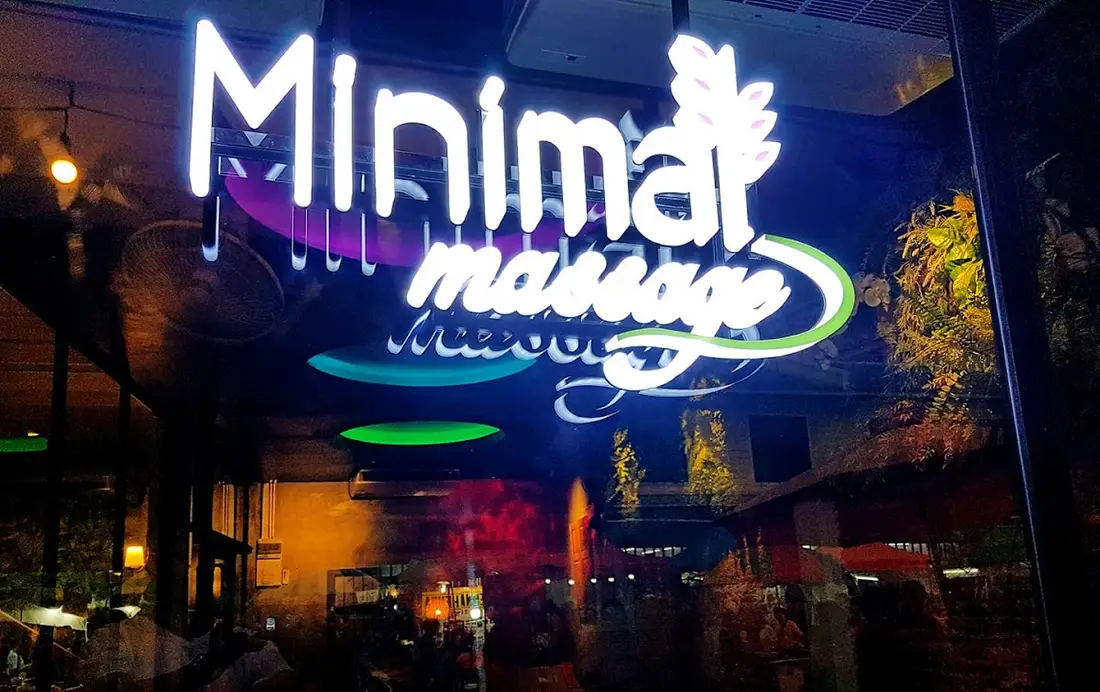
So we all decided to turn back. The information online underestimates the duration of this waterfall hike, and in hindsight, we wish we had visited Pai Canyon instead. Nevertheless, we enjoyed the evening in Pai: we had a delicious meal, got massages, and soaked up the relaxed atmosphere. After all, Pai is known for its alternative, unconventional charm.
Pai offers plenty of opportunities to relax. You can find excellent coffee, stroll along the rivers or rice paddies, sample the street food, and enjoy a drink in the quaint bars. If you're still feeling sore after your journey, you can treat yourself to something more relaxing, like yoga or a visit to the hot springs. We thoroughly enjoyed our stay at the Pai Smilehouse: a bungalow hotel with hammocks, friendly staff, and just a short walk (across a bamboo bridge) to the night market.
Day 3: Ban Rak Thai & Sang Poy Cottage
If you leave Pai early, you'll reach Ban Rak Thai in time for lunch. The road takes you northwest for a good two hours on Highway 1095 until you reach the turnoff for Route 4001 – a narrow section that takes about an hour to navigate by motorbike. The scenery on this slight detour is unique: you'll pass lush hills, tea plantations, and a few scattered settlements. Although the road is paved throughout, there are still some potholes on the way to Ban Rak Thai, so watch out for them.
Ban Rak Thai lies on a reservoir near the border with Myanmar and is known as a "Thai village"—a place founded by soldiers from Yunnan who sought refuge in Thailand during the communist takeover in China. Chinese influences are omnipresent here, from the mud houses and teahouses to the food and language. We spent the afternoon in Ban Rak Thai, enjoying a typical lunch, strolling around the lake, and taking photos. A day trip is recommended, as accommodation is very limited and often booked months in advance.
After a few hours in Ban Rak Thai, we drove back along Route 4001 and then took Route 1095 to Sang Poy Cottage, our accommodation for the third night of the Mae Hong Son tour. Sang Poy Cottage is a charming 4-star hotel nestled amidst rice paddies and rolling hills. The teak cottages are beautiful and offer a luxurious and comfortable stay before we continue our journey south.
Read more: Ban Rak Thai: Thailand's beautiful Chinese tea village
Day 4: Off the beaten track on Route 1263
Our fourth day began with breakfast at Sang Poy Cottage before we mentally prepared for our longest drive yet: over four hours to Mae Chaem. Those looking for a change of pace in the morning can first visit the Su Tong Pae Bridge, which is only a 15-minute walk from Sang Poy Cottage. Further south, this time on Highway 108, you reach Mae Hong Son, where you can take an early lunch break and browse the shops.
One shop worth visiting is Padonc Shop. It's run by a friendly local who sells small souvenirs for the Mae Hong Son tour, such as T-shirts and stickers. We all bought a few shirts, stickers, and gifts, and then drove to Khun Yuam. There, we turned onto Route 1263, thus skipping the southern road to Mae Sariang, which is part of the actual Mae Hong Son tour.
Since we wanted to spend two nights in Pai, we had to shorten our tour. We therefore decided to take the turnoff at Khun Yuam onto Route 1263, which led us east towards Mae Chaem and eventually to Doi Inthanon National Park and Chiang Mai. We didn't have high expectations for Route 1263, but it turned out to be one of the highlights of our trip. We drove past rice paddies, wide valleys, and traditional villages – on a section of the Mae Hong Son circuit that most travelers never see.
We spent our last night at the Ban Rai Jai Chaem Homestay in the Mae Chaem district. The drive there, along Highway 1088, was fantastic, but it wasn't until we were in bed that we truly realized how rural the area was. At 5 a.m., we were woken by a deafening cacophony of animal sounds: lizards, snails, frogs, birds, cats, cows, and roosters. At first, it was a bit annoying to lose a few hours of sleep. Then we all burst into laughter: we had never experienced so many animals making such a racket.
Mae Hong Son Loop T-Shirt
Ban Rai Jai Chaem Homestay
Day 5: Doi Inthanon and back to Chiang Mai
Before returning to Chiang Mai, we decided to visit one last attraction: Doi Inthanon, specifically the King and Queen Pagoda. We set off early in the morning, so there was still thick fog, which enhanced the mystical atmosphere of the temples. We eventually reached Highway 108 and drove another 100 kilometers to Chiang Mai. We were quite exhausted when we got back to the hotel, but the memories we had made were simply priceless. We spent a few more nights in Chiang Mai—enjoying good food, relaxing, and sightseeing—before flying back to Bangkok.
Relaxation back in Chiang Mai
Frequently asked questions about the Mae Hong Son loop
Are 5 days better than 4 days?
In our opinion, five days is significantly better than four, as it allows you to spend more time at each location instead of spending too much time on the motorbike. We aimed for a maximum of three to four hours of riding per day, which (keep in mind) is still quite a lot considering the concentration and effort required to navigate the winding roads. The more time you allow yourself, the more opportunity you'll have to discover waterfalls, indigenous villages, temples, markets, and the countless hidden gems of the Mae Hong Son circuit.
More information: Thailand's new visa regulations: How to stay for 60–90 days
How difficult is it to drive and is it safe?
The most challenging section of the Mae Hong Son loop is the mountain pass Highway 1095 from Chiang Mai to Pai, due to the traffic and numerous curves. Cam, who considers himself an advanced driver, had to concentrate intensely during the drive. Special attention must be paid to the trucks – helmets are essential, keep a safe distance, and only drive during daylight hours.
Do you need an international motorcycle license?
Strictly speaking, you need a motorcycle license and an international driving permit. However, rental companies rarely ask for these, and police checks are more common outside of Chiang Mai than on the main road itself. The biggest risk lies with insurance, as many providers will only insure you (in the event of an accident) with a motorcycle license. How you handle this is your responsibility, but we recommend adhering to the legal regulations. By the way: Film your motorcycle before setting off to avoid unjustified damage claims from the rental company.
Read more: 50 Thailand travel tips: What you should know before your trip
What should you pack for the Mae Hong Son tour?
We recommend staying at the same hotel in Chiang Mai before and after your Mae Hong Son tour so you can leave your main luggage there. This way, you'll only need a small day bag with the essentials and can store everything else in the bicycle's storage compartments. Generally speaking, pack as light as possible. However, for the cooler climate in Ban Rak Thai and Doi Inthanon National Park, you should pack a few jackets and sweaters.
When is the best time for the Mae Hong Son tour?
The best time for the Mae Hong Son loop is from early November to the end of January, during the cooler season in northern Thailand. During this time, you'll find clear skies, pleasant temperatures, and excellent visibility. We drove the route in December, and the weather was truly perfect. Surprisingly, the rainy season, also known as the "green season," is a good time to travel. The lush landscape makes the drive even more picturesque. However, you should avoid the slash-and-burn season (February to April): the smog is not only harmful to your health but also obscures the mountain views.
What is the absolute highlight of the Mae Hong Son tour?
For us, there's no doubt that the motorcycling itself is the highlight of the Mae Hong Son tour, and we don't just mean the scenery. It was the people we met along the way who made the trip so special – whether traditional villagers, owners of small roadside restaurants, or groups of Thai motorcyclists who clearly enjoyed exploring a part of their own country. Want more unique experiences in Northern Thailand? Then be sure to check out our Chiang Rai travel guide.
Community
Comments 0
Start the conversation.