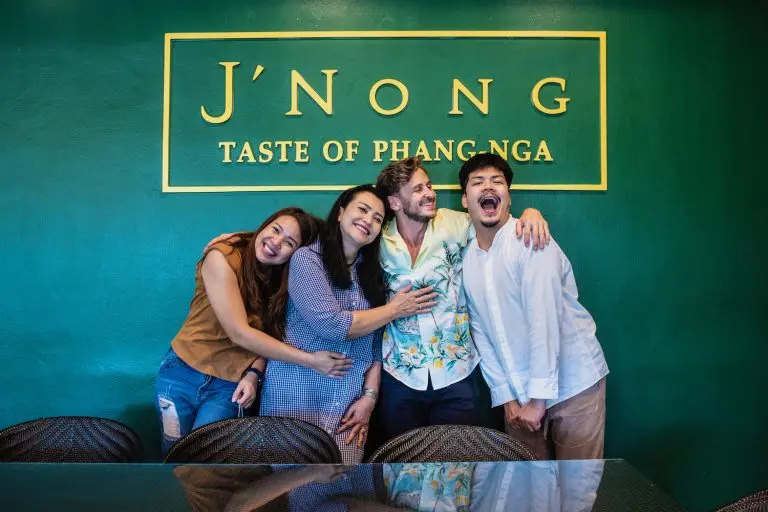
In Thailand, as in most other parts of the world, two things can be true at the same time. Thais speak very good English by Asian standards; it is also advisable to have some basic knowledge about Thailand, even if you are only traveling as a tourist.
Some aspects of this are quite practical. For example, speaking Thai allows you to negotiate prices more effectively and reduces the risk of being ripped off. This is especially useful when traveling off the beaten track, whether in lesser-known neighborhoods of Bangkok or from popular destinations like Chiang Mai and Phuket to more exotic locations like Lampang and Phang Nga.
Those who learn Thai as travelers earn a lot of respect and show their respect for the locals. Even if you can't speak fluently, Thais are unlikely to label you a mere farang (foreigner) (psst... that means "foreigner" and isn't always meant positively!).
Why it's important to learn Thai – even for tourists
Knowing a few basic Thai phrases isn't just a matter of politeness. It's also not essential: most Thais, especially those working in tourism, speak excellent English – so knowing a little Thai isn't a matter of life or death. Why waste precious time learning before your trip when there are so many other, more enjoyable things to do? You could, for example, play slots at Dafabet and relax with your favorite games.
Just because many Thais speak English doesn't mean it's always easy for them. Knowing how to ask about the price or spiciness of a dish in Thai can help you get the answer you want more easily and quickly – for both parties. While you probably won't have a good laugh without knowing Thai, it will make you less vulnerable to scams and other crimes.
The most important Thai words and expressions
Greetings
The most important word you can learn in Thai is Sawasdee (pronounced "a wa dee" or "sa wat dee"), which means "hello" (and sometimes "goodbye"). The second most important word? Ka or krab, depending on your gender (whether assigned or self-chosen). If you are a man or identify as such, you say sawasdee krab (or kub, as some Thai men say). Women, on the other hand, say sawasdee ka. In fact, you add the gendered particle of your choice to most words and phrases in Thai, including "thank you": Kob kun krab or kob kun ka.
Question words
While some simple Thai sentences require no knowledge of Thai grammar or the complex tones underlying the pronunciation of the language, for other sentences it is essential to be aware of these peculiarities. For example, when asking a question, you cannot simply use intonation in a certain way, as is common in most Western languages. You must use question words, the most basic of which is "mai" (pronounced like "my"). "Sa bai dee mai" means "How are you?" Other important question words are "arai" ("what"), "thiinai" ("where"), and "muarai" ("when").
Note: The word "mai" can also be used before a verb to express its negation. However, it is spelled differently and often pronounced differently as well: "May" instead of "My".
Eat
Besides "sawasdee" and "kob kun," the most useful Thai word is probably "aroi" or "aroy," which means "delicious." This is a simple phrase you can use—or, if you're really enthusiastic, "aroy mak mak," meaning "very tasty"—to express your satisfaction with a dish served to you. Other useful food-related words include "phet" (pronounced "pet"), meaning "spicy," and "wan," meaning "sweet." "Gai" means "chicken," "moo" means "pork," and "aahaan J" means "vegetarian," with "aahaan" meaning "food."
Shopping
Other important Thai travel phrases relate to spending money. The question word "thaorai" (pronounced "tao-rai") simply means "How much?", but can also be used on its own to ask about the price of a specific item. Saying "paeng," on the other hand, means you think it's expensive, which might prompt the seller to lower the price. Being able to state the desired amount—for example, "haa-seep" ("50") baht instead of "nung-roy" ("100") baht—increases the likelihood of this happening.
Weather
Thailand is ron (pronounced "rown") mak mak – it's very hot. During the summer months, you'll often hear "fon tok" or "fon ja tok," which means it's raining or will rain soon. In our language, we often dismiss such statements as nonsense, but knowing these Thai words can be very useful in other situations. For example, if you're staying in a cheap hostel on Khao San Road, you might need to inform reception that you don't have hot water ("mai mee nam ron").
Yes, you should learn the Thai alphabet.
Whether Thai, Japanese, or Chinese – the common opinion seems to be that mastering a language is paramount. While it's certainly more useful, I believe that learning the Thai alphabet is essential for speaking Thai correctly, if only because of the inconsistent (and often incorrect) transliterations of Thai words into English. Take a very common example: Phuket, which is pronounced "pu-ket" instead of looking like an "f".
Only by learning the Thai alphabet and understanding why Phuket is spelled with "ภ" instead of "ป" (or even "พ") can you grasp these and thousands of similar pronunciation peculiarities. Furthermore, once you have a good grasp of the Thai alphabet, you can read menus and other documents during your trip, not only understanding the information they contain but also learning new words and expressions from the context.
Other frequently asked questions about the Thai language
What does Jing Jing mean in Thai?
In Thai, "jing jing" means "really" when used as an adverb. "Pad Thai nii bpen jing jing aroy" means: "This Pad Thai is really delicious!" To ask if something is indeed the case, you use "jing mai" or "jing loh".
How long does it take to learn the basics of the Thai language?
While you might learn a few Thai phrases in the time it takes to read this post, it will take several weeks or months to become fluent. If you're serious about learning Thai, I recommend my post about living in Bangkok.
What does Aroi Mak Mak mean?
Aroi mak mak means "very delicious." You can add the phrase mak mak to any adjective to express the intensity of a quality. For example, Prathet Thai bpen ron mak mak means "Thailand is very hot." Another way to express this is Aroi jing jing, which literally means "really delicious!"
Conclusion
Investing a little effort in learning the Thai language will greatly enhance your travel experience, even if it's your first time in Thailand and you're only planning a short stay. On a short trip to popular destinations—for example, two weeks in Thailand—it will allow you to negotiate more effectively and avoid scams. On longer trips, a basic knowledge of Thai (phuut phaasaa) will open the door to discovering remote places off the beaten track, from Phang Nga in the south to the unique Isaan region in the northeast. Would you like personalized tips in addition to your new language skills? Book me to help you plan your Thailand trip.




Community
Comments 0
Start the conversation.