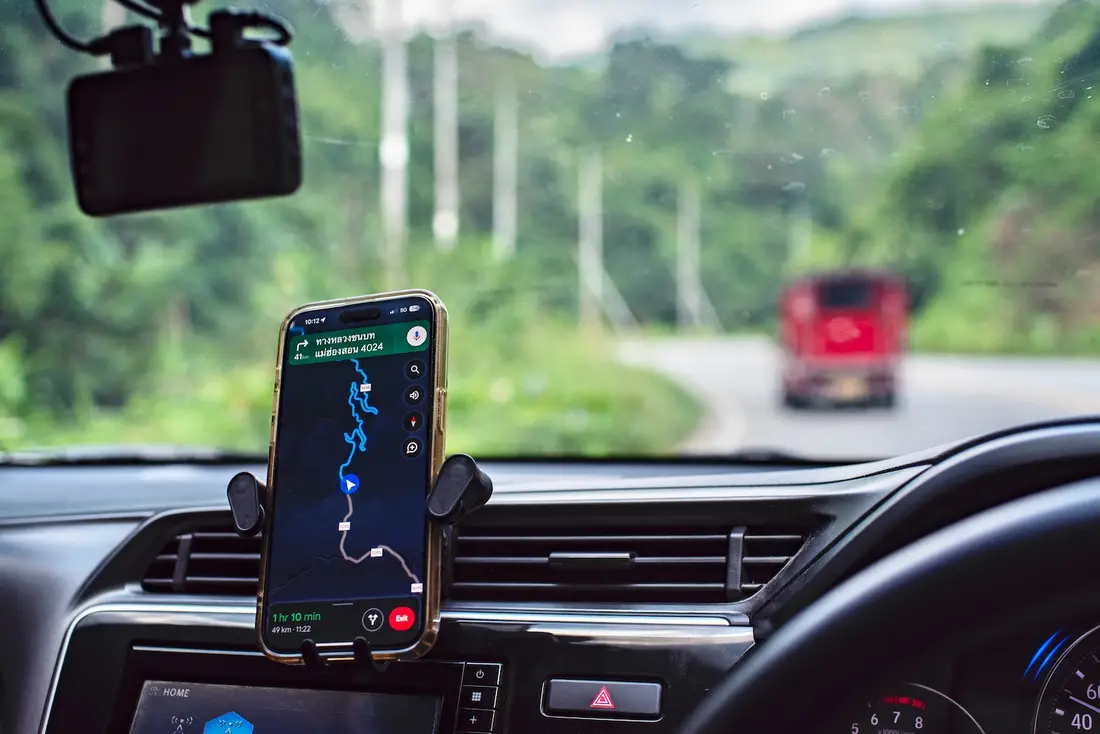
For a developing country, Thailand has a fairly good public transportation network, and it's relatively easy to negotiate prices for taxis and private rental cars. On most of my trips, getting around was never a major problem.
At the same time, I have sometimes experienced a deep sense of confinement while traveling. This is especially true when I am literally riding on the back of a stranger's motorbike on Koh Lanta or other islands.
I will never recommend renting a motorbike in Thailand unless you have considerable experience. However, I'm happy to share that I overcame my fear of driving in Thailand and would like to share my experience with you. (In short: It's not so bad!)
Why it took me over a decade to learn to drive in Thailand
Until I decided to do the Mae Hong Son tour, I'd never really considered renting a car in Thailand. Otherwise, I just managed on my own. On the islands, I hitched rides with people who could drive motorbikes. On the mainland, I either hired cars with drivers or made friends with people (and in some cases, relationships developed) who were traveling in their own cars. It wasn't perfect, but it worked.
I mean, until it simply became impossible – without a rental car, there was just no way for me to properly experience Mae Hong Son province. Honestly, I might not have even tried it a few years earlier. Renting vehicles in Thailand, whether cars or motorcycles, has historically been quite a risky business. Luckily, the agency in Chiang Mai that I used has made its entire process online; I'm sure others in Thailand have followed suit.
Fantastic travel destinations for a Thailand tour
Mae Hong Son
I had heard about the Mae Hong Son tour for almost 15 years before I did it myself, and I must say: it largely lives up to expectations! Although I wasn't a big fan of the hippie paradise of Pai, the towns of Mae Sariang (and the capital Mae Hong Son) left me speechless, whether I was paying my respects in Burmese temples or strolling through sunflower fields.
Isaan
The Isaan region is generally well-suited for self-drive tours in Thailand, as public transport is rather limited. Alternatively, you can undertake a round trip and combine cities like Udon Thani, Roi Et, Ubon Ratchathani, Mukdahan, and Nakhon Phanom (in that order). You can also rent a car at your destination and explore the surrounding area.
Kanchanaburi
Kanchanaburi is a popular destination for day trips or weekend getaways from Bangkok, primarily due to the Erawan Falls and World War II sites. However, with a rental car (either for the round trip from Bangkok or for exploring Kanchanaburi itself), you can discover much more. This includes attractions such as Wat Tham Suea temple and the Srinakarin Dam.
Chiang Rai
To be honest, I've explored the rural province of Chiang Rai many times and never thought of renting a car in Thailand. Nevertheless, I'll probably do it next time, because a car opens up countless possibilities. Aside from the Golden Triangle, having your own vehicle allows you to discover the rural idyll of the province, including coffee plantations like Doi Chaang.
Phang Nga
My trips to the underrated Phang Nga have been somewhat spoiled so far, as a very good friend of mine lives in Kalai. Whether you're exploring the pristine coasts of Khao Lak, visiting the Khok Kloi market, or enjoying the sunrise from the Samet Nangshe viewpoint – a car is almost essential in this province. Khao Sok National Park (which, strictly speaking, is in Surat Thani, but that doesn't matter) is also easily accessible by car from Phang Nga.
Why I will never ride a motorcycle in Thailand
Several months ago (as I write this – it's December 2024), a woman contacted me with what I consider a disturbing message. Her son had died in a motorcycle accident in Thailand; although I doubt he had ever visited my website, she seemed to blame me for his death. Knowing she was blaming me out of grief, and not wanting to upset her further, I didn't reply.
Had I responded, my answer would have been simple: I have never recommended that foreign tourists rent or ride motorcycles in Thailand. Quite the opposite. Almost every foreigner I know who has rented a motorcycle in Thailand has had an accident. You're better off renting a car in Thailand, but don't ride a motorcycle—unless you're a passenger with an experienced and sober driver.
More frequently asked questions about driving in Thailand
Is driving difficult in Thailand?
Driving in Thailand is surprisingly easy – at least outside the major cities, where traffic is a nightmare. On highways and in rural areas, however, it's like North America or Europe: well-maintained roads, little police presence, and mostly considerate (but not aggressive) fellow drivers.
Is driving safe in Thailand?
Driving in Thailand felt safe to me, but the statistics paint a different picture: In Thailand, almost 26 people die in road accidents every year, per 100,000 inhabitants. By comparison, this figure is 12.8 in the USA, 4.5 in Australia, and only 2.6 in the UK. In fact, in 2023, Thailand ranked 15th worldwide in the statistics for road deaths per 100,000 inhabitants, behind only a few African countries.
Can US citizens rent a car in Thailand?
US citizens can easily rent a car in Thailand. Larger companies may require an International Driving Permit (IDP), while smaller providers usually only need a driver's license from the US. Paradoxically, many rental car companies in Thailand neither accept nor require credit cards, preferring cash payments instead.
Conclusion
I recently overcame my fear of driving in Thailand – and wish I'd done it sooner. Having your own vehicle makes traveling outside of Thailand's major cities much easier and, frankly, much more enjoyable. However, let me clarify what I mean by "vehicle": In most cases, I'm referring to a rental car. Motorcycling in Thailand should only be considered by extremely experienced riders; otherwise, it's extremely dangerous. Need help planning your Thailand tour, whether to Mae Hong Son, Isaan, or elsewhere? Request your personalized Thailand itinerary today!
Community
Comments 0
Start the conversation.