Nestled in the mountain jungles of northern Thailand, near the borders of Laos and Myanmar, lies Chiang Rai, the smaller, less glamorous sister city of the more famous Chiang Mai. Largely overlooked by international tourists, it has developed more slowly. Julie Miller presents five hidden, sustainable treasures of Chiang Rai.
With its ethnic diversity, natural wonders, beautiful temples and rich culture untouched by mass tourism, Chiang Rai has truly become something special and is leading a new wave of sustainable and ecological tourism practices, serving as a beacon for the future of global travel.
Here are five hidden gems and exciting initiatives that highlight the best of northern Lanna culture and its connection to the land:
1. Elephant Livestream
The Golden Triangle Asian Elephant Foundation (GTAEF) in the Anantara Golden Triangle has been a pioneer in ethical elephant husbandry for over a decade. Their camp, where mahouts and elephants live together in a safe, peaceful, and natural environment, is considered a model of sustainability. When the COVID-19 crisis prevented tourist visits, GTAEF responded by bringing the elephants to their many fans via livestream. The footage, showing the elephants playing, eating, and bathing in the river, is absolutely enchanting and captivating. Contributions from local veterinarians and experts add an informative dimension to the livestream. The livestream not only delights elephant lovers but also encourages viewers to donate to endangered elephants.
2. Phu Chaisai Mountain Resort
This enchanting boutique resort, owned by a Thai designer of royal lineage, is nestled amidst the mist-shrouded mountains of Mae Salong on a 323-hectare estate, inviting guests to immerse themselves in nature. Wellness and lifestyle blend seamlessly here to create a luxurious holiday experience. Living organically and sustainably is our priority: the resort boasts its own reservoir, a spring-fed waterfall, a tea plantation, orchards, and farmland. The restaurant uses fresh vegetables and herbs sourced directly from its own kitchen garden. Activities include trekking, horseback riding on Mongolian horses at a neighboring farm, private yoga sessions, and a spa.
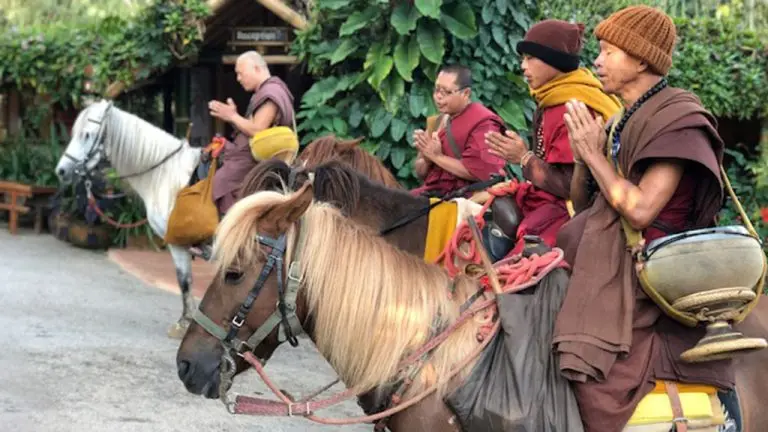
3. Monks on horseback:
Horses arrived in the Golden Triangle from China during the infamous drug-trafficking years, and their sturdy descendants are now used not only for tourist rides (see above) but are also the preferred mount of local monks who ride to the villages each morning to collect alms. The temple where these monks live, Wat Tam Pa Ar-cha Thong (Monastery of the Golden Horse), is perched high in steep, remote hills. The orange-robed monks and novices also ride down to the Phu Chaisai Resort each morning to bestow their blessings upon the guests.
4. Doi Tung
Doi Tung, the most famous of the Princess Mother's royal projects, was established in 1988 to provide alternative employment opportunities for ethnic minorities forced into the illegal drug trade, to empower villagers to bring about change, and to restore the damaged environment. The result is a beautiful area: 15,000 hectares of landscaped gardens, coffee plantations, reforested woodlands, and craft workshops, at the heart of which is the Princess Mother's teakwood villa, which today tells the story of the project. Thirty years after the program began, Doi Tung is now a model of sustainability with the motto "Zero Landfill Waste," led by a new generation of local leaders.
5. Jinnaluck
Jinnaluck is a thriving, family-run business that produces and exports high-quality paper products for both the local and international markets. Founded over 25 years ago as a small backyard project, it now employs more than 160 local people and handles all aspects of paper production – from raw material cultivation and papermaking to design and distribution. The company is one of the largest producers of mulberry paper (Saa paper) in Thailand and offers over 3,000 handcrafted products, including business cards, carrier bags, gift wrap, wallpaper, and even gold-infused face masks – available at its showroom near Mae Sai. Visitors can also participate in a papermaking workshop – a memorable and enriching travel experience.




Community
Comments 0
Start the conversation.