A travel guide for Pai, Mae Hong Son
Pai in Mae Hong Son province began to gain recognition as a small, scenic town in the late 1990s, when the thousands of curves on the road from Chiang Mai posed a challenge and often frightened people with travel sickness, as road conditions were worse than they are today.
But it was precisely its irresistible charm as a charismatic, compact city in the valley, coupled with cultural dominance and natural splendor, that helped this jewel of a travel destination achieve its stardom and a firm place on the international travel map.
Arrival
By plane: The closest airport to Phang Nga province is Phuket International Airport. Local airlines offer daily flights between Bangkok and Phuket. From the airport, you can rent a car or book a private transfer to your beach destination in Phang Nga. Natai Beach is just a 30-minute drive north of the airport, while the northernmost beach, Bang Sak, is about a 90-minute drive away.
locomotion
Activities in Pai, Mae Hong Son
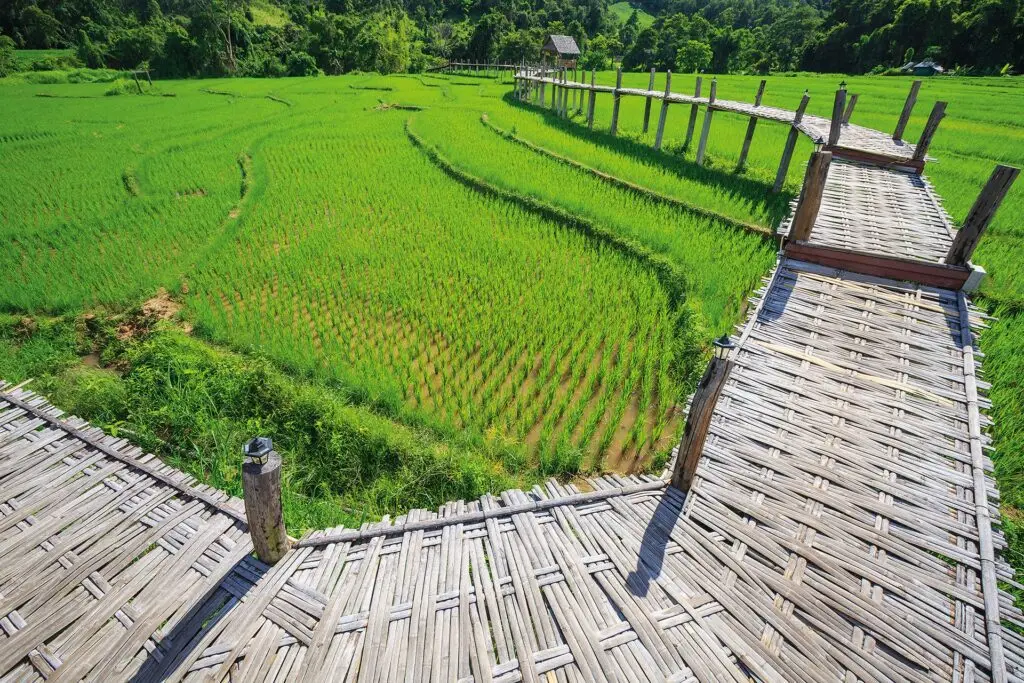
Kho-Ku-So, also known as the "Bridge of Merit," is a testament to the deep Buddhist faith of the villagers of Ban Paem Bok. Most of them are farmers of the Tai Yai tribe, and in 2016 they built this bamboo walkway together. It winds through their rice paddies and shortens the route for the monks on their morning alms rounds between the nearby temple and the village. It has thus become a new landmark of Pai. Previously, the monks had to walk six kilometers from the temple to the village.
A walk across the bridge takes you through various sections of rice paddies, with mountains stretching as far as the eye can see – a true delight. If you visit early in the morning, you can watch monks reverently crossing the bridge, while a long line of villagers waits to place their alms in the bowls. If you have something to eat, feel free to join the locals. Yoga and other activities are often offered as well. Stopping at the café to relax with a drink and gaze out over the verdant fields before continuing your journey is a good idea.
The Kho Ku So Bamboo Bridge is located 11 kilometers southwest of Pai, a short drive from the town center, on the same road that leads to Pam Bok Waterfall. There is a small fee (20 baht) to cross the bridge. If you wish to witness or participate in the daily morning alms offering, you should arrive before 6:00 AM. Otherwise, the bridge is open to visitors throughout the day.
Contact the local tourism community of Ban Pam Bok at (+66) 63 123 9022 to find out more about the activities they organize and to make sure you don't miss any of your planned activities.
Pam Bok Village is one of the most fascinating communities in Mae Hong Son, successfully blending tourism and local life in a harmonious and sustainable way, benefiting the villagers. Staying overnight with a local family offers the opportunity to extend your stay and enjoy the breathtaking, clear blue skies during the day and the sparkling starry night sky. The cost is only 150 Baht per person (meals not included).
Many visitors appreciate the opportunity to experience something new firsthand. At the Kho Ku So Bridge, you can learn about the art of rice cultivation. It's best to plan your visit during the growing season or at the latest in November, when the rice paddies are green and ready for harvest, so you can even try your hand at being a farmer in the fields.
Contact the local tourism authority of Ban Pam Bok at (+66) 63 123 9022 or call (+66) 95 189 7082 to inquire about accommodation, a campsite and trekking tours.
Pai, blessed with numerous thermal springs, is one of the best spa towns to relax in warm, crystal-clear waters, especially during the cooler months. Whether you choose a public or budget-friendly spring, or a luxurious thermal bath with a private whirlpool, your muscles will thank you.
If you can't decide where to go, visit Ta Pai Hot Spring, the most popular hot spring, about 8 kilometers south of Pai's town center and not far from Pai Canyon. Besides various pools with water temperatures ranging from 34 to 38°C, you can walk to the spring on an easy trail in the park. The water is warm enough to boil eggs, as the locals love to do. Bring your own eggs if you want to try it yourself.
The Ta Pai hot spring is open daily from 7:00 AM to 6:00 PM. Entry costs 300 baht for foreigners. Compared to other privately run hot springs, the facility appears rather basic, but the price is affordable and the simple service is satisfactory.
Pai Canyon (Kong Lan in Thai) attracts countless visitors daily, making it one of the most popular attractions in this small town. This unique area was formed by decades of continuous erosion. Although the canyon isn't as large as many imagine, the geological formation captivates with its spectacular grandeur and breathtaking views. It's also spacious enough to easily find a quiet spot to linger and enjoy the scenery. The area's geological magic and the impressive 360° panorama make Kong Lan one of the most beautiful places to watch the sunset – but sunrise here is equally unforgettable.
Pai Canyon is an incredible place with unique landscapes waiting to be explored. It's easily accessible; from the parking lot, it's just a 5-minute walk to the summit, which is usually very crowded before sunset. Adventurous tourists often explore the many different trails. A hike through the canyon takes no more than a couple of hours. Since there are no railings, caution is advised, as the trails vary greatly in width and steepness. Only those with sure footing and no fear should venture onto the narrow, winding canyon path, which drops dozens of meters on both sides. If you are unsure, stay away from the edge.
Pai Canyon is located 8 kilometers south of Pai on Highway 1095, not far from the Pai Memorial Bridge. Admission is free. The best time to visit is 5:30 p.m. to enjoy the sunset. During the colder months, the sun usually sets early, before 6:00 p.m.
If not in Pai Canyon, then Wat Phra That Mae Yen, with its enormous White Buddha, is the ideal spot to enjoy the sunset. It has become an absolute must-see in Pai. Mae Yen is a small, tranquil temple where only a few monks still reside. The temple's highlight, the west-facing White Buddha, which makes the spot idyllic for sunset viewing, is impressively visible from Pai's town center, about two kilometers away. The challenge lies in climbing the 353 steps to the top. The temple usually closes at 6 p.m., but an hour earlier, locals and tourists alike begin their ascent, securing the best spots on the steps. At the top, where the Buddha stands, there is plenty of space to rest. Some of the early risers sit cross-legged and meditate, while others sit quietly and converse softly as they wait for the spectacular sunset over the Pai Valley.
Located near Pai town center, Wat Phra That Mae Yen is easily accessible on foot. Follow the main road towards Chiang Mai, cross the bridge, and look for the signs to "Wat Phra That Mae Yen" on the left. Even in the late afternoon, when many visitors are heading there, you won't get lost.
A major advantage of staying in Pai is the easy daily walk to the market in the pedestrian zone. Early in the morning, the town is still quiet, and people brave the cold to go about their daily business. As the day progresses, it becomes increasingly lively.
In the late afternoon, some locals transform the main streets in the town center into a lively market. Some set up stalls or spread out tarpaulins to display their wares along the street, while others close their daytime businesses and convert them into other establishments, such as barbecue restaurants, fruit stands, or smoothie and juice bars. A particularly charming feature of Pai is the harmonious coexistence of different cultures. The mosque in the town center is surrounded by Thais and people of Chinese descent, who live together peacefully. Muslim visitors can be assured of a wide selection of halal food. Shopping enthusiasts can haggle at the street stalls and snag the best prices on everything from T-shirts and traditionally dyed fabrics to jewelry and paintings.
While exploring the area, you can choose a restaurant for dinner. If you're not keen on dining at a specific establishment, you can sample local specialties at various stalls and food stands, especially if you're with friends. This way, you can always grab a bite to eat while strolling through the streets and enjoying Pai's vibrant nightlife, in contrast to its more tranquil daytime atmosphere.
The market in the pedestrian zone starts around 6 pm and lasts until 10 pm, but some bars are open until 11 pm or midnight.
While most local visitors to this small, quiet town, now more lively than it was decades ago, can still enjoy the philosophy of a slower pace of life, Pai is known for something else entirely: in the evenings, foreigners flock to the main streets, bars, and food stalls. The influx of Western tourists over the past two decades has transformed what was once a nightlife hotspot into one of the most charming nightlife destinations in northern Thailand. In Pai's pedestrian zone, you can sit down and enjoy live music from various bars.
From the bus station on Chai Songkram Road to Tesaban 1 Road, numerous pubs line the street. The Don't Cry Bar immediately catches the eye, while the Pai Siam Bar & Bistro is among the most popular. Shortly before the end of the road, a small section branches off to the left, past Wat Pa Kham, leading to the Jazz House (see their Facebook page). There, you'll find a particularly relaxed atmosphere, sure to encourage you to enjoy the music and drinks even more.
For health-conscious travelers, the Malamong Art Café offers a selection of teas, easily recognizable by the hippie-like guests sitting on small, low stools and engaged in lively conversation.
If you have some time and are interested in caving, a visit to Tham Lod Cave (also known as Tham Nam Lod) is well worth it, as the drive there over the mountains takes about an hour. The impressive 1.6-kilometer-long limestone formation of Lod Cave in the Pang Ma Pa district is one of many caves in the Pai region and a perfect example of how the local people cherish their natural treasures. All guides are locals trained to explain the rock formations and important features inside. The main entrance is imposing and best admired from within. Your guide, carrying a lamp, will lead you through various sections along narrow passages in the dark cave, ascending and descending some steps. The lamplight allows visitors to discern – with a little imagination – the mysterious and beautiful images formed by the stalagmites and stalactites inside the cave.
Exploring the cave alone takes an hour. Allow another 60 minutes if you'd like to take a raft trip in a small bamboo boat. Two locals will take you on a short ride on the Nam Lang River, which flows through the cave. Alternatively, you can explore the cave by boat for three hours. Along the way, you can feed the fish by purchasing fish food at the reception. The entrance fee of 400 baht covers both the cave exploration and the boat trip. On your way back, you'll likely see some birdwatchers eagerly waiting to observe the local swifts returning home at dusk after a long day, while a colony of bats flies out of the cave in search of food.
The cave is located in the Tham Nam Lod Nature Reserve in the Tham Lod subdistrict and is under the management of the Lum Nam Pai Wildlife Conservancy. It is open daily from 8:00 AM to 7:30 PM. Although accessible year-round, during the rainy season only the first chamber remains open due to high water levels, while the other two are closed. Of particular note is the integration of the local community into the tourism: local guides receive 90% of visitor revenue, while 10% goes to the wildlife conservancy.
Good preparation is essential for a cave expedition. Sneakers are recommended instead of sandals. Group tours should have a maximum of three people per guide. Flashlights are also advisable. A tripod is helpful if you want to take good photos in the dark cave.
Since the park management consists mainly of locals, it is recommended to book through travel agencies rather than calling the Wildlife and Nature Education Center directly. Alternatively, you can contact the Tourism Authority of Thailand, Mae Hong Son Office, by email at [email protected].
Mae Hong Son is known for its cultural diversity, home to ethnic groups from a wide range of backgrounds. The Chinese Yunnan Cultural Village, one of many in the province, is a testament to Yunnan's enduring influence, which plays a significant social and cultural role. Historically, the area was settled by Chinese who fled Mao Zedong's revolution. Their descendants still live here today, preserving their traditional way of life while also benefiting from Pai's economic growth thanks to increasing tourism. The village of Santichon, called Santichon in Thai, was originally built to combat the drug problem in the community, as opium was widely cultivated in northern Thailand decades ago. As a tourist destination, it has an exotic appeal and immediately draws attention upon entering.
The village resembles a theme park, divided into different sections, and its surroundings are captivating in many ways. Near the entrance, two restaurants housed in thatched and mud buildings serve typical Yunnan dishes. Highlights include delicious pork knuckle and steamed Chinese buns—a portion almost impossible to eat alone—as well as fried noodles. Small souvenir shops in the form of mud houses offer traditional Yunnan costumes for rent, ideal for those who want to look their best. Even those who don't want to rent a costume can admire the colorful clothing. Visitors can enjoy activities such as riding a wooden Ferris wheel, archery, and mule riding. A section of the replica Great Wall of China is a major attraction. A small flower garden at the edge of the village provides a natural and varied atmosphere.
A few kilometers beyond the village, the Yun Lai viewpoint offers breathtaking panoramic views of the Pai Valley. It's considered one of the best places to experience the sunrise in Pai. Arrive early! If you're driving, it's best to park in the village for safety reasons, as thick fog can blanket the area in the morning, making the steep and bumpy road impassable for those unfamiliar with the area. Local trucks transport visitors up into the mountains. The route is also easily manageable by scooter. The stunning panorama makes the early start worthwhile.
The tourist Chinese village of Yunnan is located in Wiang Tai, about 4.5 kilometers outside of Pai. It is open from 7:00 AM to 6:00 PM. Follow the road past the hospital on the west side until you reach the bypass. Drive past Wat Nam Hoo and cross the bridge with the large Chinese gate to enter the village. From there, a bumpy road leads uphill to the Yun Lai viewpoint. It's best to arrive no later than 5:30 AM if the sun rises early; usually, 5:45 AM is sufficient.
Since traditional Thai massage was recognized by UNESCO as an intangible cultural heritage at the end of 2019, demand for the services of Sapaiya Spa and Clinic is likely to increase. This massage and beauty center, the only premium spa in Pai, has received numerous accolades, including the TripAdvisor Certificate of Excellence and the 2018 DBD Wellness Service Award for Best Practice. It's a true delight in this relaxed town. The atmosphere is cozy and restorative, and the service is outstanding. Treat yourself to a traditional or other massage and experience just how beneficial an hour of relaxation can be for your muscles.
Sapaiya, winner of the prestigious Thailand Tourism Award and provider of a wide range of standard massages and beauty treatments using exclusively organic products, is open daily from 11:00 AM to 10:00 PM and is located in Wiang Tai, near the Wednesday market. Appointments can be booked via their website.
This small community owes its name to the over one-hundred-year-old Bodhi trees in its main garden. They call themselves "Phoromraun," which means "shade-giving Bodhi trees," and the name says it all: the moment you see these imposing plants, you feel relaxed and at home. Located near the Sapaiya Spa, the area is surrounded by cafes, restaurants, and hotels. A shared playground shaded by large trees provides a pleasant place to relax. Opposite the playground is a large square that transforms into a local market on Wednesdays, offering fresh produce. The Khaotha Cafe, nestled on an idyllic corner, invites passersby to enjoy a refreshing drink in the afternoon. Tourists staying in the hostels here enjoy more privacy than those in accommodations on the main roads. Some prefer this area and only take a short trip to the nearby town center to experience the nightlife.
A highly recommended place is Good Life Da Cha. They offer accommodation with meals and half-day workshops on "The Art of Wild Fermentation." Here you'll learn how to ferment tea leaves into delicious and healthy kombucha. Good Life Da Cha also features a sauna for those who want to relax while benefiting from the positive effects such as detoxification, boosted metabolism, improved circulation, and skin rejuvenation. Visit their Facebook page and website.
The facility is suitable for a visit at any time of day, from morning until dusk, although a relaxed, carefree afternoon is ideal.
Pai is a typical town where vegetables are popular. Some farmers grow fresh, organic vegetables, and some restaurants have made a name for themselves with vegetarian dishes. At the same time, Yunnan fried noodles, Khao Soi Tai-Yai style (egg noodles in a curry-like soup), and Khanom Jeen Nam Ngeow (spicy soup with rice noodles and minced meat curry with tomatoes) offer some flavors that are unforgettable in Pai.
Baan Benjarong in Pai is the first and original branch of the family-run restaurant founded by a couple dedicated to preserving regional Thai cuisine, including vegetarian dishes. The second branch opened in Nonthaburi in 2017 and later received a Bib Gourmand from the Michelin Guide. The restaurant serves authentic Thai cuisine for lunch and dinner (11:00–13:00 and 17:00–20:00) and is located on Rangsiyanon Road, not far from the city center.
Khao Soi Zister's in the Wiang Tai district serves delicious Khao Soi and Khanom Jeen Nam Ngeow, prepared according to grandmother's recipes, in a cozy atmosphere. Two sisters run the restaurant and a nearby resort – hence the name. The dishes are served in generous portions, but it's recommended to try both the Khao Soi and the Khanom Jeen Nam Ngeow. Vegans can choose tofu instead of meat. The coffee is also excellent.
Nong Beer benefits from its central location at one end of the pedestrian zone and offers a wide variety of dishes, from Khanom Jeen Nam Ngeow to Khao Soi to Satay and everything else that makes tourists' mouths water just hearing their names.
Selected articles about Pai, Mae Hong Son
A guide to stargazing in Thailand: The best places for stargazing, national parks and planetariums
In short: Thailand is one of Southeast Asia's best destinations for stargazing, with certified star parks, mountain viewpoints, island paradises,...
Women's History Month: 5 influential Thai women
This list was compiled to mark Women's History Month. Women in Thailand occupy a special place in history…
Off the beaten track: Hidden treasures in Mae Hong Son
There's nothing better than taking a break in an idyllic, secluded area where you can experience nature and well-being...
Do you need travel information?
Discover everything you need to know before your trip – from visa requirements and entry guidelines to essential travel tips and frequently asked questions.




Community
Comments 0
Start the conversation.