You've visited Chiang Mai, Chiang Rai, Koh Samui, and Samet—what's next? Discover some Thai cities you may never have heard of. They're all easily accessible by plane, car, or train. John Borthwick shares his experiences with you.
Bang Saray, Chonburi Province
Relaxed Bang Saray on the Gulf of Thailand, just 15 km from the party town of Pattaya, is a world apart. While development is underway, Bang Saray's long, clean beach remains untouched by condominiums or crowded with jet skis. Stroll along the shaded shoreline, past small seafood restaurants, fishing boats, and breathtaking sunsets – and repeat the walk the next day. There are beer bars and restaurants, but nightlife and cocktails aren't really the focus here. Daytime attractions include golf, diving to the nearby islands, or a trip to the giant rock carving of Buddha Mountain. Bang Saray is just a two-hour drive southeast of Bangkok. bangsaray.com
Chiang Khan Province, Loei
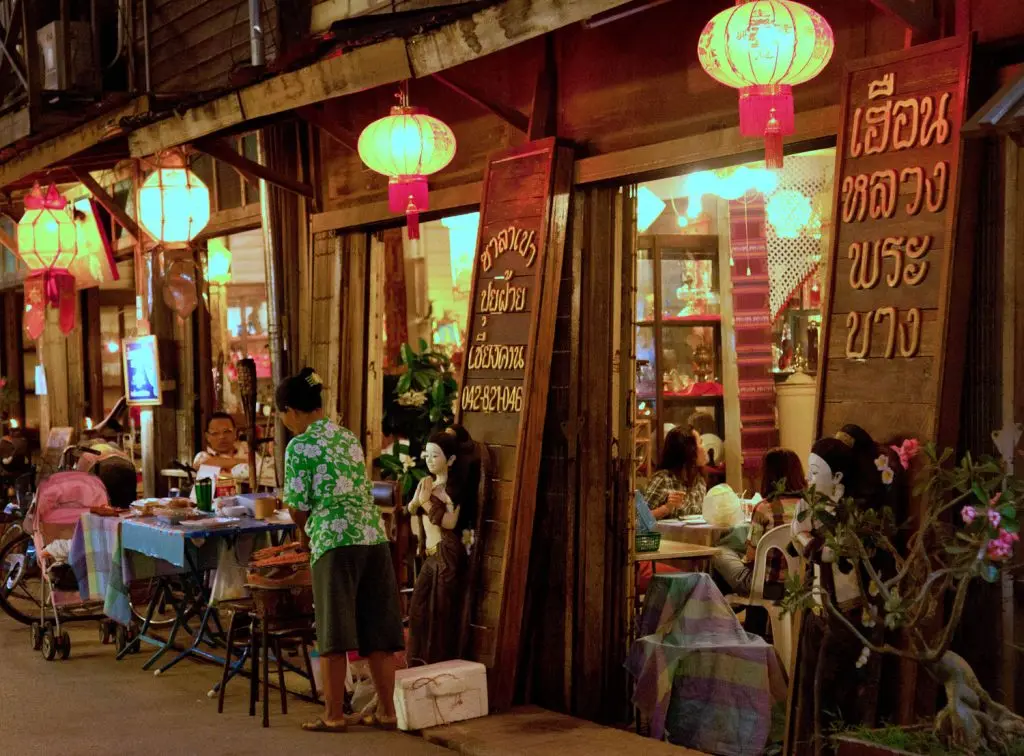
This old Mekong port, 580 km northeast of Bangkok – or 50 km north of Loei Airport – nestles gently against the riverbank. Across the river in Laos, the former heyday of the rubber trade and opium smuggling is long gone, as are the conflicts with the French colonial rulers and later the communists. Today, Chiang Khan is a popular destination for nostalgic Thais, especially the Chai Khong riverfront promenade with its well-preserved, yet lovingly restored, centuries-old teakwood warehouses. It's particularly lively on weekends. A spectacular new skywalk stretches along the riverbank 20 kilometers outside the city. Or you can simply stroll along the Chiang Khan riverfront at sunset or in the morning mist.
Hat Yai, Songkhla Province
Hat Yai lies inland, off the coast of the South China Sea. Here, in the far south of Thailand, almost a thousand kilometers from Bangkok, the landscape is quite different from the rest of predominantly Buddhist Thailand. Instead of temples, you see mosques and more hijabs than T-shirts. The Malaysian border lies even further south, yet Hat Yai already exudes a certain air of transience and perhaps also a touch of hidden pleasures: gold shops abound, bargain hunting is a common occurrence, and the latest Thai trend—cannabis boutiques—is readily available. The spicy cuisine of the south is excellent, the people are welcoming, and the journey by train is a true adventure.
Khao Yai, Nakhon Ratchasima Province
Khao Yai, about a three-hour drive north of Bangkok, Thailand, is a wine paradise for Bangkok residents—both wine lovers and connoisseurs. The local boutique wineries produce surprisingly good wines from the "new latitudes." Sign up for a vineyard tour with tasting, which almost always includes purchasing and enjoying wines, as well as an overnight stay. The pioneering family-run wineries PB Valley and GranMonte offer excellent restaurants and accommodations. During your stay, be sure to visit the vast Khao Yai National Park (Thailand's first) with its impressive waterfalls. khaoyainationalpark.com/en
Laem Mai Phim, Rayong Province
This idyllic stretch of coastline on the east coast of the Gulf of Thailand, far south of Pattaya and Koh Samet, is about a three-hour drive from Bangkok. The tranquil peninsula offers secluded beaches and offshore dive sites, including a wreck dive. One of the most beautiful beaches, right next to the fishing village of Ao Khai ("Egg Bay"), is a tree-lined shore where two fishing boats, three kayaks, and a strolling couple almost constitute a crowd. Along this peaceful stretch of coast, you'll find good resorts and several seaside restaurants. And if there isn't much going on in the evenings—well, who cares? thailandguide24.com/mae-phim
Nan, Nan Province
Nan, the capital of the province of the same name, is reached from Chiang Mai via a long, winding drive. Founded in 1282, the city was once the capital of an independent Lanna kingdom. Numerous Lanna-era temples and historic teakwood villas still bear witness to its rich history. Wat Phumin, built in 1569, is Nan's most photographed landmark. Its impressive murals depict scenes from the life of Buddha as well as secular 19th-century scenes, including European sailing ships and traditional costumes. Enjoy an unforgettable dinner on the banks of the Nan River and try the northern Chinese specialty Khao Soy Ghai (chicken noodles). Whitewater rafting on the same river is very popular in June and July.
Ranong, Ranong Province
This fishing and trading port on the Andaman Sea, about a five-hour drive north of Phuket, has remained largely untouched by mass tourism. Ranong, which tourists mainly know as a base for exploring more famous destinations on the Andaman Sea, has plenty to offer in its own right, including classic Sino-Thai-Portuguese commercial buildings and Chinese temples. There's a reconstructed old wooden palace, the local hot springs are indeed very hot, and you can easily hike to the waterfalls of Ngao National Park. The resort island of Koh Phayam lies just offshore, Myanmar is a stone's throw away, and diving safaris to the spectacular Richlieu Rock depart from Ranong.
Sichon, Nakhon Si Thammarat Province
It lies on the west side of the Gulf of Thailand, just below Koh Samui, and "relaxed tourism" seems to be the prevailing motto here. Low-rise beach resorts offer kitesurfing, stand-up paddleboarding, snorkeling, and diving, while rare pink Indo-Pacific dolphins frolic in the protected waters of the nearby Hat Khanom National Park. Sichon is a true paradise for seafood lovers—so come hungry. Meanwhile, Ai Khai Wat Chedi in Nakhon Si Thammarat, also known as the "Chicken Temple," is extraordinary—the history is long, but simply visit the thousands of chicken statues, placed there in gratitude for answered prayers or good fortune.
Sop Ruak, Chiang Rai Province
Sop Ruak, on the Mekong River in northern Thailand, east of Chiang Rai, is better known as the Golden Triangle. Standing at its apex, you immediately understand why: three countries (Thailand, Laos, and Myanmar) and two rivers (the Mekong and the Ruak) converge here. In this tranquil town, you can take boat trips, visit markets, sample local restaurants, and—almost inevitably—admire a large Buddha statue that watches over the meeting of cultures and waterways. A visit to the Opium Museum, which commemorates the region's infamous smuggling history, is also highly recommended. Meanwhile, the nearby Anantara Resort, with its elephant camp, sets a high standard for the ethical treatment of these animals.
Sukhothai, Sukhothai Province
Sukhothai, the first capital of ancient Siam, flourished from 1238 to 1378. During this time, the kingdom, reminiscent of Camelot, became the cradle of Thai art, architecture, and language. Even its Sanskrit name means "dawn of happiness." Today, the exceptionally well-preserved ruins of ancient Sukhothai, a UNESCO World Heritage Site, are located in a large archaeological park near the modern city of Sukhothai, 430 km north of Bangkok. Towering stupas, intricately carved temples, and steadfast Buddha statues rise from the lawns. Just 50 km away lies Sukhothai's sister city, Si Satchanalai, which bears an equally fitting name—"City of Good People"—and is also rich in protected ruins.
Lampang, Lampang Province
Pony carriages (Rot Maa) trot past Baan Saonak ("House of Many Pillars") with its 100 pillars, old teakwood buildings, and the 1916 train station. Lampang, 100 km southeast of Chiang Mai, was once a major center of teakwood processing. Kad Kong Ta Street and the preserved mansions are reminders of this heyday. One building, the "Louis House," is the 1905 villa of teakwood baron Louis T. Leonowens. It is open to the public, and its most striking feature is a huge vault with an equally enormous steel safe. In times of booming business, this served as Louis's impregnable source of income. Overlooking the city is Wat Prah Putthabat Sutthawas, the "Mountain Guardian." www.green-trails.com




Community
Comments 0
Start the conversation.