Why should you go there and how do you do it right?
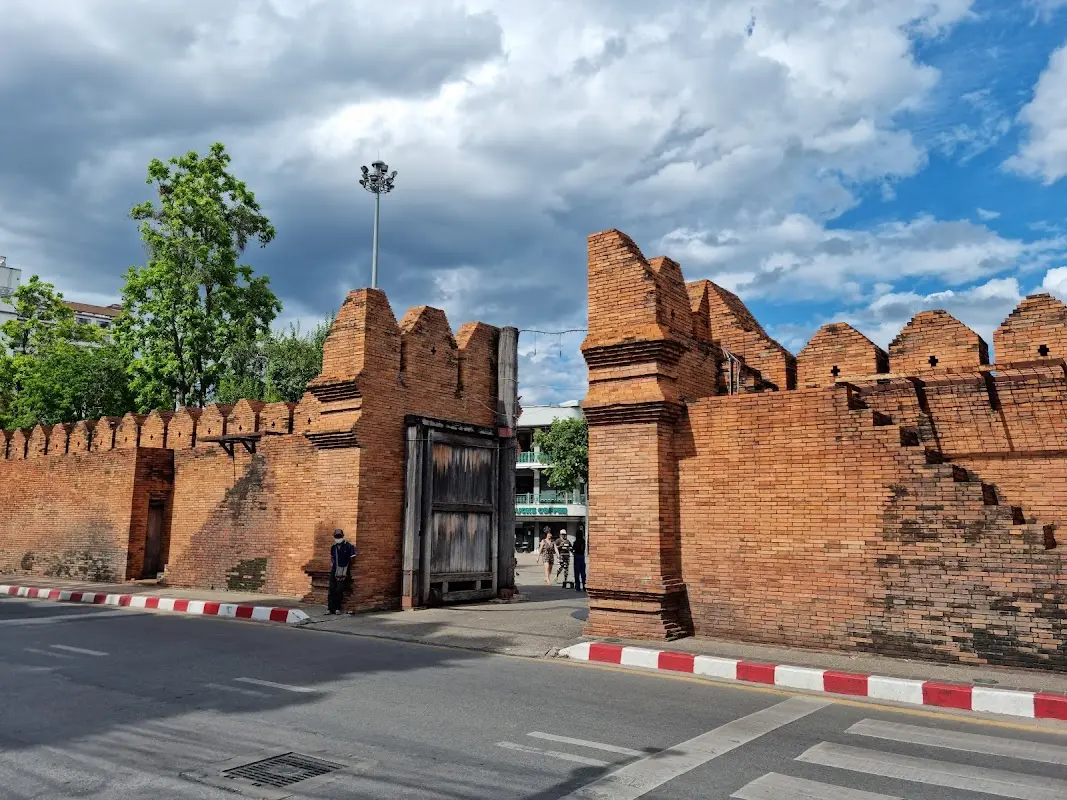
Ten minutes are enough for the gate itself. The rest of the visit focuses on the square in front of it – and that's precisely the point. The Tha Phae Gate is the eastern entrance to the walled old city of Chiang Mai. Its history dates back to the city's founding by King Mangrai in 1296. The original gate was demolished, and the current brick gate and section of wall were reconstructed in 1985/86 based on old photographs and archaeological findings. The name means "landing place for rafts."
Every Sunday, the gate marks the beginning of the "Sunday Walking Street." Ratchadamnoen Road is closed to traffic west of here, all the way to Wat Phra Singh, and transforms from 4:00 PM to approximately 10:30 PM into a kilometer-long promenade lined with handicrafts, textiles, and street food. The square also serves as a stage for the city. In November, the Loy Krathong and Yi Peng festivals are opened here; in April, parades and water fights for the Songkran festival take place at the gate and moat; and the Chiang Mai Flower Festival also utilizes the square.
If you're only going once, evening is recommended. The wall is illuminated, street vendors have set up their stalls along the edges, and many visitors gather to watch others. Mornings are quieter and better suited if you want to photograph the wall without crowds in the frame. Pigeons are a permanent fixture, and there's a ritual where you can have your picture taken with them, which some visitors find more intrusive than expected. One photo and then moving on is perfectly sufficient.
Entry is free and the square is open 24/7, so you don't need to adjust your plans. Everyone uses the gate as a landmark. The night bazaar is about 1 km east on Tha Phae Road, the temples of the old city are a 10-minute walk west, and red songthaews pass by the square all day for 30 baht per person. A Grab ride from the airport to the gate costs approximately 120 to 200 baht.




Community
Comments 0
Start the conversation.