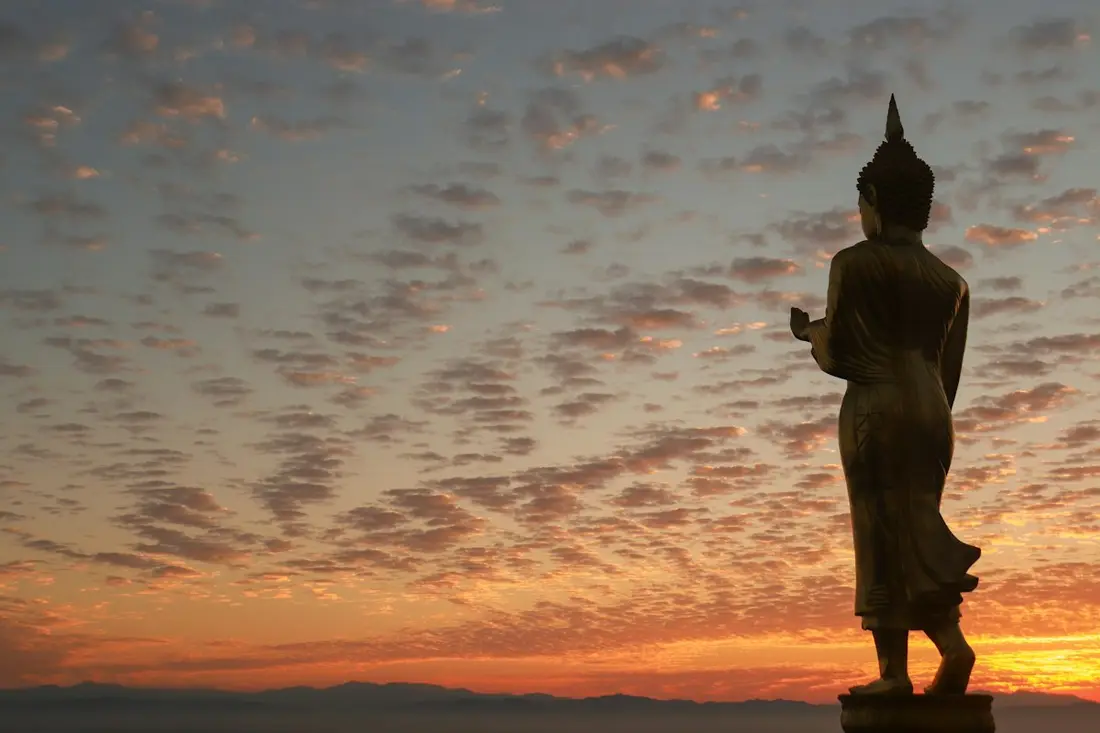
The most important Thai etiquette rules
Thai etiquette can be reduced to a few rules. Never insult the monarchy (a crime punishable by 3 to 15 years in prison; this includes stepping on a banknote), cover your shoulders and knees and remove your shoes in temples, never touch another person's head and do not point your feet at people or Buddha statues, return a wai when offered one, and remain calm, as outbursts of anger bring everyone into disrepute.
Thais are too polite to point out rule violations, so most visitors don't even notice them. This guide covers the most important customs, from rules with legal consequences to small gestures (the proper greeting, the correct way to pass a plate) that earn genuine respect.
Key Facts (2026)
Insulting the monarchy is a criminal offense and is punishable by 3 to 15 years imprisonment per offense.
Paragraph 112 (Lèse-Majesty) regulates jokes, social media posts, and the improper handling of banknotes bearing the King's image. Never hold a coin or banknote with your foot, and do not stand during the royal national anthem in cinemas.
Shoulders and knees should be covered and shoes removed in temples.
Both men and women. At Wat Phra Kaew, visitors wearing shorts and sleeveless tops will be turned away, so it is recommended to bring a sarong. Shoes must be removed in all temple buildings, Thai private homes, and many guesthouses.
The head is sacred, the feet are the lowest.
Never touch another person's head, not even a child's. Do not point your feet at people, monks, or Buddha statues, do not place them on furniture, and do not step over people, food, or objects.
Reply to a Wai message, but do not initiate your own.
Bring your palms together in front of your chest and nod slightly. Return a wai if offered, but do not greet children or service staff. A smile and "Khop Khun Khrap/Kha" are the appropriate thanks.
Keep a cool head (jai yen yen)
Raising your voice or confronting someone publicly risks losing face and the worst consequences. Stay calm, smile, and say "Mai pen rai." The best way to show affection in public is by holding hands.
Tipping is appreciated, but never required.
In restaurants, round up the bill or leave 20–50 baht; for a massage, 50–100 baht; and for a full-day guide, 100–200 baht per person. Tipping is not customary in 7-Eleven stores, markets, or government buildings.
The monarchy is Thailand's most important cultural rule.
Thailand's Lèse-Majesty Act (Section 112 of the Penal Code) criminalizes the defamation, insult, or threat of the King, Queen, Crown Prince, or Regent. Penalties range from three to fifteen years in prison per offense. This law is not ignored; prosecutions are carried out regularly, including against foreigners.
In practice, this means that one should never make jokes about the royal family, not even in private conversations with Thais. Thai banknotes and coins must not be damaged, torn, or stepped on, as each banknote and coin bears the image of the king. If a coin rolls across the floor, it must not be stopped with your foot. During the royal anthem, one must stand respectfully before film screenings and at public events. Hats must be removed during the anthem.
This also applies to social media. Posts, comments, or shared content that could even vaguely be interpreted as criticism of the monarchy can lead to arrest in Thailand. Foreign travelers have already been charged. The safest course of action is to treat the royal family with the same respect as Thais themselves and to avoid the topic altogether in conversation, unless you are absolutely certain of the context.
This isn't a matter of cultural preference, but of criminal law. Foreigners were arrested, detained, and imprisoned. I would take this just as seriously as drug laws.
Temple etiquette and the rules that apply in every temple
Thailand has over 40,000 Buddhist temples (wats), and almost every visitor will see at least one. Temples are active places of worship, not museums. Monks live, pray, and meditate here daily. The rules exist because these places are sacred, not to inconvenience tourists.
Dress appropriately. Both men and women must cover their shoulders and knees. Sleeveless tops, shorts, miniskirts, and see-through clothing will lead to rejection at large temples like Wat Phra Kaew and disapproving glances at smaller temples. A light scarf or sarong is advisable. Wearing such clothing will be considered inappropriate in any way. While some temples sell or rent head coverings, don't rely on this.
Before entering a temple building (Bot or Viharn), shoes must be removed. Look for the pile of shoes at the entrance. If there are shoes there, they must also be removed. This also applies to private homes, some shops, and any place with a raised threshold. This is particularly easy with slippers, while lace-up boots are often a nuisance.
In the temple, you should never point your feet at a Buddha statue, a monk, or an altar. Sit cross-legged or with your legs bent (in the "mermaid position"). If you must move, keep your feet tucked underneath you as much as possible. In Thai Buddhism, the feet are considered the lowest spiritual part of the body; pointing them at something sacred is therefore a profound insult.
Speak softly. Do not use flash unless explicitly permitted. Do not climb on Buddha statues or ruins to take photos. This has already led to international incidents and fierce criticism on social media. If possible, do not turn your back on Buddha statues, and ideally, avoid taking selfies altogether.
Temple Quick Rules
Cover shoulders and knees
Both men and women. A light sarong or scarf is the simplest solution, so pack one in your daypack. Tank tops, shorts, and flip-flops are suitable for the beach, but not for temples.
Take off your shoes at the door
Before entering a temple, pay attention to the pile of shoes. This also applies to Thai homes, some restaurants, and many guesthouses. Wear comfortable shoes and step over the raised wooden threshold of a temple or house, never on it. According to traditional belief, spirits dwell there.
Never touch a monk
Women must never touch monks or hand them objects directly. Place items on a cloth or table so the monk can collect them. On public transport, women should not sit next to monks. If a monk approaches on a narrow path, step aside.
Ask before taking photos
Photography is permitted in the outdoor areas of most temples, but not in the main building (ordination hall). Buddha statues must never be climbed on or photographed inappropriately. Drone photography at temples is prohibited without permission.
Speak more quietly
Temples are places of active worship. Speak softly, silence your phone, and move quietly. If a ceremony is in progress, please sit quietly in the back or leave the room. Do not walk through the center.
Temples worth visiting
Wat Phra Kaew
The Grand Palace
Wat Arun
Doi Suthep Temple
Wat Phra That Doi Kham
Wat Chedi Luang
Wat Yai Chai Mongkhon
Wat Mahathat
Wat Phanan Choeng Worawihan
The best hotels in Bangkok
My hotel selection in Bangkok in every price category, based on Google's hotel rating system. My top 10 hotels are displayed first, followed by the highest-rated ones. Each button takes you directly to the hotel's page on Booking.com, where your travel dates are already entered.
Body language that Thais notice and tourists overlook
Head, feet, hands, and gestures that carry more weight than words.
Thai culture ascribes a spiritual significance to the body that is unusual in most Western cultures. The head is considered the highest and most sacred part of the body, while the feet are seen as the lowest and spiritually impure. These are not metaphors, but rather ways in which daily behavior is shaped, and you will notice them upon closer observation.
Never touch another person's head, not even a child's. In Western cultures, stroking a child's head is considered a loving gesture. In Thailand, however, it is perceived as an insult to the spirit (khwan). It is one of the most frequently broken rules by tourists, as it is so instinctive and particularly disconcerting for Thais.
Never point your feet at people, Buddha statues, or sacred objects. Do not place your feet on tables, chairs, or desks. Do not step over someone who is sitting or lying down; instead, walk around them. Do not use your foot to point at something or to push a door shut. If you are sitting on the floor in a temple or at home, draw your feet behind you or sit cross-legged.
Do not point at others with your index finger. To point at a person or direction, use your whole hand with the palm facing down or a subtle chin movement. Waving someone over with a curled finger (palm facing up) is considered very rude. In Thailand, it is common to gesture with the palm facing down and fingers extended.
Do not step over food, offerings, or personal belongings on the ground. If you need to pass, ask the person to make room or take a longer route. In Thai culture, stepping over someone else's food, even unintentionally, is considered extremely disrespectful.
What you should and shouldn't do in body language
Head = Sacred
From a spiritual perspective, the head is the highest part of the body. Never touch another person's head, not even a child's. Don't run your fingers through their hair, pat their head, or reach over their head for anything. If you must pass near someone's head, duck slightly.
Feet = Profane
The feet are the lowest part of the body. Do not point them at people, monks, or Buddha statues. Do not place your feet on furniture or step over people or food. Remove your shoes when entering houses or temples. If you accidentally touch someone with your foot, apologize immediately.
Showing and passing things
Do not point at people or objects with your index finger. Instead, use an open hand with the palm facing down. When beckoning, also use the palm facing down and fingers extended. The Western "come here" gesture with curled fingers is considered impolite and is only used with animals. Give and receive objects, money, and business cards with your right hand (or both hands), as the left hand is traditionally considered unclean.
Public affection
Holding hands is acceptable everywhere. Kissing, hugging, and other displays of affection in public are inappropriate outside of Bangkok's nightlife districts and seem particularly out of place in temples, small towns, and when interacting with older Thais. Be discreet.
Volume and confrontation
Raising your voice, losing your temper, or publicly confronting someone means losing face. Even if you're right, you've already lost. Stay calm, speak softly, smile, and work toward a solution. The Thai expression "jai yen yen" (cool heart) is the ideal. Hot-headedness is considered a character flaw, not a sign of strength.
The wai is Thailand's traditional greeting.
The wai (palms pressed together, fingertips at chest or nose level, with a slight bow) is Thailand's most famous cultural gesture. It expresses respect, gratitude, and greeting. But it is not a casual wave. It carries a hierarchical meaning, and performing it incorrectly can be more embarrassing than not performing it at all.
The basic rule is that a younger or lower-ranking person says the wai, and an older or higher-ranking person returns it. As a tourist, you don't have to say the wai yourself, but you should always return it when offered. To do this, place your palms together at chest level and nod slightly. This is enough to show respect without having to worry about height or depth.
Please do not greet service staff with a "wai," meaning waiters, cashiers, hotel receptionists, or taxi drivers. Greeting someone who is serving you with a "wai" reverses the social hierarchy and creates discomfort rather than friendliness. A smile and a polite "Khop Khun Khrap/Kha" (thank you) are the appropriate response.
Children don't greet people with "wai." Children greet adults, not the other way around. If a child greets you, smile kindly and nod. That's the appropriate response.
In formal situations, such as meeting someone's parents, visiting a high-ranking monk, or entering a revered temple, a deeper wai with the fingertips at forehead level expresses particular respect. When in doubt, a gentle wai at chest level, accompanied by a smile, is always appropriate and appreciated.
What to wear in temples, cities and on beaches in Thailand
temple
Shoulders and knees must be covered. Sleeveless tops, shorts, and see-through clothing are not permitted. A light sarong is sufficient for most occasions. While some large temples provide clothing for loan, they strictly enforce this rule. You will be refused entry to Wat Phra Kaew.
Government buildings and palaces
Long trousers and closed shoes are required for men. Women need a skirt or trousers that end below the knee. Immigration authorities enforce this rule, and you may be refused entry if you are wearing shorts and sandals.
Beaches vs. Cities
Swimwear is fine on the beach, but as soon as you leave the sand, you should cover up. Walking around a Thai city shirtless or in just a bikini top is considered disrespectful and signals a lack of respect for local customs. Many Thai cities near the beach are also residential areas; therefore, behave as you would in any other residential area.
General everyday clothing
Thailand is hot, and casual clothing is appropriate almost everywhere. Light trousers, a sleeved T-shirt, and slippers will easily get you into any temple, restaurant, or office. Being neat and understated is more important than being fashionable.
Thai table manners: How to eat, share and pay
How Thais eat, share and show respect at the table
Thai meals are enjoyed communally. Dishes are ordered for the table, not per person. Everyone shares everything. Typically, one person orders one dish plus an additional one, with a balanced selection of flavors: something spicy, something mild, something with vegetables, something with protein. Rice plays a central role. It is served in a communal pot, and people help themselves to seconds during the meal.
Thais eat with a spoon (right hand) and fork (left hand). The fork pushes the food onto the spoon, which is then placed in the mouth. Chopsticks are only used for noodle soups and Chinese-style dishes; their use with Pad Thai or rice dishes therefore seems unusual. Knives are rarely provided, as Thai food is already cut into bite-sized pieces.
Don't take the last bite from a shared plate without offering it to others first. It's considered greedy to fill your plate from everyone else's at once. Therefore, take small portions and get seconds if needed. Use sauce sparingly. It's rude to douse other people's food with chili sauce.
At street food stalls, it's common to eat standing up, on a plastic stool, or while walking. There are no strict rules, but please return your plates and cutlery to the counter after eating. Many stalls provide a water container for rinsing cutlery before eating. This is normal and hygienic and not an indication that the stall is unclean.
The person who invited the group usually pays. While it's common among friends to split the bill (called "AA" in Thai slang), it's considered culturally unusual for the host to cover the entire cost. Arguing about the bill or insisting on your share when invited can be awkward. Accept the invitation politely and reciprocate next time.
Tip for customs officers
Restaurants
Tipping is not mandatory, but in restaurants with table service, it is appreciated to round up the bill or leave an additional 20–50 baht. Upscale restaurants add a 10% service charge, so be sure to check your bill. Tipping is not expected at street stalls or food courts.
Massage & Spa
A tip of 50–100 baht is customary for a standard Thai massage, while in upscale spas it's 100–200 baht. Therapists' income depends heavily on tips, so it's really important to tip appropriately.
transport
Taxi and Grab drivers don't expect tips, but it's customary to round up to the nearest 10–20 baht. Tour guides receive 100–200 baht per person for a full-day tour, and hotel porters 20–50 baht per piece of luggage.
When you shouldn't give a tip
Never at 7-Eleven or other supermarkets, never at market stalls, and never at government offices (it could be interpreted as bribery). No money is expected at self-service restaurants or buffets.
Restaurants and markets to experience Thai food culture
The Island Restaurant offers Thai and vegetarian cuisine as well as a bar.
Pier 21
Jim Thompson, a Thai restaurant
Chatuchak Weekend Market
ICONSIAM
CentralWorld
Han Teung Chiangmai
Khoei Chiang Mai – Nordic Food (Chiang Mai Restaurant)
Samsen Villa
Face, conflict, and the Thai smile
Why “saving face” shapes every social interaction in Thailand
Thailand is a culture where the face plays a central role. The face (naa) represents a person's social reputation, dignity, and standing, and protecting it—both one's own and that of everyone else—is considered the country's most important social rule. To take away someone's face through public criticism, confrontation, humiliation, or visible anger is one of the most serious social offenses one can commit.
That's why Thais almost never say "no" directly. A hesitant "maybe," a change of subject, or an inappropriate smile are polite ways of declining. Pressuring for a direct answer when someone is visibly uncomfortable causes both sides to lose face. Interpreting the subtle message of "no" is a valuable skill and enhances any interaction in Thailand.
The Thai smile has at least 13 different meanings, and only a few of them mean "I am happy." A smile can express agreement, apology, embarrassment, discomfort, suppressed anger, or even "I have no idea what you just said, but I don't want to embarrass you." So don't interpret a smile as proof that everything is alright.
If something goes wrong (a booking error, the wrong dish, a misunderstanding), stay calm, smile, speak softly, and focus on the solution rather than assigning blame. A friendly "Mai pen rai" (It's okay/Everything's fine) will immediately defuse the tension. Losing your temper, raising your voice, or publicly accusing someone of a mistake will only make things worse, not better.
"Jai yen yen" means to keep a cool head. In Thailand, you can achieve your goals by remaining calm. Anger is seen as a loss of control, not as an expression of authority.
Colors, days, and what you wear
In Thailand, each day of the week is assigned a specific color, based on Hindu-Buddhist astrology. Many Thais wear the color of the day, and coordinated outfits are often seen in offices and schools. Monday is yellow. Tuesday is pink. Wednesday is green. Thursday is orange. Friday is blue. Saturday is purple. Sunday is red.
Yellow holds special significance because the late King Bhumibol (Rama IX) was born on a Monday, and yellow became a symbol of loyalty and reverence for the monarchy. Thais wear yellow on Mondays and at royal events. Wearing yellow is a sign of respect, while wearing black, especially on royal memorial days, can attract negative attention.
This isn't a rule expected of tourists, but it shows cultural respect. If you're meeting Thai colleagues or visiting a government office on Monday, it's a good idea to pack a yellow shirt. It's a small gesture that will be noticed and appreciated.
Cultural taboos in Thailand and topics to avoid
The royal family
Do not criticize, ridicule, or discuss the monarchy in negative terms. Lèse-majesté is punishable by three to fifteen years in prison. This also applies to posts on social media, even if they were written outside of Thailand and you later re-enter the country. The safest course of action is to remain silent unless you are expressing genuine respect.
policy
Thailand's political history is turbulent. Coups, protests, and the deep social divide between the "Yellow Shirts" and the "Red Shirts" are still present. Avoid taking sides in political discussions. If a Thai person brings up the topic, listen respectfully instead of expressing your opinion. Political protests can be dangerous, so stay away.
Buddhism and Religion
Buddha images are sacred, not decorative. Do not buy Buddha head statues as souvenirs (their export to Thailand is restricted). Buddha tattoos are also forbidden, as they are considered deeply disrespectful and can lead to deportation. Treat Buddhist monks, temples, and artifacts with visible respect.
Drugs and gambling
Drug possession is severely punished, with penalties ranging from life imprisonment to death. Cannabis was decriminalized for a time, but regulations have since been tightened. Therefore, be sure to check the current laws before accepting anything. Gambling is generally prohibited, with the exception of the state lottery. Do not joke about drugs or gambling when speaking with Thai people.
Money and the image of the king
Every Thai banknote and coin bears the image of the king. Crushing, crumpling, or otherwise disrespecting money is considered an insult to the monarchy. If you drop a coin, do not catch it with your foot. Bend down and pick it up with your hands.
Useful Thai phrases to express respect
Khop khun khrap/kha – Thank you
The most useful expression in Thailand. Men end with "khrap", women with "kha". Use it constantly after being served food, asked for directions, or paying for something. It will always be noticed and appreciated.
Sawasdee khrap/kha – Hello/Goodbye
The universal greeting. Combined with a slight wai (palms pressed together at chest level), it elicits a genuine smile. It is suitable for both greetings and farewells.
Mai pen rai — It doesn't matter / It's okay
The epitome of a Thai idiom. It's used to defuse tension, admit a minor mistake, or signal that one isn't upset. It reflects the Thai appreciation for not making a drama out of small problems.
Kor thot khrap/kha – Excuse me / Sorry
Use it when you need to push past others, attract attention, or apologize for a minor mistake. Combine it with a slight bow, and you'll convey genuine courtesy.
Sabai sabai – Relaxed / Comfortable
More than just a phrase, it's a way of life. If someone asks you how you are, "sabai sabai" means something like "Everything's fine, no worries." It reflects the Thai ideal of a contented, serene state of being. Use it and mean it. The Thai phrasebook contains ten phrases worth learning and shows where you can communicate in English.
You can find further practical tips for your visit to Thailand in these additional guides.
Frequently Asked Questions
Frequently asked questions about Thai cultural etiquette.
Yes. Thailand's Lèse-Majesté Act (Section 112) criminalizes defaming, insulting, or threatening the King, Queen, Crown Prince, or Regent. Penalties range from three to fifteen years in prison per offense. The law is rigorously enforced, even against foreigners. It applies to verbal statements, social media posts, and any public expression of opinion, even gestures toward banknotes bearing the King's image.
In Thai Buddhist culture, the head is considered the highest and most sacred part of the body. It houses the "khwan" (spirit/soul). Touching someone's head, even casually or affectionately, is considered a spiritual intrusion and deeply disrespectful. This applies to adults and children alike. Even hairdressers in Thailand often discreetly ask for permission before touching a client's head.
The feet are considered the lowest part of the body, both physically and spiritually. Pointing your feet at a Buddha image, a monk, or another person is seen as placing them beneath you. Similarly, stepping over food or another person is considered disrespectful. This stems from Theravada Buddhist concepts of a spiritual hierarchy within the body.
Cover your shoulders and knees. Men should wear a long-sleeved T-shirt and long trousers or knee-length shorts; women a long-sleeved top and a skirt or trousers that end below the knee. Bring a light scarf or sarong just in case. Shoes must be removed before entering any temple building. Large temples like Wat Phra Kaew in Bangkok strictly enforce the dress code.
No. The wai is a hierarchical greeting. Younger people or those of lower status initiate it, and older people or those of higher status return it. As a tourist, you should return a wai if one is offered to you (bring your palms together at chest level and nod slightly). Do not greet service staff, children, or those serving you with the wai, as this reverses the social hierarchy and can cause discomfort.
Tipping is welcome, but not obligatory. In restaurants, you can round up the bill or tip 20–50 baht. Masseuses usually receive 50–100 baht (as their income depends on it). Taxi and Grab drivers don't expect tips, but they appreciate rounding up the fare. Tour guides receive 100–200 baht per day. Tipping is not customary in supermarkets, markets, or government offices.
"Mai pen rai" means something like "It's okay," "Everything's fine," or "Don't worry." It's one of the most important phrases in Thai culture and reflects the value of not escalating minor problems, maintaining harmony, and keeping calm. When used to defuse minor mishaps, it visibly relaxes the Thai audience.
You shouldn't do that. Buddha images are sacred in Thailand, not decorative. While not illegal, a Buddha tattoo, especially below the waist, is considered deeply disrespectful, and some Thai tattoo artists categorically refuse such requests. Traditional Sak Yant tattoos from temples are a different tradition: sacred characters and motifs are tattooed on the upper body and performed with the blessing of a monk or master.
In Thai astrology, each day of the week is associated with a color. Monday's color is yellow, which also symbolizes the monarchy, as the late King Bhumibol (Rama IX) was born on a Monday. Wearing yellow on Mondays is a common sign of respect and loyalty. While not expected of tourists, it is noticed and appreciated if they do so.
It's best to avoid it. Holding hands is common everywhere, but kissing and hugging in public are considered inappropriate in Thai culture, especially in temples, smaller towns, and around older people. It makes you appear unfamiliar with local customs. Things are more relaxed in Bangkok's nightlife districts. It's best to display affection in private. No one will say anything, but it will be noticed.
Only in specific contexts. Black is mourning attire, so it should be avoided on royal memorial days and at royal events when Thais wear yellow (the Monday color of the late King Bhumibol). Thailand's political "Yellow Shirt" and "Red Shirt" movements mean that a plain yellow or red shirt at a demonstration will be seen as a statement. In everyday life, any color is appropriate, and modesty is far more important than color.
Thais are understanding towards tourists and rarely hold honest mistakes against them. A sincere apology ("kor thot khrap/kha"), a slight bow, and a genuine smile will resolve almost any issue. The important thing is to show that you care about doing things correctly. Deliberate disrespect, posing with Buddha statues, mocking customs, or loud behavior in temples are different.
Where you can stay during your trip
Start below with Bangkok – this guide also covers Chiang Mai and Ayutthaya, all of which can be searched on their respective booking sites.
Compare prices on Booking.com
Compare prices on Trip.com
We may receive a commission for bookings made through these links – this will not incur any additional costs for you. Learn more.
Discover more in this guide
You might also like this
2-week Thailand itinerary
Capital city, night train, mountains, then along the Andaman coast island by island – thirteen nights, one way.
7 days in Thailand
Capital city, mountains, islands – six nights, two short flights and not a single day was lost to the journey.
10 days in Thailand – Itinerary
Capital city, night train, mountains, then ferry to the Andaman coast – nine nights, one way, no return.
Thailand Honeymoon Guide and 10-Day Itinerary
Villas with private pools, sunsets in a longtail boat, and evenings perfect for two.
Thailand on a budget
Thailand for less money, without sacrificing the best
I lived in Bangkok for four years and traveled throughout the country from there. The guidebooks reflect my personal opinion and are written as I would explain things to a friend planning a trip.
Ready to create your travel itinerary?
Use our free trip planner to save places, organize days, and share your trip.




Community
Comments 0
Start the conversation.