Anyone leaving Thailand without shopping will inevitably end up shopping. Travel journalist John Borthwick has compiled the ultimate shopping guide for Thailand – with all its diverse and colorful offerings.
Street markets
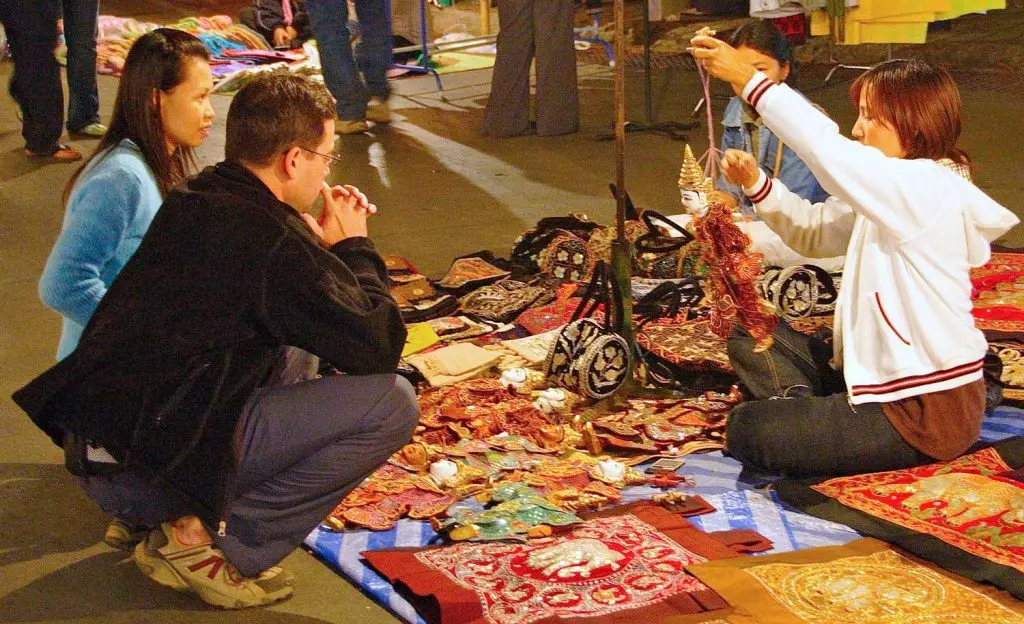
From Chiang Rai to Hat Yai and back – Thailand's street markets are a blast, overflowing with all sorts of unnecessary yet irresistible trinkets. Soi Sukhumvit in Bangkok's Nana district is a perfect example: a bustling pavement packed with football jerseys, elephant-print trousers, knock-offs, and countless gadgets. Prices are negotiable. Haggling is worthwhile, but you won't be able to beat the market. Forget cards: cash is king.
The Chatuchak Weekend Market in Bangkok is one of the world's largest, wildest, and most entertaining shopping experiences. Thais come here to haggle with other Thais for the best prices. With 15,000 stalls selling everything from fashion and bric-a-brac to household goods, dogs and cats, and even kitchen sinks, Chatuchak is a true feast for the senses.
Chiang Mai's night bazaar is an institution, even though you can find most of its toy elephants, Muay Thai shorts, fake Vuitton items, and other trinkets almost anywhere. Alternatively, there's the Sunday Walking Street Market in the old city, stretching from Tha Phae Gate to Wat Phra Singh. Half a kilometer packed with handicrafts, artwork, and clothing, there's something for everyone. Foot massages and fried grasshoppers round out the offerings. On Saturday afternoons, a market takes place on Wualai Road near Chiang Mai Gate, and in the evenings, the Anusarn Market on Chiang Klan Road beckons.
Floating markets
Some of the most authentic markets don't even float. Take, for example, the Bang Krachao Market in Bangkok, which takes place on Saturdays and Sundays. You take a ferry from Wat Bang Na Nok pier across the Chao Phraya River to Bang Krachao, a small, winding "island" in the river. The morning market there, located on the canal bank and very popular with Bangkok residents, offers everything related to food, drinks, and souvenirs.
The Damnoen Saduak floating market, 100 km from the city, is packed with tourist buses every morning. (Departs from your Bangkok hotel at 7 am.) The traffic jams of sampans are a popular photo opportunity, but the mass-produced souvenirs are part of the usual market fare. The Amphawa floating market, 50 km from the city, is an alternative, especially if you avoid weekends.
Shopping centers and malls
How many more shopping malls does Bangkok need? One more. Most luxury malls offer brand-name items like watches, cosmetics, and accessories that can be found worldwide, but here they're often all under one roof, plus there's the added bonus of VAT refunds. (Keep your receipts.)
The Ratchprasong district is home to high-end shopping malls like Central World and Gaysorn. The neighboring Pratunam district offers more, including the large Platinum Fashion Mall. And since there are still more shopping centers to choose from, don't forget Siam Paragon in the heart of the city and the massive Icon Siam complex on the riverfront.
Further east along Sukhumvit Road are shopping malls such as Central Embassy, the massive Terminal 21 (near the Asok BTS station), and EmQuartier (Prom Phong BTS station). All of these establishments have fixed prices; haggling is not advisable. For a completely different shopping experience with a huge selection and competitive prices, visit the legendary MBK Center next to the National Stadium BTS station.
Top tip: Many shopping centers not only offer air-conditioned cooling, but also appetizing and inexpensive dining areas, while pop-up clothing sales often take place on the ground floor.
Chiang Mai is no mini-Bangkok and thankfully forgoes the ostentatious mega-shopping malls of the capital. The most exclusive shopping center is Maya in the Nimmanhaemin district (or simply Nimman). Spread across six floors of brand-name stores, beauty clinics, and restaurants, you can spontaneously buy just about anything here, from new Nikes to a Harley. Nearby is One Nimman, whose Siena-style bell tower evokes Tuscany in Thailand and offers stalls selling handicrafts and fashion. Massage spas are also available, but thankfully, no locusts. In the small boutiques on the side streets off Nimmanhaemin Road, creativity flourishes. They specialize in contemporary art, jewelry, ceramics, and textiles from the hill tribes.
Shopping by the sea
When sunbathing gets boring, sunburned people go shopping. Thailand's beach resorts are happy to help. Bargain beachwear, sunglasses, fake watches, and shoes you never thought you'd need overflow from their arcades and bazaars.
Phuket. Patong, a bustling consumer hub with a vast array of goods, is home to the island's main shopping centers, such as Central Phuket and the family-friendly Jungceylon. From Phuket's Old Town to the crowded James Bond Island, visitors are spoiled for choice when it comes to shopping.
Pattaya is a similar place. Large shopping centers include the Royal Garden Plaza and the Mike Shopping Mall on Beach Road, while the large Terminal 21 is located a little further inland. In addition, there are hundreds of bazaars and market stalls. For tech enthusiasts, the TukCom shopping center on South Pattaya Road is recommended.
Hua Hin. Food and shopping collide at Hua Hin's traditional night market, a mecca in the city center on Soi 72, where you'll also find alternative shopping malls like Cicada. As darkness falls, clothing stalls open, and the roar of woks and live entertainment fill the air. After satay and singah, you can then indulge in a cornucopia of delicacies and unwanted souvenirs.
Sustainable shopping
Look out for shops displaying the OTOP seal (“One Tambon One Product”), which promotes community-produced Thai handicrafts, silk, and many other goods. Launched in 2001, the program is based on an earlier program developed in 1964 in Japan's Oita Prefecture: OVOP (“One Village One Product”).
Here you'll find genuine products – no cheap imports or counterfeits – and the profits largely benefit rural producers. Fresh and processed foods from the "Royal Projects" initiative are available throughout Thailand in supermarkets and Doi Kham Royal Project shops. Please note: Single-use plastic bags are still standard packaging, so please remember to bring your own reusable shopping bag.
Tax-free shopping
Purchases exceeding 2000 Baht may be eligible for a VAT refund under certain conditions. Specific terms and conditions apply.
Cash or card?
Cash is still widely used in the Kingdom. Cards are often accepted, but not everywhere. Carry cash and more than one card. You will definitely need cash at markets, smaller bars, restaurants, and shops, as well as in rural areas. Many merchants have a minimum spend of 300 baht (approximately AU$15). Tip: For security reasons, use a separate card for shopping with a low, fixed credit limit and inform your bank of your travel plans.
Community
Comments 0
Start the conversation.