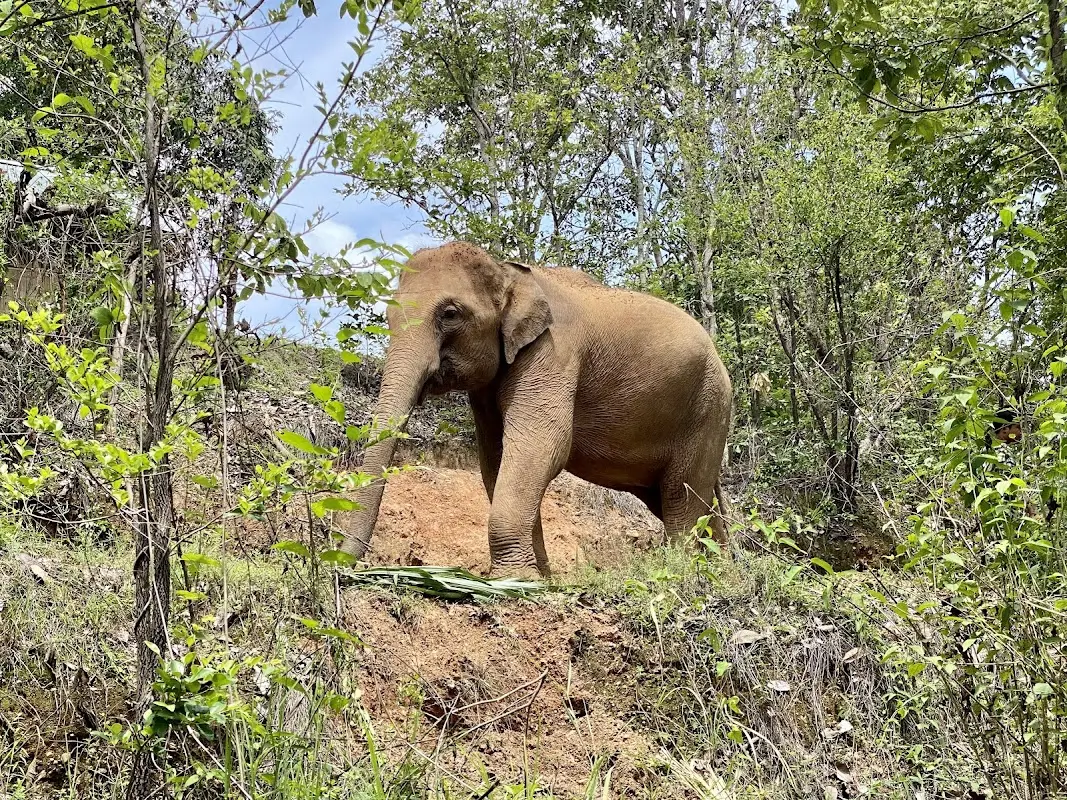
Chiang Mai has more elephant sanctuaries than any other place in Thailand, and almost all of them claim to be ethically sound, as the term isn't legally defined. Animal welfare organizations draw the line in the same place: no riding, no shows, no chains or hooks, no breeding for tourism, and—in the strictest sanctuaries—no bathing or close contact either. So, you observe the elephants instead of touching them.
Based on these criteria, the pure observation stations (ChangChill, Burm and Emily's, and Kindred Spirit) are ranked first, followed by Elephant Nature Park and Big Boy, where food is prepared but the elephants are not bathed, and finally by the stations that still offer bathing. A half-day, including hotel pick-up, costs approximately 1,600–2,500 baht, while a full day at Elephant Nature Park costs 3,500 baht.
Where to stay in Chiang Mai
This route ends in Chiang Mai. Search for hotels in Chiang Mai for your travel dates or narrow your search to the region you wish to visit. Filter for hotels with free cancellation if you'd like to book a room and decide later.
Open Booking.com with your travel dates · also on Expedia · Trip.com
My recommendations in every price category in Chiang Mai
Key facts
Look, don't touch it!
World Animal Protection's rule is: visits are only allowed where you may look at the animals but not touch them. Members of the Elephant Welfare Alliance also prohibit hand-feeding.
1,600–2,500 Baht per half day
Hotel pick-up and lunch are included. The day trip to Elephant Nature Park costs 3,500 Baht, and the overnight stay costs 5,800 Baht.
1.5 hours or more
Most of the wildlife reserves are located in the hills of Mae Wang, Mae Taeng, or Doi Inthanon. The two strictest reserves are located in Mae Chaem, about a three-hour drive away.
Book two to four weeks in advance.
During the peak season from November to February, the best half-days are quickly booked up.
Children are welcome in most facilities.
Elephant Nature Park charges half price for children aged 3 to 11. Burm and Emily's does not accept children under 10.
Booking offices are not places of refuge.
Many addresses in the old town house booking offices. The elephants are at least an hour away.
What makes an elephant sanctuary ethical?
Three independent lists served as the basis for this guidebook, and the similarities outweigh the differences. World Animal Protection publishes a list of elephant-friendly establishments and advises visitors to only visit those where they can see the animals but not touch them. This is because elephants that allow strangers to ride, bathe, or touch them have been trained accordingly. The Elephant Welfare Alliance, which is advised by World Animal Protection, recommends only establishments that refrain from elephant riding, shows, bathing for tourists, direct hand-feeding, or entertainment involving close physical contact. Responsible Travel maintains a list of supported and unsupported sanctuaries and excludes establishments that breed elephants for tourism.
This results in three levels. In purely observational stations, the elephant herds can forage, bathe, and socialize independently while visitors walk at a distance with a guide. Stations where feeding is the primary focus also offer food preparation and feeding from a platform or over a barrier. These stations are still considered by World Animal Protection to be humane, but not yet elephant-friendly. Stations that allow direct contact with the animals offer bathing, mud baths, and walks right next to the elephants. Riding is not offered at any of these stations, but animal welfare organizations see bathing as the next step towards eliminating elephants – and I share this view.
My opinion is simple: If you want to focus on the elephants themselves and not just the photo, book a day dedicated solely to observation or a day focused on feeding. If you absolutely must bathe them, please be aware that all the animal welfare organizations I consulted advise against it.
How I put them in the correct order
Elephant sanctuaries listed by World Animal Protection and the Elephant Welfare Alliance are given priority. Next come sanctuaries rated as animal-friendly on these lists or supported by Responsible Travel, where elephants are not bathed. Following these are sanctuaries where active interaction with the animals is possible, with Responsible Travel-supported sanctuaries taking precedence over all others. Within each category, the sanctuary with the most independent elephant sightings is listed first, and in case of a tie, the one best suited for a day trip is chosen. All prices are as stated by the respective sanctuaries and can be viewed on their websites.
The Elephant Jungle Sanctuary pays for sponsored listings on this website. However, this does not affect its ranking here, which follows the same criteria as for all other sanctuaries.
The ethical elephant sanctuaries in Chiang Mai, in order
First, there are purely observation stations, then those that feed first, and finally those that also offer bathing.
Comparison of elephant sanctuaries in Chiang Mai
None of the sanctuaries listed here offer horseback riding. Prices quoted are for adults and are taken from the respective sanctuary websites, with the exception of "Into the Wild" (Backpackers Wanderlust). WAP stands for World Animal Protection; EWA for Elephant Welfare Alliance. The Elephant Jungle Sanctuary is a paying sponsor of this website and is subject to the same criteria.
Half-day, full-day or overnight ticket
A half-day trip is sufficient for most visitors. It includes approximately three hours of elephant watching, transportation, lunch, and hotel pickup, and costs 1,600–2,500 baht. A full day trip is worthwhile, as it allows you to avoid the tourist crowds. Therefore, I would recommend the full-day trip at Elephant Nature Park (3,500 baht) over the half-day or full-day trip at ChangChill.
The strictest sanctuaries offer stays, not excursions. Burm and Emily's and Kindred Spirit are located three hours or more in the hills of Mae Chaem and offer programs of two days or more, including transport, accommodation, and meals. If you have the time, an overnight stay at one of these sanctuaries is the best way to experience elephants in their natural habitat.
Volunteering is also possible. Elephant Nature Park offers one-week programs for 15,000 baht, Kindred Spirit takes on interns for one to eight weeks, and Elephant Jungle Sanctuary sells a three-day volunteer program for 7,900 baht.
The best-rated hotels in Chiang Mai
Here is my ranking of the 10 best hotels in Chiang Mai. Each button will take you directly to the hotel's page on Booking.com, where you can enter your travel dates.
Elephant camps to avoid
Responsible Travel does not endorse Patara Elephant Farm, described as a breeding farm offering elephant rides; Mae Sa Elephant Camp, where there are reports of trickery and possible captive breeding under new management; or Kanta Elephant Sanctuary, known for deep-water baths with large groups and small children. Backpackers Wanderlust also recommends avoiding Thai Elephant Home and Chiang Dao Elephant Camp.
The general check is quick and easy. Avoid establishments that offer horseback riding excursions of any length, shows, painting demonstrations, baby elephants, or elephant bathing as their main attraction. Also, be wary of animal welfare organizations whose names don't appear on any animal welfare lists. Several independent companies use nearly identical names, so book directly through the establishment's website.
Booking, what to wear and when to leave
Book two to four weeks in advance between November and February, and a few days in advance for the rest of the year. Big Boy and Elephant Jungle Sanctuary offer a free pick-up service within 5 km of the old town; a small fee applies for distances beyond this radius.
Wear closed shoes that can get dirty, light, long trousers suitable for the forest, and bring insect repellent, sunscreen, and a change of clothes. In the protected areas where the animals are only observed and fed, you don't need swimwear, as you won't be entering the water.
Every month is suitable, but during the rainy season from about June to September the paths turn into mud, and the smoke from the forest fire season from late February to April makes long walks in the woods less pleasant.
The welfare recipients, by whom this page is sorted, in their own words.
Frequently Asked Questions
Frequently asked questions about ethical elephant sanctuaries in Chiang Mai.
According to animal welfare lists, ChangChill is the best day trip, as it is rated elephant-friendly by World Animal Protection and the Elephant Welfare Alliance, and visitors can only observe the elephants there. For an overnight stay, Burm and Emily's is recommended. The Elephant Nature Park is the most famous and offers elephant viewing and feeding from a platform.
ChangChill, Burm and Emily's Elephant Sanctuary, and Kindred Spirit are the three elephant sanctuaries in Chiang Mai listed as elephant-friendly by World Animal Protection and the Elephant Welfare Alliance. Elephant Nature Park and Big Boy do not offer bathing, but they do provide feeding and food preparation.
Animal welfare organizations advise against it. World Animal Protection recommends visiting only places where you are allowed to observe the animals but not touch them, and the Elephant Welfare Alliance prohibits bathing by tourists. However, the elephants still bathe on their own, and in the strictest conservation areas, you can observe them from the riverbank.
Approximately 1,600–2,500 baht for a half day including hotel pick-up and lunch, 1,800–3,500 baht for a full day, and 5,300–6,000 baht and more for stays at the Kindred Spirit and Burm and Emily's. The Elephant Nature Park charges 2,500 baht for a half day and 3,500 baht for a full day.
No horseback riding is offered, but most programs include bathing and a mud bath. It is not listed by World Animal Protection or the Elephant Welfare Alliance, and Responsible Travel does not support it due to reports of possible breeding operations at its Chiang Mai location. The "Watch Me" program offers observation only. Elephant Jungle Sanctuary is a paying sponsor of this website, but this does not change this statement.
It's based on observation; riding and bathing the elephants are not offered, and Responsible Travel supports it. World Animal Protection lists it as animal-friendly but notes that it is temporarily not on its list of elephant-friendly establishments due to an ongoing investigation. I don't know what this investigation is about.
Yes, provided you choose a tour where the elephants aren't working for you. A morning spent watching a herd of elephants foraging for food, accompanied by a guide who knows the story of each individual animal, would be the best wildlife day trip for me on any Chiang Mai visit.
Sturdy footwear that can get dirty, lightweight long trousers suitable for the woods, and a hat are recommended. Please bring insect repellent, sunscreen, and a change of clothes. Clothing provided by Karen is included for the day at Big Boy.
Yes. Elephant Nature Park offers a one-week program for 15,000 baht, Kindred Spirit takes on interns for one to eight weeks, and Burm and Emily's sells stays of up to seven days.
Yes, in most sanctuaries. Elephant Nature Park charges half price for children aged 3 to 11, and Big Boy offers a child rate for children aged 4 to 8, but Burm and Emily's does not accept children under 10.
More about elephants and Chiang Mai.
Compare prices on the major booking portals and filter for rooms with free cancellation if you want to book now and decide later.
Compare prices on Booking.com
Compare prices on Trip.com
We may receive a commission for bookings made through these links – this will not incur any additional costs for you. Learn more.
You might also like this
Best time to travel to Thailand
The best time to travel is from November to February; the rest of the year is best on the east coast.
Thailand on a budget
Thailand for less money, without sacrificing the best
Is Thailand safe?
What actually poses risks, what is only mentioned in the news, and what do four government advisories say – destination by destination?
Thailand Visa and Entry Requirements
Who is allowed to enter visa-free, what entry controls are in place, what is the TDAC, and how can you extend your stay?
Elephant sanctuaries on Koh Samui
Five protected areas where horseback riding is prohibited, and one clear favorite.
I lived in Bangkok for four years and traveled throughout the country from there. The guidebooks reflect my personal opinion and are written as I would explain things to a friend planning a trip.
Ready to create your travel itinerary?
Use our free trip planner to save places, organize days, and share your trip.




Community
Comments 0
Start the conversation.