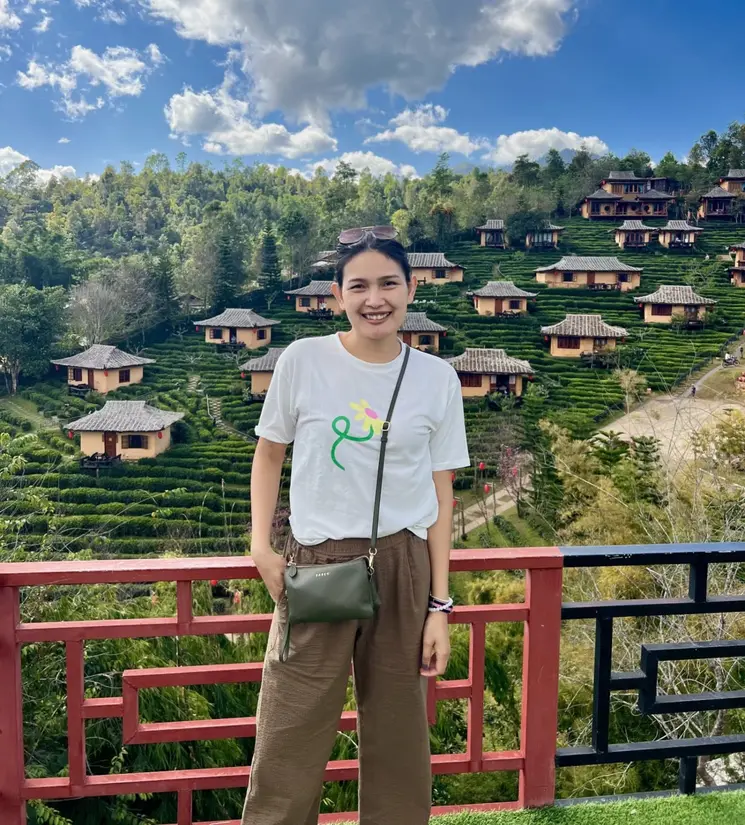
Ban Rak Thai is a small village right on the border with Myanmar in northern Thailand. It lies at about 1800 meters above sea level, surrounded by rolling hills, tea plantations and a tranquil reservoir that makes for misty boat trips in the mornings during the cooler dry season (November to February).
The village was founded by soldiers from the Chinese province of Yunnan who fled their country during the brutal and bloody communist takeover in the mid-20th century. Forced to escape, the soldiers crossed the border into Myanmar and eventually ended up in northern Thailand.
They sought refuge, and Thailand welcomed them. In return, the refugees named the village "Ban Rak Thai," which means "Village of Thai Love." Much of the Chinese architecture, food, language, and customs were retained, but the new settlers also integrated well into Thai society.
Why travelers love Ban Rak Thai
There isn't much to do in Ban Rak Thai except enjoy the peace and quiet and soak up the tranquil atmosphere. You don't come here to tick off tourist attractions, like in Chiang Rai; the village itself is the main draw. You'll find charming host families nestled around the lake, red lanterns hanging from the wooden houses, and neatly arranged tea plantations.
It's like a journey back to "old China," blended with the typical characteristics of Thailand – a place where you can simply switch off and enjoy the fresh mountain air. Most international travelers don't venture this far north, but many Thais do. And in our experience, the places popular with locals are often the most beautiful.
Things to see and do in Ban Rak Thai
Dine at a traditional Yunnan restaurant
For some reason, we had decided to skip breakfast before our drive to Ban Rak Thai, so we arrived absolutely starving. The drive from our hotel, the Sang Poy Cottage, took an hour – the roads wound their way up ever higher, more mountainous, and more remote routes.
We went straight to a restaurant by the lake and ordered a feast. There were various soups and salads, bao buns, and a slow-cooked pork knuckle. The pork was incredibly tender, but what surprised us most was its flavor: it strongly resembled the Colonel's famous chicken recipe (KFC). We wondered if he had gotten the recipe from there.
We ordered a set menu, a popular way to have lunch or dinner in Ban Rak Thai's main restaurants. Yunnanese cuisine is generally hearty and warming – perfect for the cooler mountain climate. Served with tea, it was a real treat.
Treat yourself to a coffee at Leewine Cafe
Perhaps the most photogenic spot in Ban Rak Thai is Leewine Coffee, with its windows offering a magnificent view of the lake. You can sit inside or outside – both provide wonderful views of the misty landscape and the Chinese wooden boats floating on the lake.
Take a complete circuit around the picturesque lake.
A hiking trail in Ban Rak Thai circles the lake, passing houses, guesthouses, cafes, and several truly beautiful viewpoints. A viewpoint right next to the Lee Wine Ruk Thai Resort, with its famous yellow mud-brick houses and tea plantations, is particularly worth seeing.
Take a boat trip on the lake at sunrise.
If you find a nice place to stay in Ban Rak Thai, you should definitely book it, because the next morning you'll have the opportunity for a sunrise boat trip. With a bit of luck, you'll be in luck and the conditions will be perfect – a light mist through which the sun gently shines.
Visit the Lee Wine Ruk Thai Resort
The next best alternative to staying at the Lee Wine Ruk Thai Resort is a visit to the viewing platform. For a small entrance fee of 50 THB, you can admire the famous cottages, tea plantations, and viewpoints above – undoubtedly one of the best places in Ban Rak Thai to take photos.
Take part in a traditional tea tasting.
Tea tastings are a wonderful way to immerse yourself in the culture of Ban Rak Thai in Yunnan. This region of Thailand is famous for its tea – especially oolong tea, which thrives in the cool mountain climate. Alternatively, green tea and jasmine tea are also available, popular options for those who don't enjoy oolong.
Accommodation in Ban Rak Thai
Finding accommodation in Ban Rak Thai can be difficult for two reasons. Firstly, the supply is very limited; in fact, there are only about 20 to 30 places to stay in the village itself. Secondly, these months are booked up well in advance, especially during the peak season from November to February. For this reason, we stayed at Sang Poy Cottage, about an hour outside the village.
How to get to Ban Rak Thai
From Pai
Pai is certainly a better choice than Chiang Mai for a day trip to Ban Rak Thai, but the motorbike ride can still take up to three hours. You travel west on Highway 1095 and then turn north onto Route 4001 – the narrow road that winds through hills and tea plantations. Important: This last section is paved, but you should still watch out for the occasional pothole.
From the city of Mae Hong Son
Mae Hong Son is an even better option than Pai for a day trip to Ban Rak Thai. The motorbike ride takes only about 60–90 minutes and follows Route 108 north before joining Route 1095 and then taking a detour onto Route 4001. Mae Hong Son offers a much more authentic, local feel than Pai, with numerous temples, markets, and attractions in the surrounding countryside.
Recommended route: Mae Hong Son circular trail
We recommend visiting Ban Rak Thai as part of a motorbike tour called the Mae Hong Son Loop, which typically takes four to five days from Chiang Mai. The Mae Hong Son Loop is an unforgettable experience: winding roads, breathtaking mountain panoramas, and countless cultural treasures to discover.
Read more: Mae Hong Son Loop: The Ultimate 5-Day Motorcycle Tour
Best time to travel to Ban Rak Thai
The ideal time to visit Ban Rak Thai is from November to March, as this is when you have the best chance of seeing mist over the lake. Daytime temperatures are relatively warm, but it cools down considerably at night and in the mornings. However, a visit during the rainy season is also worthwhile. The rain creates lush vegetation, and it's often easier to find suitable accommodation then.
Concluding remarks on Ban Rak Thai
Despite today's tourism, Ban Rak Thai is definitely worth a visit. The village's history and traditions are authentic, and there are plenty of opportunities to relax and soak up the atmosphere. If you're planning a trip to the north, we recommend our Chiang Mai travel guide – a great starting point.




Community
Comments 0
Start the conversation.