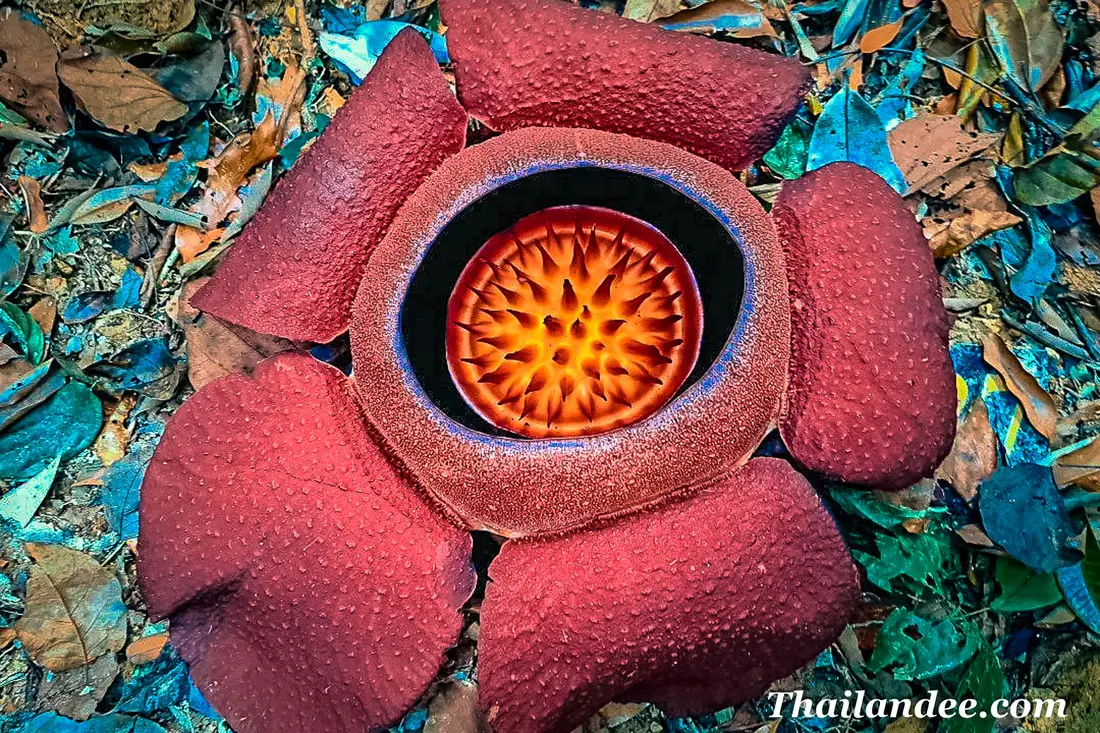
In Khao Sok National Park, you can find the Rafflesia, considered the world's largest flower. It can reach a diameter of up to 90 centimeters and weigh up to 7 kilograms. Its flowering period typically extends from December to the end of March, but can begin later. It was discovered in 1818 by Sir Thomas Stanford Raffles, who also gave it its name. It grows in the tropical rainforests of southern Thailand, particularly in Khao Sok National Park, which remains the country's most famous place to admire it. It also occurs in Malaysia and Indonesia, but only in limited areas and in small numbers. In Thai, the flower is called "Bua Put." The variety found in Khao Sok has little fragrance. During the flowering season, an open Rafflesia is not present every day, and since it only lasts about five days before wilting, it is impossible to see an open bloom during a visit to Khao Sok, even at this time of year. There is a specially designed jungle hike that leads tourists to a monitored area where they can view the Rafflesia with a local guide. The route is marked by national park rangers to ensure that hikers do not damage the plant.
Since we are in Khao Sok National Park, you will need to pay the entrance fee if you haven't already purchased a ticket. There is a checkpoint at the start of the hiking trail. To see the Rafflesia flowers in Khao Sok, you will also need to hire a guide. Local agencies and accommodations offer tours with a knowledgeable guide.
If you have your own transportation, you can easily reach the starting point of the Rafflesia hike by walking along the roadside. However, you will be asked to hike up with a local guide who will ensure that everything possible is done to protect the flower, which is an endangered species.
How to get there
How do you get to the Rafflesia, the world's largest flower? If you have transportation, you can easily reach the starting point of the Rafflesia hike from the roadside. However, it is recommended to hike with a local guide who will ensure that everything possible is done to protect the flower, an endangered species.




Community
Comments 0
Start the conversation.