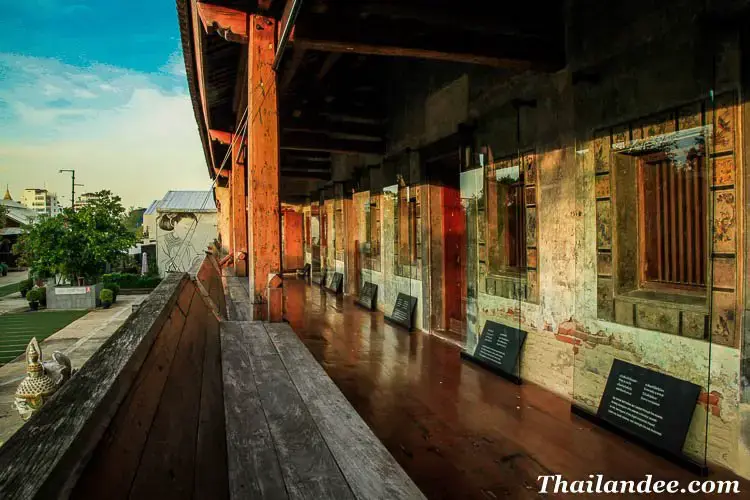
Lhong 1919 in Bangkok, best described as a cultural center, was once a kind of shopping mall housed in a listed building, combining arts, crafts, and restaurants. Located on the banks of the Chao Phraya River, it comprises a rectangular complex of old Siheyuan-style (Chinese architectural) warehouses, originally built in 1850 by Phraya Pisansuphaphol (Chuen), a wealthy Thai-Chinese, to receive ships from British Malaya, mainland China, and Hong Kong. The site's name derives from the Huang Chung word "Lhong," which referred to a steamship port. 1919 marks the year the warehouses were acquired by the Wanglee family, who own them today. The property remained privately owned for a long time until the family began renovations in October 2016 in preparation for its official public opening on November 2, 2017. Surprisingly, it's relatively unknown, yet a charming place that invites you to immerse yourself in history. Stroll through the buildings with their old murals and along the sections of the wall adorned with impressive street art, whose style perfectly complements the spirit of this historic landmark. To discover it, with the river at your back, turn left, midway between the two buildings, and enter the small alleyway and go through its door. You'll arrive at a small courtyard, which, for me, is the hidden gem of Lhong 1919. The most famous mural is located on the left-hand wall, with more visible in the background. If Asiatique The Riverfront, a large night market also housed in old warehouses, seems too artificial, I highly recommend Lhong 1919. It's more authentic, historic, and intimate.
Entry is free, but be aware: Lhong 1919 is not yet open to the public. It is slated to be converted into a luxury private residence by a developer.




Community
Comments 0
Start the conversation.