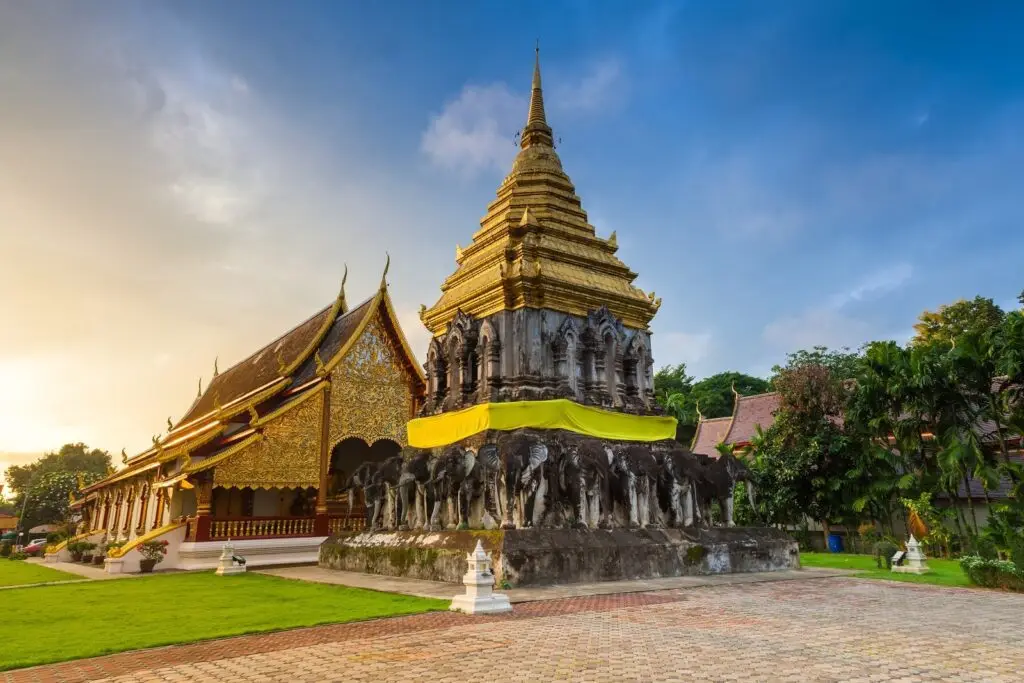
A travel guide for Chiang Mai
Exploring the largest province of Northern Thailand
The city of Chiang Mai, also known as the Land of the Misty Mountains in northern Thailand, was founded in 1296 as the capital of the Kingdom of Lanna and remained so until 1558.
Chiang Mai, home to magnificent temples, cultural diversity, and breathtaking natural beauty, is a popular destination that embraces modernization while retaining the relaxed charm of its old city. Visitors should be sure to experience the many activities on offer. They can embrace the concept of "slow living" and explore Chiang Mai's mountainous landscape in one of its many well-maintained national parks. They can also sample delicious local dishes, experience traditional cuisine firsthand, and immerse themselves in the arts and crafts for which the city is renowned. Modern architecture contrasts with centuries-old monasteries – Chiang Mai skillfully blends past and present, preserving its heritage while embracing the modern.
To say that Chiang Mai has something for everyone would be an understatement. The city appeals to a wide range of tastes, attracting young generations and seasoned travelers, shopaholics and art lovers, nature explorers and adventurers, as well as culture enthusiasts and hipsters alike. This charming city is a paradise for gourmets who appreciate high standards, including Michelin stars, and for street food lovers who want to savor authentic local cuisine.
Chiang Mai has been voted one of the most famous cities in the world by travel publications such as Travel and Leisure and TripAdvisor, and is the gateway to the north with good connections to neighboring provinces as well as a growing aviation hub connecting Thailand with countries in the Asian region.
With an average temperature of 25°C, cooler than the rest of the country, the region is a popular destination year-round, especially during the Songkran festival in April. The peak tourist season runs from November to February – generally the best time to visit, as the cooler weather attracts both local and international travelers.
Arrival
There are countless daily flights from Bangkok to Chiang Mai, operated by THAI, Nok Air, Bangkok Airways and Thai Smile (+662 118 8888).
EVA Air and AirAsia offer direct flights from Taipei to Chiang Mai. Cathay Pacific and Cathay Dragon fly direct from Hong Kong. Qatar Airways flies directly from Doha to Chiang Mai.
Buses run from Mo Chit 2 bus station on Kamphaenphet Road in Chatuchak from early morning until late evening. Sombat Tour and Nakhonchai Air are among the leading operators on this route.
The train connection from Hua Lamphong station in the capital to the Rose of the North is also a popular option. On this website you can find more information and book various modes of transport in Thailand, including train journeys.
locomotion
Various public transport options are available in Chiang Mai city centre, including the air-conditioned Chiang Mai Smart Bus (15-30 Baht per ride) and the famous red pick-up truck (approx. 30 Baht for a short ride).
Yellow pickup trucks serve as taxis and transport passengers between city districts. For longer journeys outside the Muang district, you can alternatively use the Arcade Bus Terminal in Chiang Mai.
Grab offers a taxi service for those familiar with the ride-hailing app. Drive Hub rents cars starting at just over 700 baht per day. You can pick up your car at the airport after your flight to Chiang Mai. To comfortably explore the numerous hills surrounding Chiang Mai, adventurous tourists often rent a motorbike for 250 baht per day. Visit the Funky Bike Rental website. Bikky Chiang Mai offers both cars and motorbikes for rent. Click here to go to their website.
Things to do in Chiang Mai
The ancient walled city of Chiang Mai was the center of the Lanna Kingdom when King Mengrai the Great founded it in 1296. For centuries, Chiang Mai has been the cultural heart of North India, celebrating its 700th anniversary in 1996. Within the city walls, the area embodies the heart of Buddhism, which spread throughout the region, and numerous temples were built during the reign of the founding king. Must-see sites include Wat Chiang Man, the first temple in Chiang Mai, Wat Chedi Luang, and Wat Phra Singh. The old city offers accommodation to suit all tastes and comfort levels. This vibrant and dynamic city is like an open-air museum and has maintained its status as a cultural and religious center since its founding. There's always something happening in and around the old city walls. You can explore the area on foot, or take a city tour on a small green bus, where a guide will share the history of this popular city. The tour, lasting just over an hour, will broaden your perspective on the city. Part of the proceeds benefits a project to preserve green spaces in the province and the trees along the city moat, most of which are marked with a green ribbon. The service was established in 2016. The tour, with stops at key locations along the route, takes place between 9:00 and 11:00 AM and between 1:00 and 2:00 PM. The fee is 200 baht.
As for the weather, the cool breezes, fresh air, and clean ozone layer in the hilly regions are the main reasons why locals prefer Chiang Mai to other destinations, especially from November to February. However, during the hot season, particularly in April, temperatures soar to sweltering levels. Locals escape the heat with the famous Songkran Festival, which is internationally renowned. Anyone who has experienced the festival understands why the city is considered one of the best places to enjoy the holidays.
The Songkran festival in Chiang Mai takes place from April 13th to 15th. Weeks before the Thai New Year, temples are adorned with magnificent decorations, colorful flags, and paper lanterns symbolizing the approaching festivities. People can buy flags and lanterns and place them at a temple to pray for prosperity. Locals and visitors alike can participate in the diverse activities offered at these temples throughout the long festival. One of the traditional Songkran customs is for locals to bring sand to a nearby temple to build sand chedis and other replicas of temple buildings. The custom of bringing sand to temples for important holidays was meant to replace grains that villagers had inadvertently taken home. Removing sand from the temples was considered theft, and returning it was a form of restitution. This tradition continues to this day. Other activities include distributing food to monks, bathing Buddha statues, and the "Rod Nam Dam Hua," in which water is poured over the hands of older relatives to ask for their blessing for a positive start to the new year.
Experience the splendor of Songkran at major temples such as Wat Phra Singh and Wat Chedi Luang in the Muang district, while Wat Ton Kwen in the Hang Dong district often organizes special activities during the long holidays that are well worth a visit.
For local visitors, the Tha Pae Gate is one of the province's most picturesque sights. It is one of the five ancient gates that protected the old city of the Lanna Kingdom and were jointly recognized as a national historic site in 1935. The Tha Pae Gate is unique in that it features a "kuang," a spacious plaza for strolling, relaxing, and taking photographs. Special events are held here, including New Year's Eve celebrations.
The City Gate, part of the ruined city wall, is the central point and one of the most popular meeting places in Chiang Mai, attracting visitors from morning until late at night. It connects the city with its main attractions, including the Night Bazaar, the Old City, and the City Moat. The gate is also the starting point of the famous Tha Pae pedestrian street, which is open on Sundays.
Chiang Mai is rich in culture and its history is comprehensively presented in several museums within the city walls, including the Lanna Folklife Museum and the Chiang Mai Arts and Cultural Center.
The tour begins in Chiang Mai's Historical Centre and tells visitors how the city was built at the foot of Doi Suthep, up to the decline of the Mengrai Dynasty when it came under Burmese rule. Multimedia elements make the tour a more engaging experience. Archaeological finds beneath the museum suggest that it was part of the original wall of the Emerald Buddha Temple, which was built within the walls of the Royal Palace.
The Chiang Mai City Arts and Culture Centre uses multimedia to introduce visitors to the origins of Chiang Mai's identity. The "Best of Chiang Mai" room showcases some of the city's most significant inventions, including the Bo-Sang umbrella, Lanna folk toys, San-Kamphaeng porcelain, and silk textiles. In contrast, the "Life on the Mountain" room displays the cultural heritage of the hill tribes, which continues to this day.
Last but not least, the Lanna Folklife Museum offers everything from the Buddha image hall to the Lanna offerings, the Lanna writings and textiles, and the history of the building itself.
All three museums are located on Prapokklao Road in Chiang Mai's Old City and are open from Tuesday to Sunday, 8:30 am to 5:00 pm. Entry costs 90 baht per museum; alternatively, a combined tour for all three museums can be booked for 120 baht.
A visit to Chiang Mai offers numerous shopping opportunities and products to discover if you're in the mood for some retail therapy. The city's handicrafts are unique and largely locally produced. In San Kamphaeng, for example, the village of Bo Sang has been renowned for decades for its umbrellas, parasols, paper lamps, and fans. Outside of harvest season, the villagers used to craft their umbrellas from various natural materials such as bamboo strips, softwood, natural latex, and rice paper. Today, acrylic paints are used instead of natural dyes. In addition to being a leading producer of these items, the Bo Sang Handicraft Center now also offers accommodation.
Nearby, visitors can explore two potteries offering the region's most exquisite ceramics, known as Celadon ware. Siam Celadon and Ban Celadon make the San Kamphaeng district a must-see for arts and crafts enthusiasts. The light green, yellow, and brown Celadon pieces invite tourists to take a few home. Celadon ware is believed to have originated in the early 14th century. The local industry flourished until the Burmese invasion led to the downfall of the Lanna Kingdom. From the mid-17th century onward, cheaper blue-and-white ware produced in China competed with the market. The new era of Lanna ware began at the start of the 20th century.
Baan Celadon preserves the traditional celadon manufacturing method, handcrafting designs that reflect Thai art and cultural heritage through masterful painting and carving. Contact the company by email at info@baanceladon.
Despite its unclear origins, the Bo Sang Umbrella Village has survived the test of time and remains one of the most visited places in San Kamphaeng.
Siam Celadon, founded in 1978, continues to produce high-fired stoneware using a traditional wood-ash glaze, a technique discovered in China over 20 centuries ago. The company, which has received several prestigious awards, produces 400,000 pieces annually and supplies customers worldwide. Contact us by email at [email protected].
These businesses offer a convenient home delivery service.
Small communities have played a significant role in making their neighborhoods so popular with visitors. The San Kamphaeng district is known as an artisans' quarter. Alongside Bo Sang Village and the region's finest celadon pottery, Loang Him Kao, the area along the Kao River, has become a popular and modern destination for those interested in textiles, handicrafts, and accessories within a close-knit, friendly community. Fabric lovers will be in their element here, able to admire products from around the world. The textiles are locally made and unique in their own way. Every November, during the Loy Krathong Festival, a five-day fair takes place, showcasing even more shops, makers, workshops, and activities.
Just a short drive from Chiang Mai's Old City lies the village of the Mon people, originally from Ken Tung in Shat State, Myanmar. The village lives according to a slower pace of life and maintains a long tradition of handicrafts. It is open daily except Wednesdays, and the Chamcha market in the communal area takes place on weekends from 9 am to 2 pm.
The village has a wide variety of shops and stores where you can shop to your heart's content. These include:
Slowstitch Studio specializes in handcrafted, indigo-dyed home accessories, fashion accessories, and naturally dyed textiles. Further information can be found on their website.
Anda Indigo Chiang Mai presents indigo-dyed clothing and products.
Meena Rice Based Cuisine offers Asian, Thai, vegetarian, and vegan dishes. It was recently awarded the prestigious Bib Gourmand in the 2020 Michelin Guide, one of the restaurants in Chiang Mai to receive this distinction.
Visitors to Chiang Mai can observe how temples and villages have coexisted for centuries. This reflects their mutual dependence: locals support the monasteries with morning alms, material donations, and, when needed, with labor. Monks and temples reciprocate this support with spiritual guidance. The nearby temple also serves as a playground for children and a central location for community events such as New Year's celebrations and funerals. Baan Kang Wat, literally translated as "the village near the temple," is a new shopping center near Wat Rampoeng. It represents a close-knit community where locals are active, supportive, and look out for one another. The shops are built like small houses and offer a wide range of products—from coffee, tea, pastries, and churros to bags, T-shirts, small cacti, and trees. Workshops, such as bookbinding, are offered regularly. The area is as trendy as some sections of Nimman Street, but cozier, quieter, and less crowded.
Baan Kang Wat is located in Ban Rampoeng and is open daily except Mondays from 10:00 AM to 6:00 PM. Further information can be found on the website.
Anyone who hasn't tried Khao Soi, Nam Ngeow, and Nam Prik Noom hasn't truly experienced Chiang Mai. These local delicacies make a visit to this gem of North Maikia an unforgettable experience. Khao Soi (fresh egg noodles in coconut curry soup with chili paste), Khanom Jeen Nam Ngeow (rice noodles in spicy pork soup), and crispy pork rind with Nam Prik Noom (a popular North Maican green chili dip) are just a few of the dishes you absolutely must try. Khao Soi is a typical dish of North Maikia, and here in the region's capital, you can discover different variations in various restaurants. While the main ingredients are the same, the preparation and cooking methods make each Khao Soi a unique treat.
Recommended restaurants include: Huen Pen in the Old City near Wat Phra Singh, open daily from 8:30 am to 10:00 pm; Khao Soi Khun Yai or Grandma's Khao Soi between Wat Monthian and Wat Kuan Kama, open Monday to Saturday from 10:00 am to 2:00 pm; and Khao Soi Islam on Charoen Prathet in the Chang Moi subdistrict, open daily from 8:00 am to 5:00 pm.
While temples, old quarters, and local specialties enchant visitors with the typical Chiang Mai flair, Nimmanhaemin Street, or "Nimman" for short, offers a completely different atmosphere. Located in the heart of Chiang Mai's trendiest district, Nimman entices visitors with hip restaurants, cool cafes, bars, boutique hotels, shops, and shopping centers—all within easy walking distance. It's one of the best places to enjoy street food in the "Rose of the North," as Chiang Mai is also known.
Anyone returning to Chiang Mai will likely hardly recognize Nimman Street, as it's dynamic and its surroundings change with every visit. Trendy shopping malls, chic craft shops, boutique hotels, and hip cafes all contribute to this unique flair, which you have to experience for yourself to truly understand.
One Nimman Shopping Centre is one of the area's most popular destinations. With its Lanna style and blend of European architecture, it's a photogenic spot at every turn. This new city landmark houses a contemporary art exhibition that is sure to delight visitors. It's the perfect place to browse for arts and crafts, local design, and handmade products, and to unwind in its trendy bars in the evening.
Visit the Bunthomstan Guesthouse at Nimman Lane 5. This old wooden house, converted into a small hotel, is as cozy and stylish as you could wish for an overnight stay. You'll feel right at home.
Ristr8to Lab at Nimman Lane 3 is a unique, cult café dedicated to serving the best coffee, prepared by a team of award-winning baristas. An absolute must for coffee lovers.
Cheevit Cheeva Fine Desserts in Lane 7 is famous for its wide selection of sweet treats. Visit their website here.
An unforgettable visit to Chiang Mai isn't complete without a mountain trek through Thailand's stunning highlands. Chiang Dao, the "City of Stars," is the country's third-highest mountain at 2,186 meters and rises above the Ping Gorge on the slopes of Doi Chiang Dao. Camping in the area is a dream for stargazers, as Chiang Dao truly lives up to its name. At nightfall, you can admire countless celestial bodies. At the same time, the area is peaceful and picturesque, and the consistently pleasant temperatures make it a popular destination for climbers and trekking enthusiasts.
Chiang Dao is located 72 kilometers north of Chiang Mai on Highway 107 and can be reached by car in about an hour and a half. The bus service from Chang Phuek bus station to Thaton, with a stop in Chiang Dao, runs daily between 6:00 AM and 6:00 PM and costs around 45 baht, which is less than US$2.
Villa De View is highly recommended if you're looking for comfortable accommodation in a stunning location for a relaxing stay. Further information can be found on their Facebook page.
In Thailand, elephants play a major role in capturing the hearts of visitors. While the well-being and proper care of elephants requires a concerted effort from everyone involved, several sanctuaries have been established to care for our elephant friends who cannot live in the wild. Chiang Mai, rich in forests and land resources, is ideal for experiencing activities with the largest land mammals on Earth. There are many ethically run elephant camps in Chiang Mai. Here are a few we recommend.
At the Elephant Jungle Sanctuary, one of many attractions, tourists can feed, wash, and bathe these lovable animals. The sanctuary was established in 2014 due to concerns about the elephant population in the region. Members of the Karen hill tribe and local people joined forces to create this facility, where injured and abused elephants receive excellent care after their rescue. A particular highlight is the mud bath for all visitors who don't mind getting dirty and splashing around in the mud with the elephants as they play playfully.
Elephants naturally love to swim, splash in the water, and rub themselves with thick mud. This benefits their skin and their physical and mental well-being.
For inquiries regarding the Elephant Jungle Sanctuary in Chiang Mai, please email [email protected]. Further information can be found on the website.
The Into the Wild Elephant Camp on Changphuek Road and Chang Chill in the Mae Wang district guarantee visitors a unique experience with Karen elephants. There, the mahouts demonstrate how they prepare meals with wild herbs for their magnificent companions in the traditional Karen style. Tourists can also sample traditional Karen home cooking at the camp, including Karen chili paste.
Another facility of this kind is the Patara Elephant Farm, whose elephant day care center broadens the view of elephant health care and makes it possible to observe the animals interacting with their family members in their natural environment.
While elephant conservation is based on a 4-point approach encompassing rescue, recovery, reproduction and reintroduction, the farm's activities are designed to provide an educational and holistic experience, from learning about elephant health and behavior to watching them being fed, cleaned and bathed.
The elephant farm is located in the Hang Dong district and offers visitors a diverse program. Further information can be found on the website. Bookings can be made by email at [email protected].
In Chiang Mai, you're highly likely to come across shops offering unique textiles. The entire Lanna Kingdom is known for its ethnic diversity, which has led to the creation of numerous local fabrics, each with its own specific characteristics. Inspired by a desire to revive traditional Thai knowledge of intricate handweaving and artistic patterns, Patricia Cheesman founded the Studio Naenna Company in 1986 as the marketing arm for the weaving group she had established. This group, which calls itself "Weavers for the Environment," aims to train young women in the villages of the Chomthong district south of Chiang Mai and provide them with meaningful employment. This gives the women an additional income and eliminates the need to work far from home. The group also researches and documents indigenous knowledge of natural dye plants, weaving techniques, and the cultural aspects of traditional clothing and textiles. Years of collaborative effort have resulted in ready-to-wear clothing, accessories, household goods, and home furnishings made from natural fibers. These are available at Studio Naenna's showroom on Nimmanhaemin Street and at their workshop on Soi Changkhian in the Chang Phuek district. On Soi Changkhian, visitors can delve into the history of textiles and view the founder's collection in the gallery. The exhibition is only open during the winter months (from late November to February, as it becomes too hot to display antique textiles after that). Visitors can also participate in various workshops on textiles and natural dyeing – from multi-hour demonstrations and full-day introductions to Thai textiles to two half-day advanced courses on natural dyeing. Studio Naenna is currently managed by Lamorna Cheesman, Patricia's daughter. For more information, please email [email protected].
Baan Rai Kong Khing, originally formed from the merger of two villages, has established itself as a community dedicated to promoting health and well-being. The village is renowned for its abundant herbal resources and the concept of self-sufficiency, pioneered by the late King Bhumibol Adulyadej. This award-winning village offers visitors an authentic, agriculture- and health-based tourism experience, where families work together to meet everyone's needs. Some houses offer homestays, allowing visitors to experience village life in a variety of ways.
Visitors can explore the area on various cycling routes, which are not to be missed. The traditional village massage, known as Yam Khang, is also highly recommended. This massage, passed down through generations, involves hot coals while the masseur walks their heated feet over the client's limbs to release tension. Cooking classes are another popular activity. A particularly popular local dish is Khai Pam, an egg dish cooked in banana leaves on a stove.
Located in the Nong Khwai subdistrict, Hangdong County, the village offers visitors an unforgettable experience, allowing them to learn about and appreciate the natural way of life of the local people. This makes them feel at home on every visit. It was awarded the Best Community-Based Tourism Initiative prize by the Pacific Asia Travel Association (PATA) at the 2015 PATA Tourism InSPIRE Awards.
Selected articles about Chiang Mai
A guide to stargazing in Thailand: The best places for stargazing, national parks and planetariums
In short: Thailand is one of Southeast Asia's best destinations for stargazing, with certified star parks, mountain viewpoints, island paradises,...
Inside Patara Elephant Farm, the ethical elephant sanctuary that is redefining elephant conservation in Thailand
In short: The first thing you notice at Patara Elephant Farm is what's missing. No concrete enclosures, no steel posts, no...
What are the differences between the various Thai curry dishes?
Do you need travel information?
Discover everything you need to know before your trip – from visa requirements and entry guidelines to essential travel tips and frequently asked questions.




Community
Comments 0
Start the conversation.