Not all temples in Chiang Mai are worth visiting. For a first trip, we recommend starting with an absolute must-see and then choosing two or three more temples depending on your interests.
In this guide, we will show you what makes each temple worth seeing, which temples you can skip, and how to plan your visits so that you don't get tired.
For your first Chiang Mai experience: Wat Phra That Doi Suthep
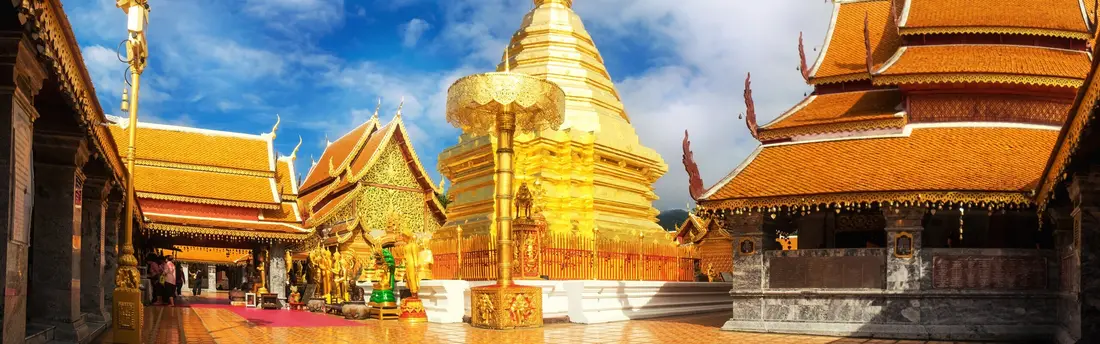
If you only have time for one temple in Chiang Mai, I would choose Wat Phra That Doi Suthep. It's the best temple for understanding the city.
Nowhere else are the city's sacred mountain, Buddhist traditions, Lanna heritage, and landscape combined into a single experience.
This temple, perched atop a mountain peak, is the spiritual symbol of Chiang Mai. For centuries, people have climbed this sacred mountain to pay homage to a Buddha relic, and they continue to do so today.
Come by on any day and you will see locals (not just tourists!) kneeling, singing and circling the stupa adorned with lotus flowers.
For an even deeper connection, I highly recommend the evening monks' chanting. It's my favorite part. As the crowd thins, silence descends upon the entire temple; only the monks' chanting and the prayers of the faithful can be heard.
Even the journey there is an experience: a winding drive through the mountain forest and the famous Naga Staircase with its 306 steps. Once at the top, a gleaming golden chedi and a breathtaking panoramic view over Chiang Mai await you.
Tips from a local tour guide:
Doi Suthep is famous, so expect large crowds during the day. Those seeking a quieter experience should arrive around 4:00–5:00 PM. This is also a good time to enjoy the sunset and the evening chants.
If stairs are a problem, don't worry – the funicular railway will take you past the more than 300 main steps. Once you reach the top, however, you will still have to climb a few more stairs.
The four I would add after Doi Suthep
After Wat Phra That Doi Suthep, I highly recommend including these four temples in your trip. They will give you a much more comprehensive picture of the city's temple culture.
Wat Pha Lat: A hidden temple in the forest
If you want to experience the quieter, more spiritual side of Chiang Mai, I would choose Wat Pha Lat temple.
Located in the middle of Doi Suthep, this small forest temple feels like another world, far from the hustle and bustle of the city and the crowds at Wat Phra That Doi Suthep.
The forest, the babbling brook, the moss-covered ruins and the ancient Buddha statues make this place more of a place of tranquility than a place where one simply visits tourist attractions.
Here, the forest is part of the temple experience. Sit in the shade, listen to the stream, or meditate on your own.
For an even more immersive experience, we recommend hiking the Monks' Trail through the forest. This 30-minute hike leads over roots, rocks, and a gentle incline. Those who prefer to conserve their energy can alternatively arrive by car.
The best way to visit: Combine Wat Pha Lat with Doi Suthep. Visit Pha Lat first to experience the tranquil, forested side of the mountain, and then continue up to Wat Phra That Doi Suthep to enjoy the impressive ceremony.
If you only have one place to visit in the old town: Wat Chedi Luang
If you only have time for one temple in Chiang Mai's old city, I would choose Wat Chedi Luang, as it combines Chiang Mai's past and present in one place.
The huge, ruined chedi is one of the most impressive relics of the city's Lanna past, and the temple once housed the Emerald Buddha, which is now venerated in Bangkok.
But this is not just a historical site – you will also find an active monastery here, where monks live, pray and receive offerings.
Instead of just sightseeing, we can arrange a conversation with a monk for you.
It is a rare opportunity to sit down with a monk and have a genuine conversation about Buddhism, monastic life, and the daily life of a monk – something most visitors would never experience on their own.
Visit the monastery around 7:30 am and you will see it come to life as young monks return from distributing alms and locals kneel to offer sacrifices.
Wat Phra Singh: The classic temple of Chiang Mai
This is the temple I would choose if you want to see what a classic temple in Chiang Mai looks and feels like.
The highlight is the Viharn Lai Kham (the prayer hall) with its layered roofs, intricate wood carvings, golden stencil paintings and original Lanna murals – some of the finest examples of northern Thai craftsmanship in the city.
The temple also houses the revered statue of Phra Singh Buddha, which, in addition to its architectural appeal, adds a strong spiritual dimension to the visit.
The best atmosphere can be experienced in the late afternoon.
Experience the golden hour on the 32-meter-high main chedi, listen to the monks' evening chanting, and (if it's Sunday) head straight out to the Sunday night market.
Wat Chiang Man: See where Chiang Mai began
Wat Chiang Man is a must-see if you want to understand how Chiang Mai grew around its temples.
The temple, built outside Chiang Mai, was a center for education, worship, festivals, and community gatherings. Around it, residential buildings, markets, and local life developed.
Therefore, when walking through the old town, you will see temples in the middle of residential areas, in markets and in everyday life.
Wat Chiang Man also offers you a glimpse into early Chiang Mai.
Go to the stone inscription from 1581 and see how the founding date of Chiang Mai was carved in stone.
Next, discover the classic craftsmanship of the early Lanna dynasty at the Elephant Chedi. There you can admire 15 life-size stone elephants supporting a golden spire (a fantastic photo spot!).
Inside you will find the tiny Crystal Buddha and Phra Sila, which offer a glimpse into the older Buddhist beliefs and traditions long before the founding of the city.
Worth a visit if you have a specific interest.
I wouldn't recommend these to every first-time visitor. But if you have a particular interest in them, they can be very rewarding.
Wat Umong: Enter a 700-year-old meditation tunnel
If Pha Lat seems like a hidden temple in the forest to you, you can visit a real, active meditation monastery at Wat Umong.
It is the only temple in northern Thailand with a network of 700-year-old underground brick tunnels for meditation.
Stroll barefoot past dimly lit shrines, ancient Buddha statues, and faded 14th-century murals. To absorb the silence, sit on the ground for a while.
Outdoors, exploring the scattered, broken Buddha statues and ancient ruins can evoke a sense of Zen.
Would you like to delve even deeper? Participate in the temple's monk-led retreats, which usually last 3 days or longer.
If you have limited time, we can arrange a one- to two-hour session with a former monk for you. This way you can still experience the atmosphere and practice yourself.
Temples I would skip on a short trip
Wat Phra That Doi Kham: Do not visit unless you want to see the "Temple of Happiness".
This temple is famous for lottery numbers, wishes for money, and lucky charms. The drawing of the "lucky numbers" is the reason why the entrance area is lined with flowers and lottery stalls. The prayer and offering areas are also well-frequented.
Furthermore, traffic disruptions occur uphill, especially on weekends.
Wat Ban Den: Too far away (and too new) for a first trip to Chiang Mai
Yes, it's huge and photogenic. But what you see today was only built in recent years and it lacks cultural and historical heritage.
Furthermore, you will need to spend about 3 hours in the car for a round trip from Chiang Mai.
How to organize a temple tour without experiencing temple fatigue
To prevent temple fatigue, we design the activities to make your trip more varied and interactive:
You won't spend the whole day looking at temples.
You will see how the locals practice Buddhism, talk to a monk, try local food, participate in evening chants and enjoy the panorama of Chiang Mai.
We also pay attention to the right time for visiting the temple.
They will visit Wat Chiang Man, Wat Pha Lat and Wat Phra That Doi Suthep during quieter times and use the busier time slot from 9 am to 3 pm for monk talks at Wat Chedi Luang.
Would you be interested in such a temple day? Contact us and we will tailor it to your trip.
What you should know before visiting the temples of Chiang Mai
Cover your shoulders and knees.
A T-shirt and loose trousers or a longer skirt are the simplest choice. Avoid tank tops, crop tops, and very short shorts.
Take off your shoes
Furthermore, you must remove your shoes before entering some buildings. Therefore, wear shoes that are easy to put on and take off.
Do not point your feet at Buddha statues or monks.
If you are sitting on the floor, pull your feet behind you or to the side.
You don't have to donate.
Some visitors assume that they are expected to donate money when visiting a temple.
You do not have to make a donation or purchase religious offerings just because you are visiting.
If you would like to donate, you can do so. If not, please don't feel pressured.
Women: Please observe restricted areas.
Women can visit most temples in Chiang Mai, but some holy sites are closed.
For example, women are not allowed to enter the Inthakhin pillar shrine at Wat Chedi Luang or the main silver ubosot at Wat Sri Suphan. However, you can still visit the other temple complexes.
Make your Chiang Mai experience more than just a temple tour
So you've already planned the temples. Now it's a matter of deciding what to design around them.
Tell us what you are interested in and we will help you go beyond the sights and delve into the underlying culture – to understand the rituals, stories and Buddhist daily life that you might otherwise miss.
Discover more tips for planning your trip:
Community
Comments 0
Start the conversation.