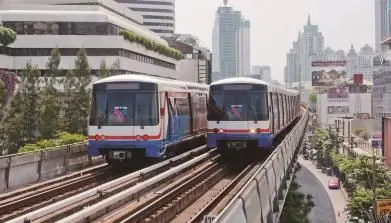
Bangkok boasts an extensive transportation network, with buses, taxis, subways, and tuk-tuks readily available, making it easy to get anywhere you want. However, traffic can be congested during peak hours, so plan your travel time accordingly.
Bangkok Railway
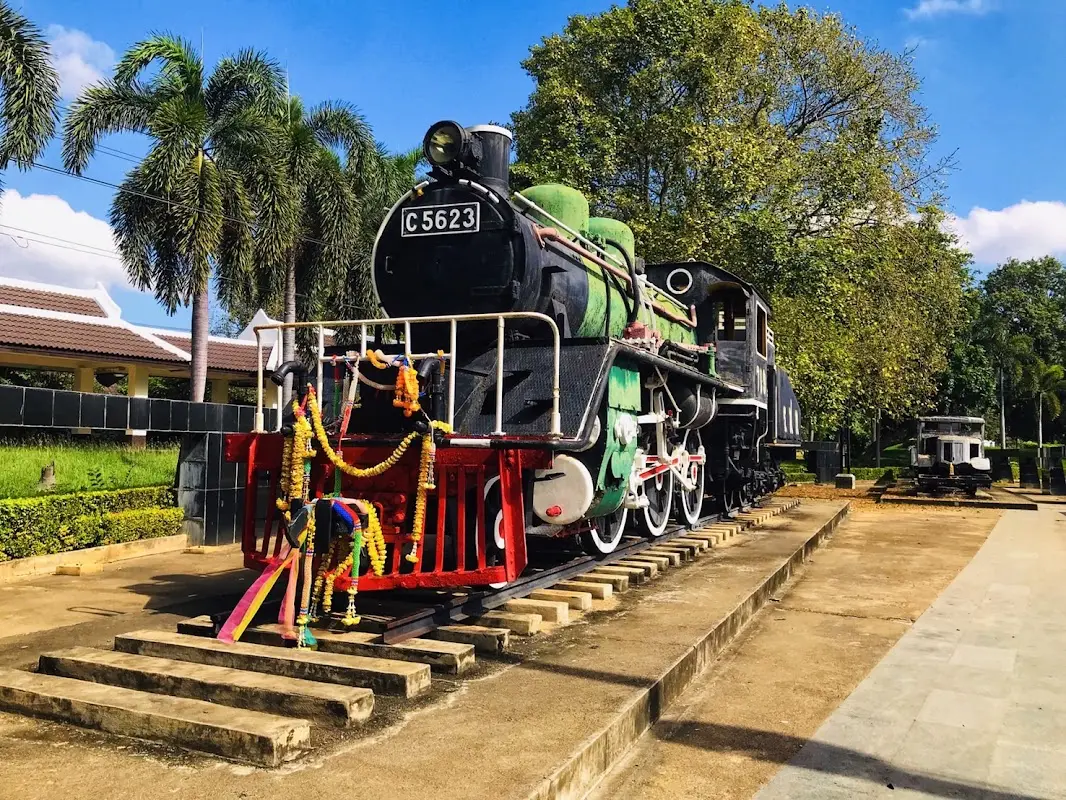
Thailand's railway network covers all parts of the country and also connects with neighboring countries such as Malaysia. Traveling through Thailand by train is a great option, allowing you to enjoy the scenery along the way.
Beyond the beautiful scenery, you can also learn about the stories and culture behind each station. Who says travel isn't a form of reading? Reading the people along the way, reading the scenery, reading the accumulated culture. Trains are also a form of reading, carrying travelers who love to read attentively.
Hua Lamphong Railway Station,กรุงเทพมหานคร
Hua Lamphong Railway Station is the largest railway station in Thailand, located in the Pathuwan area of central Bangkok. It is the starting point for four railway lines in Thailand and the terminus of the Orient Express luxury train. Its official name is actually Krungthep Station, but this name is far less widely used than Hua Lamphong Station.
The train station has over 20 platforms and 26 ticket booths (self-service ticketing is available inside the station), serving more than 130 trains and approximately 60,000 passengers daily. Since 2004, Hua Lamphong Railway Station has been connected to the MRT station, named Hua Lamphong MRT Station. From Hua Lamphong Railway Station, passengers can easily access Chinatown, the Chao Phraya River, Road 16, and Road Sukhumvit, making transportation very convenient.
Pathum Wan, Rong Muang, Hua Lamphong Railway Station,Bangkok
Makkasan Railway Station, สถานถไฟมักกะสัน
The Eastern Line train station is located on Nikom Makkasan Road, and trains depart daily for eastern Thailand. Nikom Makkasan Road, Bangkok
Thonburi train station, สถานีรถไฟธนบุรี
Thon Buri Railway Station, located near Arun Amarin Road, is the terminus of the southern railway line, with daily local trains departing for southern Thailand. Arun Amarin Bridge, Thon Buri, Bangkok, 10600; Thailand
Train lines
Thailand's train lines radiate outwards from Bangkok, forming four main lines.
Eastern Front
The Eastern Railway runs from Bangkok to Aranyaprathet on the Cambodian border, a distance of approximately 255 kilometers. The express train takes about 5 hours, while the regular train takes 7 hours. Major stations along the route include Nakhon Ratchasima and Ubon Ratchathani. Travelers to Siem Reap (Angkor Wat) in Cambodia can take the Eastern Railway, crossing the border at Aranyaprathet.
Northern Route
The northern railway line runs from Bangkok to Chiang Mai, a total distance of approximately 851 kilometers. The express train takes 14 hours and 30 minutes to travel, and the main stations along the way include Ayutthaya, Lopburi, Phitsanulok, and Lampang.
Northeast Line
The Northeast Railway runs from Bangkok to Nong in Laos, a distance of approximately 624 kilometers. The express train takes 11 hours and stops at major stations including Ayutthaya.
Nakon Ratchasima, Khon Kaen, and Nong Khai.
Southern Line
The southern railway line starts in Bangkok, runs along the Malay Peninsula in the Gulf of Thailand, and is about 990 kilometers long, passing through Hua Hin and reaching Hat Yai.
International Line
There are regular bus services from Bangkok to Malaysia, running day and night, with both express and regular trains. There are three trains a week from Bangkok to Butterworth, Malaysia, on Mondays, Wednesdays, and Fridays; if you wish to travel to Singapore, you will need to transfer at Butterworth.
If your trip to Thailand involves multiple train journeys, there's a cost-effective "Train Pass" available at Hua Lamphong Railway Station in Bangkok. It allows you to travel in any second or third class carriage for 30 days and costs 1500 baht.
Bangkok long-distance bus
Mo Chit Terminal (North Bus Terminal)
The Northern Bus Terminal primarily operates long-distance bus services to northern provinces of Thailand, such as Chiang Mai.
Take the BTS Skytrain and get off at Mo Chit station. It's about a 30-minute walk from there; you can also reach it by taking bus routes 77, 138, or 3.
Ekkamai Terminal (Eastern Bus Station)
The Eastern Bus Terminal primarily operates long-distance buses to eastern provinces of Thailand, such as Pattaya, Rayong, and Koh Samet.
There are two types of long-distance buses departing from here: one is blue, which does not stop along the way; you need to buy a ticket at the station to take this type of bus. The other type is red, which makes stops along the way; you can board this type of bus first and buy a ticket on the bus, depending on your destination.
Take the Skytrain (66 2 3912504) and get off at Ekkamai station. It's within walking distance.
Southern Bus Terminal (sai tai mai)
The Southern Bus Terminal primarily operates long-distance buses to southern provinces of Thailand, such as Phuket. The bus number 66 2 4347192 indicates that you can only reach the Southern Bus Terminal by rental car; there are no subway or bus stops nearby.
subway
BTS Light Rail
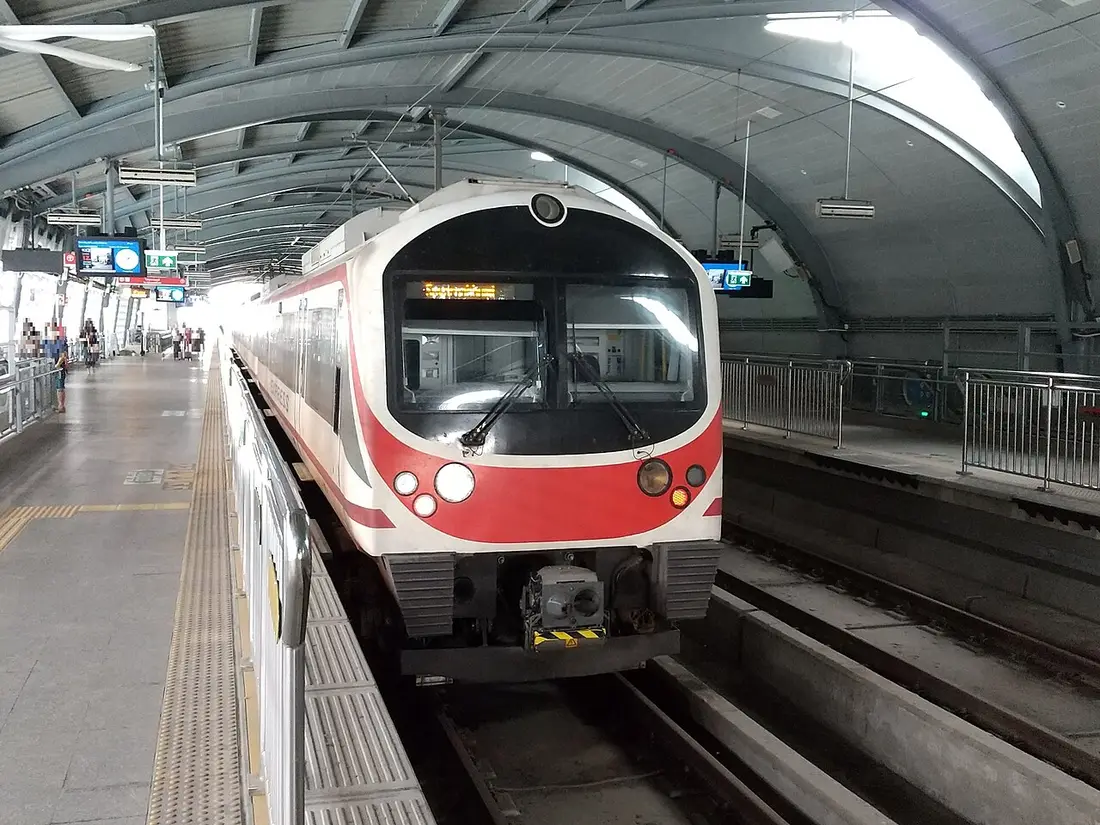
Currently, the Bangkok BTS Skytrain system has four lines: the Silom Line, the Sukhumvit Line, the Chaloem Ratchamongkhon Line, and the Airport Rail Link. Prices range from 15 to 40 baht per person (depending on distance); a one-day pass costs 120 baht per person.
Single-journey tickets and day passes for the BTS and MRT are not interchangeable and must be purchased separately. Siam Station, located at the entrance to Siam Square and Siam Center, costs twice as much as other stations. Here, you can disembark from one line and transfer to another.
MRT (Main Transit Railway)
Currently, Bangkok's subway system has only one line (the blue line), running from Hua Lamphong Railway Station to Kamphaeng Phet. Major stations include Hua Lamphong Railway Station, Sam Yan, Si Lom (where you can transfer to the Si Lom BTS Skytrain, but you'll need to buy a new ticket), and Chatuchak Park (the northern bus terminal; the Mo Chit BTS station also stops here).
Adults: 15-39 THB/person; Children (90-120 cm tall): 8-20 THB/person; Children under 90 cm tall: Free (price varies depending on distance). Passes: 1-day pass: 120 THB/person; 3-day pass: 230 THB/person; Monthly pass: 900 THB/person. A stored-value card offers a discount of 2-6 THB per use, with a 30 THB deposit required.
taxi
Taxis in Bangkok come in two types: those marked "taxi-meter" and those without. Taxis with "taxi-meter" use the meter, while those without require you to negotiate the price before getting in. The starting fare for a Bangkok taxi is 35 baht, with an additional 5 baht per kilometer after the first 2 kilometers. A taxi ride within Bangkok city limits typically costs 60-150 baht; from the airport to the city center, the maximum fare is no more than 500 baht.
Try to take taxis that are willing to use the meter. During peak traffic hours, it is recommended to take the light rail (BTS) or subway (MRT) instead.
Water transportation
Chao Phraya Express Boat
The public boats travel in both directions along the Chao Phraya River, stopping at each station, much like a bus. A single ticket is required; you must buy a new ticket to re-board. Sometimes, due to traffic congestion, taking the public boat is more convenient and faster. The public boats are categorized by color: orange, yellow, blue, green-yellow, and colorless (local line). They stop at 30 stations, and fares are based on a range, from a few baht to 30 baht. Colored triangular flags indicate express boats that do not stop at intermediate stations. The routes are as follows: Colorless (Regular): Tha Wat Rajsingkorn – Nonthaburi; Orange (Express): Tha Wat Rajsingkorn – Nonthaburi; Yellow (Express): Ratburana - Tha Sathorn – Nonthaburi; Blue (Express): Tha Sathorn - Wang Lang – Nonthaburi.
Cross-River Ferry
The ferry crosses the Chao Phraya River, taking about 5 minutes to reach the other side. Boatmen usually wait for a certain number of passengers before setting off, and boarding points are mostly near the pier. 5 baht per person.
Longtail Taxi
Longtail boats are available for rent to tourists, and the price has now risen to 1000 baht per hour. Their advantages are speed and the ability to navigate very narrow canals, including floating markets. They can carry up to 15 people.
There are two options: shared rides and chartering. It's best to avoid renting boats from touts at the pier. Boat rental service counters are available at piers such as Tha Chang and Tha Si Phraya, where tourists can arrange rentals. You can also book through a travel agency.
Hotel shuttle ferry
Hotels such as the Mandarin Oriental, Shangri-La, and Peninsula offer complimentary ferries to shopping centers near Central Pier, Oriental Pier, and Royal Orchid Sheraton.
Bangkok tuk-tuks
This is a Bangkok memory that evokes both love and hate; it appears in numerous movies. No one knows what Bangkok would be like without tuk-tuks. Generally, tuk-tuks are about 30% cheaper than taxis. It's best to agree on the price with the driver before getting in.
Community
Comments 0
Start the conversation.