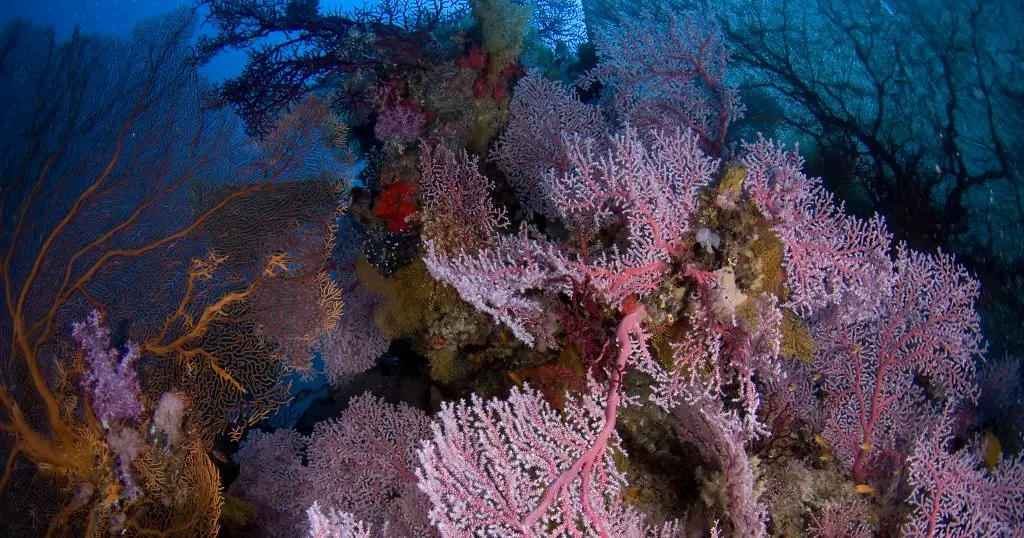
Thailand has numerous beautiful dive sites on both sides of the Thai peninsula, many of which can be reached from Phuket and Koh Samui on a day trip.
Coral reefs and shipwrecks are just a short boat ride from the coast, but if you want to go further out to the famous Similan Islands and Richelieu Rock, then you will need to book a few days on a dive safari boat.
Photo: MV Smiling Seahorse
Here you will find everything you need to know about diving in Thailand.
In the most popular diving areas, there are numerous independent dive shops, dive centers attached to large resorts, and liveaboard dive boats. The challenge lies in finding the right option from the multitude of choices. The following points should be considered when making your decision:
1. Consider your diving experience: Dive sites close to the coast are usually very gentle and are ideal for beginners (such as the dive sites around Krabi).
2. Liveaboard or Resort Diving? If you plan to dive for more than three days during your stay, a liveaboard or dive safari is highly recommended. This allows you to enjoy a variety of dives without the daily hassle of traveling to and from the boat and dive site. It's also the best way to explore more remote dive areas like the Similan and Surin Islands, and the only way to see the world-famous Richelieu Rock.
Photo: Thailand Aggressor
Diving cruise ships such as the MV Marco Polo, Genesis 1, the MV Smiling Seahorse, The Phinisi, The Junk and the Thailand Aggressor offer a range of 3- to 10-day itineraries from the southern Andaman Sea via the Similan Islands up to the Mergui Archipelago in Myanmar.
Where to dive in Thailand – The Gulf of Thailand.
On the eastern side of the Gulf, the areas around Pattaya and Ko Chang offer year-round diving opportunities, with the best time being from March to September.
Pattaya has been known as a beach resort since the 1970s. Located just two hours from Bangkok, it offers some of the most affordable and easily accessible diving opportunities in all of Thailand. Thanks to its numerous dive centers, it's an ideal place to learn to dive on a budget.
Ko Chang is a five-hour drive or one-hour flight from Bangkok, making it particularly worthwhile for experienced divers. Several dive schools operate in the area, each with its own favorite dive sites, typically around the rocks and pinnacles south of Ko Chang. The water is not particularly deep and is also well-suited for snorkeling.
To the west lie the larger islands of Koh Samui, Koh Phangan, and Koh Tao, as well as another group of smaller islands near Chumphon, which are much closer to the shore. Diving is possible in this area from January to October. Experienced divers should head to Koh Tao and include Sail Rock and Chumphon Pinnacle in their dive itinerary.
Where to dive in Thailand – The Andaman Sea
Marine national parks stretch along the entire west coast of southern Thailand, from Surin, which is near the border with Myanmar, down to Tarutoa in the tropics, near the Malaysian border.
The diving season in the Andaman Sea lasts from November to May, as the southwest monsoon begins in May, bringing rain and making the sea unpredictable. During this time, the inland national parks are closed to visitors. These include Surin, Similan, and Mu Koh Lanta.
Surin National Park is home to Thailand's most famous dive site – Richelieu Rock – which is the only one in the country with its own website. It's famous for good reason: a horseshoe-shaped cluster of rocks and boulders that supports an incredible diversity of marine life. In March and April, this is the place where you're most likely to encounter a whale shark.
Although Richelieu Rock actually belongs to the Surin National Park, it is usually included in diving safaris in the Similan Islands because it offers the best diving spots in the region.
The Similan Islands Marine National Park comprises nine islands, usually numbered 1 to 9. Koh Bon and Koh Tachai are also located nearby – both are commonly visited on a trip to the Similan Islands.
Each island is different and offers a variety of dive sites, from sandy bays to hard coral gardens and gigantic granite rocks to rocky underwater adventure playgrounds.
Phuket, Koh Phi Phi and Krabi
The most famous attraction between Phuket and Koh Phi Phi is Koh Dok Mai (Flower Rock); other nearby sites include the King Cruiser wreck, Anemone Reef, and Shark Point – all described on this website. Koh Young and Koh Mai are also located in this area.
Around Koh Phi Phi there are about a dozen dive sites: the most famous are probably Koh Bida Nok – an island in the south of the Phi Phi group – and Maya Corner – near Maya Beach on Koh Phi Phi Leh – the beach made famous by the film “The Beach” with Leonardo DiCaprio – currently closed to divers due to regeneration measures.
Further south lies the Mu Koh Lanta National Marine Park, which stretches approximately 30 km west to 30 km south of Koh Lanta and is home to numerous uninhabited islands considered excellent diving spots. Koh Ha (Five Islands) are tiny islets located 25 km west of Koh Lanta.
The two southernmost dive sites of Mu Koh Lanta are considered the best outside the Similan Islands: Hin Daeng (Red Rock) and Hin Muang (Purple Rock), Thailand's highest vertical underwater wall.
Hat Chao Mai National Park, mainly accessible from Pak Meng and encompassing Koh Mo(o)k, Koh Kraden, Koh Wean and Hin Nok with a number of established dive sites, is a paradise for macro enthusiasts.

Community
Comments 0
Start the conversation.