A travel guide for Phuket
Phuket is famous for its beaches, and for good reason. With so many well-known beaches, there's something for everyone. From snorkeling and diving to relaxing massages by the sea, each beach offers its own unique amenities. The best time to visit Phuket's beaches is from November to April, during the high season when the waves are calmer.
Arrival
Phuket Island is easily accessible. Most visitors arrive by plane: Phuket Airport is Thailand's busiest airport outside of Bangkok, connecting the island with cities in Asia, Australia, Europe, and the Middle East. Domestic flights within Thailand are also available, for example, for travelers from Bangkok.
To get from Bangkok to Phuket by bus, go to the southern bus station (Sai Tai Mai) in the capital and take the bus that terminates at Phuket 2 bus station on Thepkasatri Road. The journey takes 13 hours. To get to the aforementioned sights, you can either hail a red and yellow metered taxi in Phuket, negotiate a tuk-tuk fare, or use the ride-hailing app Grab (grab.com/th).
locomotion
By plane: The closest airport to Phang Nga province is Phuket International Airport. Local airlines offer daily flights between Bangkok and Phuket. From the airport, you can rent a car or book a private transfer to your beach destination in Phang Nga. Natai Beach is just a 30-minute drive north of the airport, while the northernmost beach, Bang Sak, is about a 90-minute drive away.
Things to do in Phuket
Phuket is widely known as a center for lively beaches and parties from sunset to sunrise on Bangla Road.
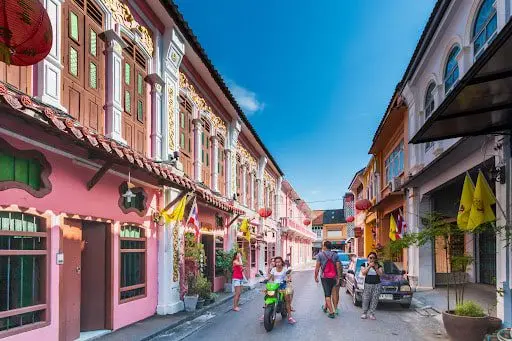
Phuket also offers modern street art, European-Asian shophouses, baby turtles fleeing to the sea, and tranquil temples away from the crowds.
If you avoid Phuket because you don't like the tourist attractions, you will also miss out on the history, culture and nature of the region.
Phuket's historic district should shape the region just as much as Patong and the nightclubs in Soi Bangla – given its longer and more vibrant history, one could even say it has a stronger claim to do so.
Tin mining was the reason for Phuket's existence long before the first tourist laid eyes on Patong Beach. During the industry's heyday from the 19th to the early 20th century, European traders and Chinese miners (Hokkien) extracted enormous quantities of tin from Phuket's soil. The town they built was shaped by both groups, but has also continued to evolve over time.
A steadily growing collection of street art now adorns many walls in Phuket's Old Town. Charming little boutiques have transformed Soi Romanee, the former red-light district of Phuket's Old Town, into their most popular Instagram hotspot.
The restaurants, boutiques, and cafes in the storefronts of Thalang Road are an absolute must-see during the day. On Sunday evenings, the street transforms into a huge pedestrian market, offering a truly spectacular experience.
Those with an appetite will find numerous artfully converted mansions in Phuket's Old Town, offering classic interiors and five-star menus. Two of the best are the Blue Elephant (a former governor's villa) and the Raya Restaurant (awarded the Michelin Bib Gourmand).
Boutique and budget hotels in Phuket's Old Town offer good value for money and a great atmosphere, but most tourists find the distance between Phuket's Old Town and the beach – a good 20 km from Patong – a bit too great.
For most tourists visiting Phuket, the beaches are the main attraction, while the pristine rainforest and waterfalls inland are often overlooked. Discover these authentic treasures of the island.
Khao Phra Thaeo National Park protects Phuket's last remaining rainforest and its wildlife – including rare muntjacs, gibbons, wild boars, and over a hundred bird species. Several forest trails wind through the undergrowth; the easiest leads for over 600 meters through a picturesque bamboo forest. A longer, 4-kilometer trail connects the two waterfalls, Bang Pae and Ton Sai.
Sirinat National Park, which covers a larger area of the island than Khao Phra Thaeo, offers nature lovers a bit more. Wooden boardwalks lead visitors through an extensive mangrove forest ecosystem and allow for occasional sightings of animals such as mudskippers, brown-winged kingfishers, and monitor lizards.
The beaches of Nai Yang, Nai Thon, and Mai Khao belong to Sirinat and offer a welcome change from the crowded beaches of Patong or Kamala. Those who truly want to escape the hustle and bustle should stay at one of the campsites in Sirinat.
Party animals aren't the only wildlife you might encounter in Phuket. Numerous other experiences offer the chance for a close—and ethically responsible—encounter with native Thai animals. The Gibbon Rehabilitation Centre (gibbonproject.org) in Khao Phra Thaeo National Park offers visitors the opportunity to observe these primates from a viewing platform. During your visit, learn more about the centre's efforts to rehabilitate mistreated gibbons and release them back into the wild.
Adjacent to Khao Phra Thaeo National Park, the Phuket Elephant Sanctuary (phuketelephantsanctuary.org) offers a responsible way to observe retired working elephants. From a safe distance, visitors can watch the elephants swimming in a freshwater pond – the park does not allow direct contact with the elephants, such as bathing or riding.
The Mai Khao Marine Turtle Foundation (maikhaomarineturtlefoundation.org) on Mai Khao Beach is dedicated to protecting the native sea turtles that regularly lay their eggs on Phuket's beaches. Daily information sessions explain the precarious situation of the turtles off the coast of Phuket. During feeding times, you can meet the foundation's permanent residents: disabled turtles that would not be able to survive in the wild.
Thailand's religious sites reveal a beautiful side of the country beyond its idyllic beaches. Besides Phuket's most important (and touristiest) holy sites – the Big Buddha at Karon and Wat Chalong in the bay of the same name – you can visit one of the island's less frequented temples and discover the spiritual side of Thailand.
The Shrine of the Silent Light in Phuket's Old Town was founded in 1891. This Taoist temple serves as a place of worship for the Hokkien and Peranakan residents of the city. A colorful archway now welcomes tourists to this once well-hidden location. Inside, visitors will find a small but captivating altar, adorned with statuettes and filled with the scent of burning incense.
The Golden Buddha at Wat Khao Rang was Phuket's first large Buddha statue and was later overshadowed by the newer, larger statue in Nakkerd Hills. It's still worth a visit, though (usually as part of a Wat Khao Rang tour, which also includes the nearby viewpoint). With fewer tourists around, you can better appreciate the sights of Yommaraj, the god of death, figures from Thai mythology, and the golden Buddha peacefully gazing over Phuket.
The reclining Buddha at Wat Sri Sunthon is one of the largest Buddha statues in Phuket, rising approximately 29 meters high atop a single-story building. Located directly on Phuket's main street, it's well worth a visit if you're traveling to or from Phuket Old Town.
The Elephant Fly Zipline in Khao Lak/Lamru National Park offers visitors and adventure seekers the chance to enjoy views of the Andaman Sea and the exhilarating sensation of flying through the rainforest. Soaring from tree to tree, you'll be captivated by the fantastic bird's-eye view of the Andaman coast above the lush rainforest. What makes the Elephant Fly Zipline so special is that it offers more than just ziplines. Between the 24 platforms in the forest canopy, you'll find suspension bridges, bicycle ziplines, a spiral staircase, abseiling points, and much more.
Opening hours: Daily from 8:00 to 17:30
Location: On Phetkasem Road, between Khao Lak and Nang Thong beaches
Website: Elephant Fly Zipline Khao Lak
About 35 kilometers northeast of Natai Beach in the Thakua Thung district, the vast chambers of natural caves form a monastery (and a home for playful monkeys). The cave temple, also known as "Wat Tham," is very popular with local tourists. They come here to pray and admire the beauty of the stalactites and stalagmites inside the cave complex. Upon entering the enormous Tham Yai cave, you'll be struck by a spectacular underground temple. The highlight is the 15-meter-long reclining golden Buddha. Bathed in soft light and shadow, the reclining Buddha appears mysteriously beautiful. The cave also houses several standing and seated Buddha figures, as well as ceramic figurines of spiritual significance. Getting to the cave temple: The easiest way to reach the caves is with an organized tour with a guide—or you can rent a private car and explore the temple cave on your own. Snorkeling on Surin Island: Snorkeling tours with hotel pick-up, lunch, and snorkeling equipment are offered. The trip promises you the opportunity to swim in the sea, walk on the beach, and snorkel around Koh Surin. Diving: Many dive centers offer a wide range of diving excursions—day trips or night dives—for diving enthusiasts.
The most beautiful tropical beaches in Phuket
Surin
Surin Beach was once a popular tourist destination, bustling with sun loungers, vendors, shops, and hotels. However, in recent years these have disappeared, revealing the beach's natural beauty. Surin Beach remains a favorite with visitors who appreciate its pristine sand and crystal-clear waters. The beach is particularly popular with kayakers, divers, and boogie boarders. Located on the so-called "Millionaires' Mile," Surin Beach is close to world-class hotels and luxurious villas – ideal for people-watching.
Patong
Patong Beach on Phuket's west coast is a lively beach popular with tourists who want to experience the vibrant city life and Phuket's legendary nightlife. Here you can rent jet skis and find beach toys, massages, and much more. Because Patong is so popular, it can get quite crowded. The northern part of the beach is a bit quieter and is ideal for those looking to escape the hustle and bustle.
Freedom Beach
Located right next to Patong Beach, the significantly less crowded Freedom Beach is quieter and more pristine thanks to its limited accessibility by boat or via a steep slope. This limits the number of visitors to this idyllic beach, but those willing to make the slightly greater effort will be rewarded with a worthwhile adventure.
Kata Beach
Kata Beach is just as popular as Patong, offering a vibrant nightlife, shopping, hotels, and restaurants all within easy reach. With its soft, white sand and azure waters, it's ideal for families with children and anyone wanting to enjoy Phuket's nightlife. Several hotels are even located right on the beach.
Karon Beach
The popular Karon Beach in Phuket offers restaurants, shops, a bazaar, and even a temple. Thanks to its size, every visitor will find plenty of space on the expansive, white sandy beach, so it never feels crowded. Karon Beach is also very family-friendly and is supervised by lifeguards. Since sea turtles are known to lay their eggs at Karon Beach, beachgoers are asked to inform their hotel if they spot any nests so that the relevant authorities can be notified to protect the eggs.
The popular sports beach Karon Beach offers its guests everything from parasailing to deep sea diving to windsurfing.
Selected articles about Phuket
A guide to stargazing in Thailand: The best places for stargazing, national parks and planetariums
In short: Thailand is one of Southeast Asia's best destinations for stargazing, with certified star parks, mountain viewpoints, island paradises,...
Island hopping in Thailand: Discover the tropical paradise, island by island.
What are the differences between the various Thai curry dishes?
Do you need travel information?
Discover everything you need to know before your trip – from visa requirements and entry guidelines to essential travel tips and frequently asked questions.




Community
Comments 0
Start the conversation.