A travel guide to Nakon Si Thammarat
Nestled on the coast of the Gulf of Thailand, Nakhon Si Thammarat possesses a unique natural and cultural appeal.
For over 1000 years, the province has been a crossroads for travelers between the South China Sea and the Andaman Sea. The ancient city attracted all kinds of travelers from near and far to this part of the Malay Peninsula, including Indian traders, Chinese seafarers, and Islamic scholars.
The most important visitors to present-day Nakhon Si Thammarat were Buddhist monks from what is now Sri Lanka. They arrived in this port city in the 12th century with the Four Noble Truths of Buddhism. The province was later recognized as the birthplace of Theravada Buddhism.
Today, Nakhon Si Thammarat is a worthwhile stopover between Surat Thani and Hat Yai, delighting visitors with its beautiful temples, stupas, and historical sites. But Nakhon Si Thammarat is more than just its past.
The southern province stretches along 225 kilometers of coastline with beautiful, pristine beaches from the districts of Khanom to Hua Sai. With its majestic mountain ranges, rainforest, and small valley villages, Khao Luang National Park is the ideal place for jungle hikes and relaxing nature excursions.
This diversity is the real charm of Nakhon Si Thammarat: You can discover the traces of the old town, climb the mountains and still have time to visit the beaches.
Arrival
Air Local airlines offer daily flights from Don Mueang International Airport in Bangkok to Nakhon Si Thammarat.
Public buses run daily from Bangkok's South Terminal to Nakhon Si Thammarat. The journey takes 12 hours.
There are two trains running between Bangkok and Nakhon Si Thammarat. The journey takes 15 hours.
locomotion
Songthaew minibuses and motorcycle taxis are ideal for short trips. For longer journeys within the province, intercity buses are available.
Activities in Nakon Si Thammarat
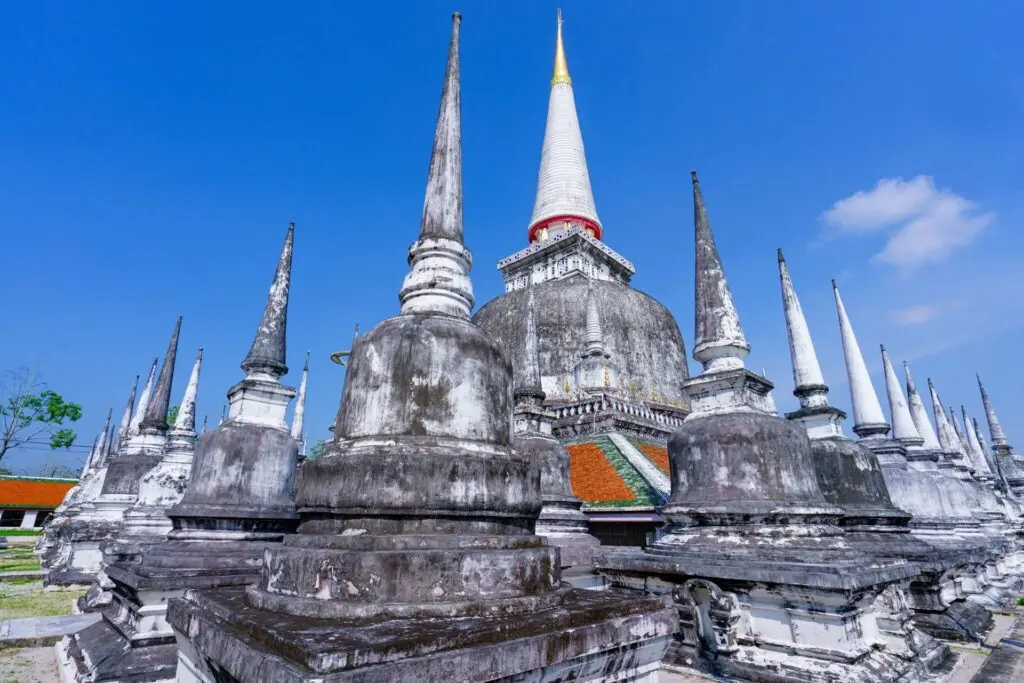
The 77-meter-high sacred pagoda Wat Phra Mahathat Woramahawihan (often simply called Wat Phra Mahathat) has stood for over 800 years. This gigantic, bell-shaped stupa was commissioned by King Sri Dhammasokaraja to house the relics of Buddha and establish the symbol of Theravada Buddhism. Inspired by Sri Lankan Buddhist art, the pagoda is most beautiful during the cooler months, when the whitewashed monument with its golden spire casts a spiritual spell against the azure sky. If you are in town during Makha Bucha or Asarnha Bucha, you can join the locals in the robe offering ceremony. However, the towering stupa is worth visiting at any time of year. Most visitors simply stroll around the grounds, taking photographs of the picturesque pagoda from various vantage points. Every Saturday evening, the temple grounds transform into a night market where you can experience the local atmosphere and enjoy local specialties. Find more information here.
A classic breakfast in Nakhon Si Thammarat ranges from warm, Hainanese-inspired toast with sweet custard and countless portions of dumplings, to Muslim-prepared roti and chicken biryani, to fresh rice noodles in a fiery hot soup. No matter what locals order for breakfast, they always drink a bittersweet coffee with it. This coffee is made from beans roasted in margarine and sugar, resulting in a very sweet brew. Kopi, a traditional restaurant chain in Nakhon Si Thammarat, serves classic breakfasts in a heritage-listed "kopitiam" (coffee house in Hokkien). The restaurant is worth a visit for a caffeine boost and to mingle with the chatty locals, who love nothing more than to talk at their tables. Kopi has many branches throughout the city, but the original and best one is located next to the provincial building.
A visit to Nakhon Si Thammarat isn't complete without a walk along the city walls. They were the first walls to enclose the rectangular city and were built around the time of its founding in the early 13th century. Over time, the walls fell into disrepair and were repeatedly restored and reinforced to defend against enemies. In the mid-17th century, the city walls were rebuilt in a castle style, reflecting the French influence on Siamese architecture. Today, only a short section of the northern city wall with its gate remains, making it ideal for a morning or evening stroll. For history buffs, the old city walls are impressive, as they testify to the engineering and construction skills of the people of that era.
Just a short walk from Wat Phra Mahathat is the home of Suchart Subsin, a Thai national artist and puppeteer. He has transformed his traditional wooden house into a small museum to house his collection of shadow puppets and southern Thai handicrafts. Shadow puppetry is an ancient art form of storytelling and entertainment. Using light, shadow, and a simple screen, puppeteers make the one-dimensional, cut-out puppets walk, dance, fight, nod, and laugh. The museum, called Ban Nang Talung, attracts visitors with its original, traditional puppets. Occasionally, shadow puppet shows and workshops, such as puppet-making workshops, are held here. Admission is free, but visitors can support local artists and craftspeople by purchasing puppets, T-shirts, and other souvenirs in the gift shop.
At 1,835 meters above sea level, Khao Luang is the highest mountain in southern Thailand. As part of the national park, this high mountain range attracts adventurous hikers for trekking tours along winding ridges and through dense forests. The park is home to over 300 orchid species and more than 200 bird species. Khao Luang's hiking trails lead to various peaks, down into valleys, and alongside waterfalls and streams. For those who don't have a week—or the necessary stamina—to explore the entire park, the multi-day loop trail is divided into shorter, scenic sections. Nature lovers can hike along various routes through the tropical rainforest.
Getting to Khao Luang National Park:
A songthaew (shared taxi) will take you from Nakhon Si Thammarat to the Lan Saka district for about 30 baht. From there, the driver will take you another 10 kilometers to the park headquarters for an additional fee. Alternatively, your hotel can arrange a private transfer.
The park has a campsite and a restaurant. Information about hikes can be obtained from Khao Luang National Park.
Just 25 kilometers north of downtown Nakhon Si Thammarat lies the village of Ban Laem, one of the province's best-kept secrets. This peaceful fishing village has thrived on fishing for centuries, thanks to its abundant marine life. Today, it attracts health-conscious visitors seeking thalassotherapy – a treatment based on seawater and natural minerals from the seabed. A study has shown that seawater and our skin share similarities in their mineral content. Repeatedly breathing in warm seawater, sunlight, sea breezes, and iodine-rich air nourishes the skin with the sea's anti-aging minerals. Unlike the luxurious and expensive marine treatments offered elsewhere, thalassotherapy in Ban Laem is a fun and adventurous experience. Visitors take a short boat trip to the natural mud pool before enjoying a mud bath and rinsing off in the sea. The community offers accommodation in rustic cabins for those who wish to enjoy a longer stay in a rural setting.
Website: Banlaem Homestay
Getting to Ban Laem: Take a songthaew minibus or arrange a private transfer from Nakhon Si Thammarat.
Khiriwong village boasts some of the cleanest air in Thailand. Nestled in the rainforest valley of Khao Luang National Park, Khiriwong attracts weary visitors from the big cities. But the village offers travelers much more than just fresh air. Beautiful organic orchards and homestays characterize the area. Here, you can rediscover your connection to rural life without sacrificing comfort. From July to October, the valley is laden with juicy and delicious tropical fruits such as durian, mangosteen, bananas, langsat, jackfruit, and rambutan. The mountain scenery is breathtaking. You can stay in a stilt house over the stream, hike the nature trail through the orchards, or try your hand at organic tie-dyeing techniques. The homemade dishes are fresh, satisfying, and always served with a smile. Getting to Khiriwong: Take a songthaew (shared taxi) or book a private transfer from Nakhon Si Thammarat. Khiriwong is located approximately 30 kilometers west of the city center.
The Nakhon Si Thammarat National Museum on Rajdamnoen Road is dedicated to the people, history, art, and culture of the province and several other locations in southern Thailand. A tour through the various rooms offers a journey through Nakhon Si Thammarat's history. The first exhibition presents prehistoric artifacts from the region, proving that people lived here as early as 6,500 years ago. The next exhibition highlights the diversity of religions practiced by the locals—including Brahmanism, Mahayana Buddhism, Theravada Buddhism, Christianity, and Islam—thus emphasizing Nakhon Si Thammarat's multicultural character. Particularly impressive is the permanent collection of Vishnu depictions, dancing Shivas, and phallic Shiva lingams. Also on display are a 9th-century stone Buddha head and several ancient Srivijaya statues. Admission costs only 150 baht (approximately US$4.46).
Getting there: Take a songthaew shared taxi or a motorcycle taxi.
With its long, pristine beaches fringed by coconut palms and jungle-clad mountains, Khanom is a dream destination – even before you've seen the rare pink dolphins. Not far from the Khanom coast lives an area that provides a home to 50 pink dolphins. These animals, also known as Indo-Pacific humpback dolphins (Sousa chinensis), are dark gray when newborn. As they age, their skin turns white and pink to regulate their body temperature. Observing pink dolphins in their natural habitat should be on everyone's bucket list. It's fascinating to watch these gentle creatures dive and surface without a single loud splash. Swimming alongside boats and interacting with people, they reveal their tame and charming nature. The "Khanom humpback dolphins" can be seen from October to May. A longboat regularly departs from Laem Prathap in the mornings to observe the pink dolphins. The trip takes about two hours.
Getting to Khanom: Minibuses depart from Nakhon Si Thammarat bus station every 40 minutes from 5:00 AM to 4:00 PM for Khanom. The journey takes 90 minutes and costs 80 Baht.
About 40 kilometers east of downtown Nakhon Si Thammarat, the Pak Phanang district made headlines in 1962 when Tropical Storm Harriet devastated Cape Talumpuk. Today, peace and tranquility have returned to this small coastal town, now known for its natural beauty and cuisine. Every Sunday afternoon, the river community's canal transforms into a retro market with a diverse array of food. The old food market and river communities are ideal places to mingle with locals. Pak Phanang vendors offer fresh and dried seafood. Stroll along the towpath, watch the fishing boats coming and going, or take a boat trip and enjoy Pak Phanang's picturesque river scenery. The long, idyllic Talumpuk beach is lined with local restaurants where you can enjoy deep-fried king mackerel, grilled squid, sensational seafood soup, and much more at affordable prices.
Getting to Pak Phanang: Take a songthaew shared taxi or arrange a private transfer from Nakhon Si Thammarat.
Selected articles about Nakon Si Thammarat
Do you need travel information?
Discover everything you need to know before your trip – from visa requirements and entry guidelines to essential travel tips and frequently asked questions.




Community
Comments 0
Start the conversation.