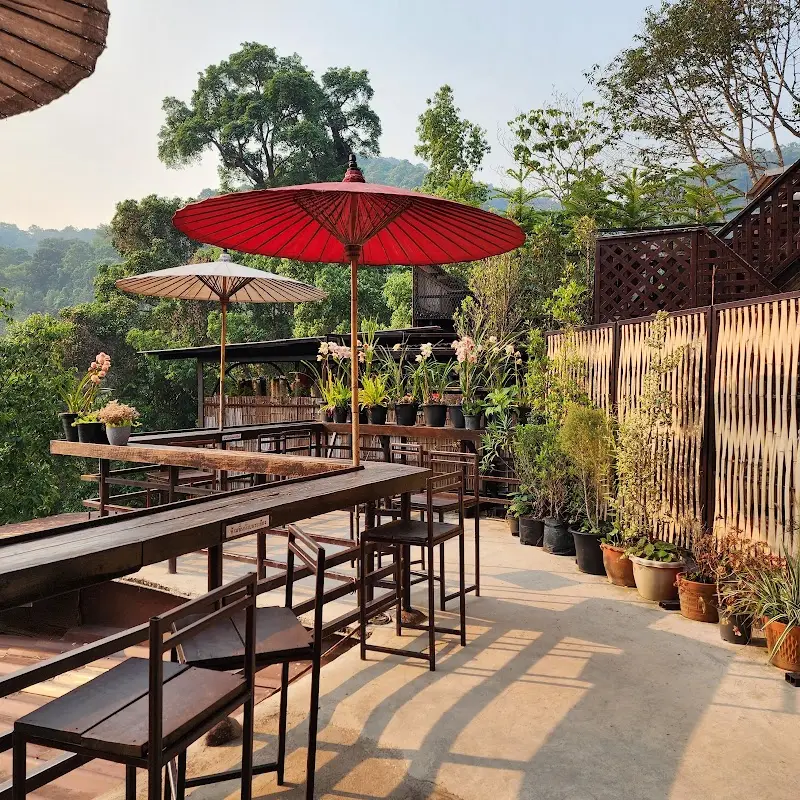
Mae Kampong is a small mountain village about 50 km east of Chiang Mai, nestled in the forested hills of the Mae On district at an altitude of around 1300 m. Its wooden houses line a stream in a narrow valley. Around one hundred families live here, having made their living for generations from selling miang, fermented tea leaves, before oolong tea, Arabica coffee, and tourism displaced their livelihoods. Since the late 1990s, the village has operated its own community tourism program with villagers running host families and guides. A portion of the income is invested in forest conservation, healthcare, and education.
Thai visitors come for the cool air, the cafes, and the sea of clouds at dawn, and it gets very crowded on weekends during the cooler months. Below you'll find information on how to get there, what to do, where to stay, the best time to visit, and whether the trip is worthwhile.
Where to stay in Chiang Mai
This route ends in Chiang Mai. Search for hotels in Chiang Mai for your travel dates or narrow your search to the region you wish to visit. Filter for hotels with free cancellation if you'd like to book a room and decide later.
Open Booking.com with your travel dates · also on Expedia · Trip.com
My recommendations in every price category in Chiang Mai
Key facts
About 50 km east of Chiang Mai
The journey takes one to one and a half hours via San Kamphaeng and Mae On; the last section is steep and winding.
Cooler than the city
At an altitude of 1300 m, it is about 5 °C colder in the mornings than in Chiang Mai. Bring warm clothing.
Best time to visit: November to February
The clearest skies and the most reliable cloud cover. Smoke may develop from March to May.
Stay one night
The accommodations are run by families from the village. Early booking is recommended for weekends and the cooler months.
Low fees
The village is free. There is a fee for the waterfall; it is open from 8:00 am to 5:00 pm.
Bring cash and petrol.
Card payment is not always possible and there is no petrol station in the village.
Arrival in Mae Kampong
The village is located about 50 km from Chiang Mai and can be reached by car in one to one and a half hours via San Kamphaeng and Mae On. The last section is a narrow, steep, and winding road. Therefore, drive slowly and fill up your tank beforehand, as there is no gas station in the village. Parking can be difficult. The village has only one main road and few parking spaces. These fill up early on weekends during the cooler months. Therefore, arrive before 9:00 AM or park on the outskirts of the village and hire a driver or a songthaew (shared taxi). The temple parking lot, with about 20 spaces and a donation box, is another option.
Without a car, the easiest option is a shared taxi from Chiang Mai, which takes about two hours and can be booked online. Alternatively, a private car or a day trip are possible. There is no regular bus service directly to the village. A shuttle bus runs four times a day from Chiang Mai to the San Kamphaeng hot springs for 150 baht and takes you almost to your destination, but you will need to find another ride to continue your journey into the mountain.
Things to do in Mae Kampong
The village itself is the main attraction. Stroll along the lanes and paths beside the stream, past wooden houses, tea gardens, and guesthouses, and enjoy a cup of coffee from the surrounding hills. Wat Khantha Phueksa, the village's only temple, sits by the stream and is built of carved, golden teak. Its ordination hall stands in the water—one of only two of its kind in Thailand.
The Mae Kampong Waterfall, about 1 km above the village, cascades through the forest in seven stages. A jeep takes you up from the village for about 20 baht, followed by a steep, roughly 20-minute climb up wet steps to each stage. The waterfall is open to the village community from 8:00 am to 5:00 pm for a small fee. Another attraction is the cafes. Rabiang View, on the hill above the village, offers the panoramic view that everyone photographs, while Teddu Cafe is situated by a waterfall on a stream and is accessible via a staircase.
Kew Fin and the Sea of Clouds
Kew Fin is a viewpoint about 3 km above the village, at an altitude of 1,517 m on the mountain ridge between Chiang Mai and Lampang in Chae Son National Park. On cool mornings, the valleys fill with mist – a sea of clouds that draws most Thai visitors here. To witness this natural spectacle, you must be at the top before sunrise, which is a good reason to spend the night. Host families can arrange a ride in a songthaew (shared taxi) at dawn. Coffee is available at the top, and a short climb up some steps leads to the viewpoint. Those traveling by scooter should check their brakes beforehand, as the road is very steep.
Mae Kampong on a map
The temple, cafes, and waterfall are all within easy walking distance of the village. Kew Fin can be reached via a short but steep drive.
The best-rated hotels in Chiang Mai
Here is my ranking of the 10 best hotels in Chiang Mai. Each button will take you directly to the hotel's page on Booking.com, where you can enter your travel dates.
Overnight stay with a host family
Mae Kampong is well-suited for a day trip, but an overnight stay allows you to experience the village at its most tranquil – in the evenings after the day visitors have departed and at dawn on Kew Fin. Two days and one night are sufficient for this. Host families are in private homes registered with the village association. They offer simple rooms, often with shared bathrooms, blankets, and mosquito nets. Comfort levels vary, so it's advisable to read reviews. Most accommodations are not listed on the major booking sites. Bookings are usually made via Facebook, a few are also listed on Booking.com, and on a quiet weekday, you can often find a room by asking around in the village. For weekends and the months of November to February, booking well in advance is recommended.
The small family kitchens and cafes serve northern Thai dishes as well as the village's own tea and coffee, mainly from morning until late afternoon. So if you're spending the whole day there, you should eat before 6:00 PM. Bring cash from Chiang Mai or Mae On, as card payments aren't accepted everywhere and mobile phone reception in the valley is patchy.
When should you go?
The best time to visit is from November to February. During this period, the skies are clearest, the mornings are cool (around 8–12°C), and the cloud formations are most reliable. This is also peak season, so the village is busiest on weekends. From June to October, the waterfall is at its most abundant and the forest at its greenest; however, the paths can be slippery and the mornings are more often foggy than clear. From March to May, haze is common, and smoke from agricultural burning in the north is frequent. Therefore, check the air quality forecast before your trip. If possible, travel on a weekday at any time of year.
Is Mae Kampong worth a visit?
Yes, if you want to spend a relaxing day or evening in the mountains, enjoy good coffee and fresh air, and especially if you want to experience the sunrise in Kew Fin. But don't expect too much. It's a small village with many private accommodations and cafes and one main street, not a remote mountain village. On weekends during the cooler months, it's overrun with Thai tourists, and parking is scarce. It's most beautiful during the week or if you're staying overnight.
Frequently Asked Questions
Frequently Asked Questions about Mae Kampong Village: A Guide.
Drive approximately 50 km east via San Kamphaeng and Mae On (travel time: 1 to 1.5 hours) or take a shared transport (travel time: approximately 2 hours), which you can book online. There is no regular bus service to the village.
Approximately 50 km, one to one and a half hours by car. The last section is steep and winding.
Yes, because of the cool air, the coffee, the waterfall, and the sea of clouds in the morning at Kew Fin. It's a small village with many private accommodations and cafes, which is crowded with Thai tourists on weekends during the cooler months. Therefore, a midweek visit or an overnight stay is recommended.
A day trip is possible, but ideally an overnight stay is recommended so you can experience the village in the evening and Kew Fin at sunrise.
No, entry to the village is free. There is a small fee for the waterfall; it is open from 8:00 am to 5:00 pm.
Most host families accept bookings via Facebook message, a few can be found on Booking.com, and during the week you can often find a room in the village. For weekends and the months of November to February, early booking is recommended.
From November to February, the skies are clear, the mornings are cold, and the area is often shrouded in clouds. The waterfall is most abundant from June to October, and fog is common from March to May.
Yes, but the last section and the road up to Kew Fin are very steep. So make sure you have good brakes and drive slowly. Parking in the village is limited.
Compare prices on the major booking portals and filter for rooms with free cancellation if you want to book now and decide later.
Compare prices on Booking.com
Compare prices on Trip.com
We may receive a commission for bookings made through these links – this will not incur any additional costs for you. Learn more.
You might also like this
Bangkok travel guide
A city with three zones and a river – once you understand the structure, everything else falls into place.
Chiang Mai City Guide
A walled square, a mountain, and the best value for money for good living in Thailand – if you know the calendar.
Things to do in Bangkok
Ten experiences worth traveling to – sorted by rank, price and time, so you can experience each one at the best time.
Things to do in Chiang Mai
Twenty-five things worth a trip to the north, ranked by rank, price and time of year to visit, centered around the mountain, the markets and the smoke-free months.
Best time to travel to Thailand
The best time to travel is from November to February; the rest of the year is best on the east coast.
I lived in Bangkok for four years and traveled throughout the country from there. The guidebooks reflect my personal opinion and are written as I would explain things to a friend planning a trip.
Ready to create your travel itinerary?
Use our free trip planner to save places, organize days, and share your trip.

Community
Comments 0
Start the conversation.