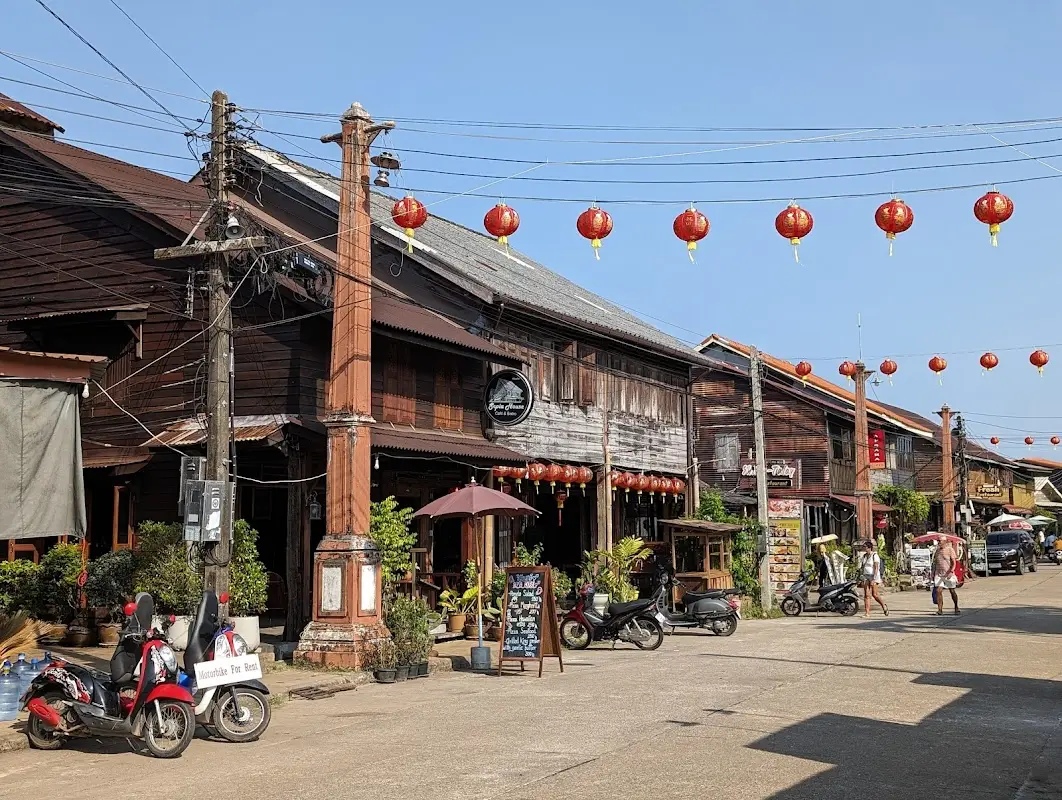
Lanta Old Town, formerly the village of Ban Si Raya, was Koh Lanta's port long before the resorts on the west coast developed. It consists of a single street lined with wooden shophouses on the island's east coast, many built on stilts over the water. For generations, Chinese, Muslim, Thai Buddhist, and Urak Lawoi families have lived side by side here. I visited Lanta Old Town myself and would recommend it for a half-day trip to any beach holiday on the island. Entry is free, it takes two to three hours to explore, and you can reach Lanta from Klong Dao or Long Beach in about 25 minutes by hiking over the hills.
Where to stay in Koh Lanta
This route ends in Koh Lanta. Search for hotels in Koh Lanta for your travel dates or narrow your search to the specific region you wish to visit. Filter for hotels with free cancellation if you'd like to book a room and decide later.
Open Booking.com with your travel dates · also on Expedia · Trip.com
My recommendations for every price category on Koh Lanta
Key facts
It's free
There is no charge for the street, the pier and the shrines, and the community museum simply requests a donation.
Two to three hours
A street, a pier, and a museum. Stay longer and enjoy lunch or dinner overlooking the water.
Come by this weekend
The street market takes place on Saturdays and Sundays from 11:00 am to 10:00 pm, and a local market is set up on Sunday mornings from about 8:00 am to 11:00 am.
There are no buses running.
Come by scooter, car, or a tuk-tuk you've hired for the round trip. The old town is about 20 km south of Saladan.
Late afternoon is best
The street cools down and the light reflects off the water. At midday there is little shade, especially on the pier.
People live here.
The storefronts serve as both residences and shops. Dress appropriately at the shrines and ask permission before photographing people.
A brief history of Ban Si Raya
The old town was the island's first port. Its sheltered waters lie opposite the mainland on the other side of a narrow strait, and Arab and Chinese trading ships docked here on their routes between Phuket, Penang, and Singapore. Chinese settlers from Fujian arrived about two hundred years ago, distilled charcoal from the mangroves, and traded it in Penang and Singapore for sugar, salt, and household goods. They built their houses on stilts with long terraces extending out to sea, where they could hang their fishing nets.
The town developed into a diverse district whose character is still evident today. Chinese merchants ran the shops, Muslim families fished, Thai Buddhists settled alongside them, and the Urak Lawoi, the seafarers who had sailed these islands for centuries, settled along the coast. The old town was the administrative center of the district, and its wooden district office still stands at the roundabout. As the boats shifted to Saladan in the north and tourism moved to the west coast, the old town remained largely unchanged, which is why it is worth visiting today.
Old Town of Lanta on foot
From the roundabout at the southern end, walk along the pier and back up the road. Everything is within a 10-minute walk, so park once and walk the rest of the way.
The shrines and the street
The Chinese shrine is the city's most magnificent building, a red and gold temple right on the seafront, accessible via a short footbridge guarded by two golden dragons. It is the Maha Katyayana Shrine, and it is an active shrine. Therefore, expect to hear incense and fresh offerings, and be considerate of worshippers.
The rest is the street itself. Old wooden houses line it, red lanterns hang from the rooftops, and almost every house on the sea side opens onto a café or fish restaurant with a terrace overlooking the water. The shops sell batik, clothing, handicrafts, and souvenirs, and after a few houses they all look alike, so pick one or two and spend your time eating instead.
The weekend market and the Sunday morning market
The old town has two distinct markets. The street market fills the old town with food stalls, handicrafts, and souvenirs on Saturdays and Sundays from 11:00 AM to 10:00 PM and is liveliest in the late afternoon during the high season from November to April, when live music is also offered on some weekends.
The Sunday morning market is the local meeting place. According to Google, it takes place from 8:00 to 11:00 a.m. on the road near the roundabout, and regulars report that it's already set up by 7:00 a.m. There you can find fruit, vegetables, snacks, and Thai sweets at local prices. So arrive early, bring some small change, and have breakfast there.
Where to eat in Lanta's old town
Food is the best reason to stay longer. Most restaurants here are built on stilts behind the shophouses and offer tables right over the water. They specialize in seafood and are often cheaper than restaurants on the west coast. Pinto, at the northern end of the street, is the highest-rated restaurant, and Khrua Lanta Yai, also known as "Beautiful," is a popular Thai restaurant on the street just outside town, open from 8:00 am to 9:00 pm.
Enjoy a late lunch or early dinner once the heat on the terraces has subsided and the strait is illuminated. Pinto closes at 9:00 PM and the weekend market at 10:00 PM. The old town is quiet after dark, so don't plan on staying out late.
Stay overnight in the old town
A night or two in the old town is ideal for those seeking the tranquility of Lanta. The east coast faces the sunrise, the stilt houses have the sea directly beneath their floorboards, and once the day-trippers have left, the street belongs to the residents again. The stilt houses of Mango House are a highly recommended accommodation option.
The catch is the beach. There's no beach in the old town, so you have to drive 20-30 minutes to the west coast almost every day. If the beach is the main reason for your trip, stay on the west coast and come over in the afternoon – that's what most people do.
The best-rated hotels in Koh Lanta
Here is my ranking of the 10 best hotels in Koh Lanta. Each button will take you directly to the hotel's page on Booking.com, where you can enter your travel dates.
Getting to Lanta's Old Town
A guided tour also includes the mangroves and the national park, but the island is easy to explore by car and the old town can easily be visited on your own.
What goes well with the old town?
The old town is located on the popular scooter route. From there, continue south to Mu Ko Lanta National Park at the island's tip. There you'll find the lighthouse and the forest nature trail (entrance fee: 200 baht for adults). Afterward, you can drive back through the old town and enjoy a late lunch. The mangroves of Thung Yee Peng, about 10 km north on the east coast, are ideal for another half-day excursion. Here you can go hiking or kayaking through the forest.
Longtail boats depart from the pier to Koh Por, a small island with guesthouses and restaurants, as well as to Koh Bubu and Koh Talabeng. Arrange the price and pick-up time with the boatman before departure.
When should you go?
There's a market every day of the year, but it's open on weekends, and on Sundays, both the market and breakfast take place. Come in the late afternoon to enjoy the light and cooler streets, or early on Sunday morning for the market and breakfast.
The high season runs from November to April, when the street market is busiest and the boats are running. From May to October, most of the island is closed, but the restaurants and the market in the old town are open and offer one of the best experiences on Lanta, especially on a rainy day.
How to visit respectfully
The old town is a vibrant village with Chinese, Muslim, Thai Buddhist, and Urak Lawoi families – not a homogenous group. Cover your shoulders and knees on the street and at shrines, don't stand in front of worshippers, and ask permission before taking photos or entering a private terrace. Buy something to eat or from one of the stalls during your visit; this is what helps preserve the old houses.
Frequently Asked Questions
Frequently asked questions about Lanta Old Town, the original port of Koh Lanta.
Yes, for two or three hours. It's free, you experience the island's history on a single road, and the seafood right on the water is the best reason to cross the island. Combine it with a day trip to the national park by scooter.
Wooden shophouses on stilts over the sea, a red and gold Chinese shrine, waterfront fish restaurants, and a weekend market. It was the island's original port, settled by Chinese traders, Muslim fishermen, and the seafaring Urak Lawoi people.
Yes. The old town transforms into a market on Saturdays and Sundays from 11:00 AM to 10:00 PM, becoming liveliest in the late afternoon during peak season. A local morning market also takes place on Sundays from approximately 8:00 AM to 11:00 AM.
By scooter, car, or a tuk-tuk hired for the round trip. From Klong Dao or Long Beach on the other side of the island, it's about 25 minutes and approximately 20 km south of Saladan. There are no public buses.
On the east coast of Koh Lanta Yai, roughly halfway across the island, opposite the mainland on the other side of a narrow strait. The beaches and most resorts are located on the west coast.
Not really. There's no beach in the old town, just the pier and the stilt houses. Swim on the west coast and maybe come visit for an afternoon.
The street market takes place on Saturdays and Sundays from 11:00 AM to 10:00 PM. The local Sunday morning market takes place from approximately 8:00 AM to 11:00 AM on the road near the roundabout.
For one or two quiet nights, yes. The stilt houses of Mango House put the sea beneath your feet and the sunrise in front of you, but there's no beach, so beach lovers should stay on the west coast and visit them.
Compare prices on the major booking portals and filter for rooms with free cancellation if you want to book now and decide later.
Compare prices on Booking.com
Compare prices on Trip.com
We may receive a commission for bookings made through these links – this will not incur any additional costs for you. Learn more.
You might also like this
Bangkok travel guide
A city with three zones and a river – once you understand the structure, everything else falls into place.
Chiang Mai City Guide
A walled square, a mountain, and the best value for money for good living in Thailand – if you know the calendar.
Things to do in Bangkok
Ten experiences worth traveling to – sorted by rank, price and time, so you can experience each one at the best time.
Things to do in Chiang Mai
Twenty-five things worth a trip to the north, ranked by rank, price and time of year to visit, centered around the mountain, the markets and the smoke-free months.
Best time to travel to Thailand
The best time to travel is from November to February; the rest of the year is best on the east coast.
I lived in Bangkok for four years and traveled throughout the country from there. The guidebooks reflect my personal opinion and are written as I would explain things to a friend planning a trip.
Ready to create your travel itinerary?
Use our free trip planner to save places, organize days, and share your trip.
Community
Comments 0
Start the conversation.