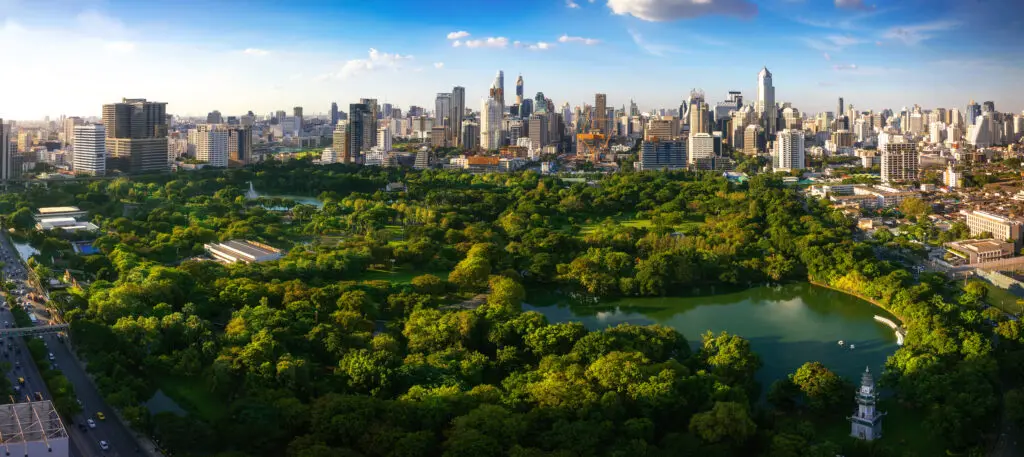
These days, new buildings are springing up everywhere. But when we lose green spaces, we also lose a part of ourselves. Studies have shown that spending time outdoors can alleviate depression, improve sleep, ease breathing, and even enhance eyesight. As a countermeasure to the bustling cities around us, many cities and countries have taken the initiative and created more green spaces and parks for residents and tourists. There, they can enjoy nature, breathe fresh air, and admire the architecture of these urban oases.
Thailand is no exception. Bangkok boasts numerous architectural masterpieces, largely thanks to the "Bangkok250" initiative. This initiative aims to make Bangkok a more livable city by its 250th anniversary in 2032. Together with the "Green Bangkok 2030" project, which seeks to expand Bangkok's green spaces, this will lead to a significant increase in public space for the Thai population in the near future. (Thailand also takes sustainability very seriously in the tourism sector.)
To mark National Park Walk Day, we present some of Bangkok's parks and tell you a little about their history.
Image credit: PanoramicStudioChulalongkorn University Centenary Park
Designed by Landprocess and N7A Architects, Chulalongkorn University Centenary Park is a small oasis on the campus of Chulalongkorn University in Bangkok. Built to commemorate the university's 100th anniversary, the park is an ecological masterpiece aimed at addressing Bangkok's water crisis.
The flat city is vulnerable to rising sea levels, heavy rainfall, and flooding due to the loss of green spaces over the years. Chulalongkorn University Centenary Park aims to change this, creating a flood-proof park for a flood-prone city. By harnessing gravity, the park can sustainably collect, treat, and store water to reduce the flood risk in the Bangkok area. Situated on a gentle 3-degree slope, Centenary Park incorporates various ecological features, including a green roof, wetlands, retention basins, and a storage pond, ensuring that not a single drop of rainwater is wasted. Rain and surface water are channeled and captured by the park's topography, creating a closed-loop water system.
Chulalongkorn University Centenary Park is part of a broader initiative by Chulalongkorn University to promote sustainability. Planners even managed to convince the university to expand the bike and pedestrian paths leading to the park and to remove some roads surrounding the expansive green space. Chulalongkorn University Centenary Park is definitely worth a visit and is a truly visitor-friendly park in Bangkok.
Benjasiri Park was created in 1992 to celebrate the 60th birthday of Her Majesty Queen Sirikit. The lush green park is known as a sculpture park, but it's not just the sculptures that make it so appealing. Centrally located in Bangkok, Benjasiri is easily accessible by the BTS Skytrain and other public transport. It's a popular meeting place for locals and, thanks to its proximity to major city attractions, is also becoming increasingly popular with tourists. Benjasiri Park regularly hosts a variety of events, from culinary delights and art to music.
Benjasiri Park not only houses a wide variety of plants, but has also become an urban habitat for animals such as birds, turtles, squirrels and even lizards.
Benjasiri Park offers a wide range of activities for visitors. Numerous sports and fitness options are available, including yoga, basketball, jogging, and even a children's playground. Adjacent to the park is a public swimming pool, which visitors with the appropriate documentation can use.
Bang Krachao is nicknamed the "green lung" of Bangkok due to its extensive, air-purifying green spaces. This secluded park, accessible by boat on the river near Wat Khlong Toey Nok temple, is located within Bangkok but offers a welcome respite from the usual city life.
The island park, dotted with temples, is easily explored by bicycle and offers tourists numerous attractions amidst stunning natural scenery. Bang Krachao is home to ponds, lakes, and botanical gardens, so there's no shortage of green spaces. Those who prefer a more modern experience will find several restaurants and a floating weekend market.
Lumphini Park is affectionately known as Bangkok's Central Park. As Bangkok's first public park, it boasts a beautiful lake and lush greenery. Locals use it for yoga, tai chi, and other fitness activities, and picturesque swan boats glide across the tranquil water. Numerous benches invite visitors to linger – ideal for starting the day at one of the many food stalls and then refueling before relaxing and watching the park's wild birds or lizards. Occasionally, the park also hosts concerts and other social events.
Suan Luang Rama IX Park is Bangkok's largest park. Spanning over 80 hectares, it's the city's largest green space. Although there's a 10 baht entrance fee, it's well worth a visit. Botanical gardens from around the world (including Japan, Italy, and America) dot the expansive landscape, and the sports center includes a swimming pool and tennis courts. The bandstand and the large lawn in front of it serve as an open-air stage for various performances. During the "Magnificent Plants Beautifying Suan Luang Rama IX" flower festival, held in early December, the lawn is also transformed into a market for ornamental plants.
Benjakitti Forest Park is Bangkok's newest park. Built on the site of former tobacco processing plants, it is now home to thousands of trees and numerous wild birds, attracting many birdwatchers. An estimated 12,000 visitors come to the park daily, and its small ponds help purify the wastewater of the surrounding communities.
So if you happen to be in a park in Bangkok on National Walking Day, you can't go wrong by choosing one of these magnificent green parks for a stroll.
Community
Comments 0
Start the conversation.