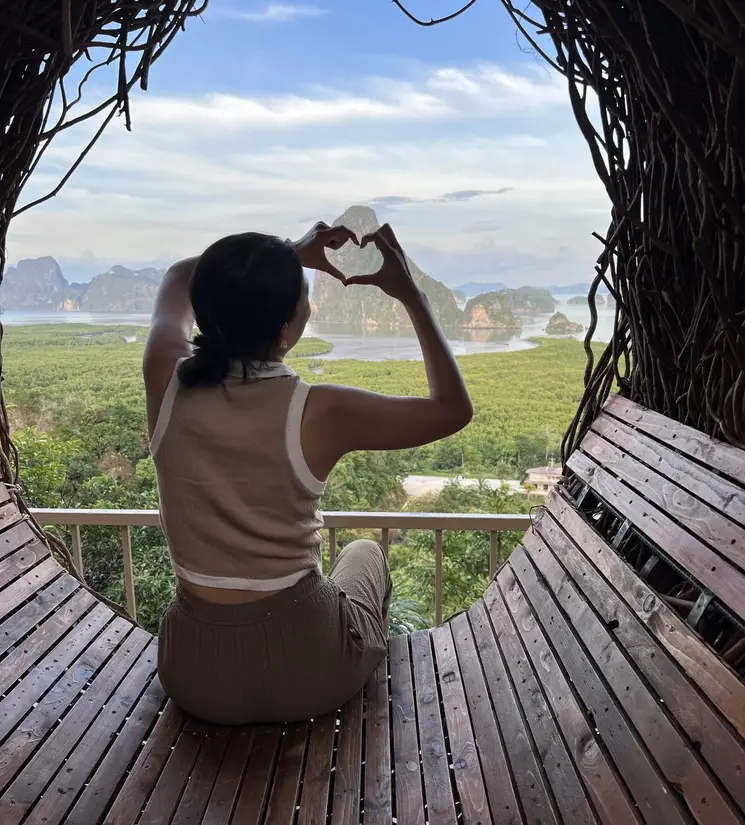
Planning your first trip to Thailand can be quite stressful. There are so many incredible places to discover – how do you even begin to choose? Add to that the challenge (and the allure) of traveling to a foreign country and adapting to a new language, culture, and way of life. We know what it's like to travel to Thailand for the first time – Cam went almost ten years ago and, to say the least, was unprepared for what awaited him.
But we also know what it's like to live here – after all, Kat grew up here before moving to New Zealand with Cam. Over the years, we've made countless trips to Thailand and fallen in love with this country time and time again. We now know Thailand like the back of our hand, which is why we've put together this travel guide: 50 essential tips (and other surprises) to help you experience the Land of Smiles even more intensely.
50 essential travel tips for Thailand
1. Familiarize yourself with Thailand's visa regulations.
From September 15, 2026, citizens of many countries can visit Thailand visa-free for 30 days. This applies to most Western countries, including the USA, Canada, the UK, most European countries, and Australia. If you wish to stay for up to 60 days, you can apply for a tourist visa online through the official Thai e-Visa website before your trip. This 60-day stay can then be extended by another 30 days at a local immigration office (after your arrival in Thailand), allowing you to stay for a total of up to 90 days.
Alternatively, travelers entering Thailand with the 30-day visa exemption can apply for a 30-day extension at the local immigration office, allowing them to stay for up to 60 days in total. Regardless of visa status, all foreign visitors must complete a Digital Entry Card for Thailand (TDAC) within three days prior to arrival. In our opinion, 30 days is still plenty of time for a successful holiday in Thailand.
More information: Thailand's new visa regulations: How to stay for 60–90 days
2. Choose the best time to travel to Thailand
Those looking forward to sunshine and calm seas should visit Thailand between November and April. April and May can be hot and humid, which is why we generally advise against traveling during this period – unless you want to participate in the Songkran water festivals. We were once in Phuket in April, and the heat made it difficult to enjoy the afternoon activities. June to October is the rainy season, which often makes island hopping difficult. Some remote islands, such as the Similan and Surin Islands, close during the rainy season to protect their ecosystems.
The Gulf islands of Koh Samui, Koh Phangan, and Koh Tao are accessible year-round and often offer pleasant weather from June to October. On a city break to Bangkok or Chiang Mai, an occasional rain shower won't really spoil the trip – there's simply too much to do. The advantage of visiting Thailand during the rainy season, of course, lies in the lower number of tourists and significantly cheaper hotel prices.
Read more: Best time to travel to Thailand: weather, seasons & tips
3. Plan your Thailand itinerary carefully.
For Thailand, you should plan at least two weeks (a month is better) and then choose three or four destinations you'd like to explore in more detail. For example, Bangkok → Koh Chang → Koh Kood, or Bangkok → Krabi → Koh Phi Phi, or Bangkok → Chiang Mai → Chiang Rai. One of the biggest mistakes travelers make is trying to see everything. Thailand is surprisingly large, and you certainly don't want to spend half your time at the airport or on a bus. Also, be sure to allow plenty of time for spontaneous adventures.
Read more: 2-week Thailand itinerary: Island hopping or cultural trip?
4. Take care of your Thailand travel insurance.
It is advisable to purchase your insurance before arriving in Thailand to protect yourself against lost luggage and scooter accidents. Please note that you will need a motorcycle license from your home country and an international driving permit for insurance coverage. However, many travelers don't bother with this and take the risk – the decision is yours.
5. Arrange your accommodation in advance.
This is an important travel tip, as popular hotels and resorts are often booked months in advance, especially between December and February. If you're visiting an island or small town with limited accommodation, such as Koh Kood or Mae Kampong, you should also book well in advance (at least three months ahead). If you're a first-time visitor to Bangkok and looking for accommodation, we recommend Casa Vimaya – a fantastic mid-range hotel within walking distance of Khao San Road.
6. Prepare yourself for the “Mai Pen Rai” lifestyle
It took Cam a few trips to understand the "Mai Pen Rai" attitude, but now he fully grasps it. It means something like "no worries," very much in the spirit of Hakuna Matata in Thailand, and Thais really do live that way. The phrase embodies the calm, relaxed, and forgiving nature of Thai culture. If something goes wrong, a little "Mai Pen Rai" immediately brightens the mood.
7. Beware of ATM fees and swallowed cards
In Thailand, you should be aware of the high ATM fees, which can quickly add up. A cash withdrawal costs 220 THB – regardless of the amount. Therefore, it's advisable to withdraw a larger sum each time (e.g., 10,000 THB) instead of just 1,000 THB. We also had some problems with the yellow Krungsri Bank ATMs, which swallowed our cards a few times.
We prefer the blue ATMs of Krungsri Bank or the purple ones of Siam Commercial Bank. However, one advantage of Krungsri Bank is that it allows higher withdrawals – up to 30,000 THB. Remember to always select "No conversion" at ATMs in Thailand so that your bank calculates the exchange rate – otherwise, you'll get a less favorable rate.
8. Always carry cash and small change with you.
In Thailand, most large hotels, restaurants, and shops accept card payments, while many smaller shops only accept cash. It is advisable to carry a wallet containing at least 2,000 THB in addition to a wallet for 10-baht coins.
9. Don't be a "Farang Kee Nok"
"Farang Kee Nok" roughly translates to "bird-droppings foreigner" and is indeed an insult. The term is mainly used for backpackers or stingy, rude tourists. Of course, it's perfectly fine to travel on a budget, but (in our experience) many try to beg and beg their way through the country. Instead of being a "farang kee nok," you should do the opposite and leave small tips wherever possible. We do this, for example, for Grab drivers, masseurs, and tour guides who do a good job—which is quite common in Thailand.
10. Take the BTS and MRT in Bangkok.
Traffic in Bangkok is chaotic and seems to get worse with every visit. Luckily, public transport in Thailand's largest city is excellent – especially the BTS and MRT, which allow you to bypass the dense traffic. For those who don't know, the BTS Skytrain runs above ground, while the MRT is underground. The trains are modern, comfortable, and (importantly!) air-conditioned, and they take you to stations near temples, bars, and all the other places you might want to visit in Bangkok.
11. Use Grab, taxis and tuk-tuks in Thailand
Grab is another popular mode of transportation, essentially the Asian version of Uber. With the app, you can order rides from your current location and link your card. This eliminates language barriers and the need for haggling. If you do need a taxi, make sure the driver uses the meter. For tuk-tuks, you should negotiate the price beforehand. While tuk-tuks are more expensive, nothing beats the feeling of zipping through the streets in an open-topped three-wheeler.
You can also take Grab motorbike taxis – a common mode of transport for locals. These are great for weaving through traffic or for short distances when a taxi is too expensive. Riding on the back of a motorbike is a real experience, especially at night in Bangkok. While wearing a helmet is legally required, it's unfortunately not always consistently enforced. To be on the safe side and for insurance reasons, you can ask your driver to provide you with one.
12. Hop on a songthaew to experience the country more authentically.
Songthaews are the most authentic form of transport and are offered in cities, villages, and on islands throughout Thailand. They are pickup trucks with bench seats, and you pay in cash at the end of the journey, usually no more than 50 THB per person. We love songthaews, but only when they aren't overcrowded. It can get quite cramped and uncomfortable when too many people get in.
13. Use cheap domestic flights in Thailand.
Traveling from Bangkok to the north and south is quite difficult without a domestic flight. Therefore, we recommend flights to Chiang Mai, Chiang Rai, Phuket, or Krabi. AirAsia is the best low-cost carrier. Alternatively, Bangkok Airways is a good option – although more expensive, it offers a significantly more comfortable and exclusive flight experience. The airline operates private airports in remote regions of Thailand such as Trat, Sukhothai, and even Koh Samui.
14. Use trains or buses for short distances.
For longer distances in Thailand, flights are the best option, while trains and buses work well for shorter distances – for example, from Bangkok to Ayutthaya, Kanchanaburi, or Chanthaburi. We often take the bus to Chanthaburi, and it's usually trouble-free. Minivans are also popular in places like Phuket and can take you to Khao Sok National Park or the piers in Khao Lak.
15. Stop at rest areas such as PTT.
Road trips are great fun and a fantastic way to experience authentic Thailand – whether by motorbike or rental car. Along most main roads, you'll find rest stops with Amazons, 7-Elevens, food courts, electric vehicle charging stations, and (always clean) restrooms. The PTT and Bangchak chains are particularly recommended – they'll save the day during a short break.
16. Get an eSIM for a short trip to Thailand
This allows you to use Google Maps, contact hotels (if necessary), and let your loved ones know you've arrived safely. We typically use Airalo, Saily, or Holafly, but there are many other reliable eSIM providers.
17. Buy a Thai SIM card for a longer stay
If you're staying in Thailand for more than two weeks, it's probably worth exchanging your SIM card for a Thai one. A Thai phone number is convenient, and you'll also benefit from affordable 5G plans. Mobile providers AIS and True are reliable and reasonably priced.
18. Download WhatsApp and Google Translate
WhatsApp is handy for contacting hotels and tour operators, and Google Translate is essential for communication. It might feel strange to be on the phone all the time, but there's simply no alternative (unless you're fluent in Thai). Cam still uses it today when he talks to Kat's family and friends.
19. Learn a few Thai words before you leave.
Learning a few Thai phrases before your trip makes a big difference to your experience. Locals greatly appreciate the effort, even if your pronunciation isn't perfect, and it makes it easier to make new friends. While you can get by with "sawadee kha/khap" and "kop khun kha/khap," we recommend learning a few more phrases, such as:
20. Respect Buddhist culture and Thai temple etiquette
Thailand is predominantly Buddhist, so you'll discover countless temples on your travels – from the sprawling Grand Palace to the ornate White Temple. Dress respectfully and cover your shoulders and knees. Remove your shoes and avoid pointing your feet at Buddha statues. You'll encounter monks in temples and in everyday life – on trains, at food stalls, and so on. Keep your distance and don't take photos directly in front of their faces.
21. Do you know Thailand's royal rules and local laws?
The royal family is a central part of Thai society, and as a guest in their country, it is appropriate to show respect (regardless of your own opinion). We advise against raising the topic, as criticism of the monarchy in Thailand can lead to severe legal consequences, including imprisonment.
22. Look for restaurants that are popular with locals.
The question "What Thai food should I try on my first visit?" is valid, but not so easy to answer. It all depends on how spicy you like it and whether you enjoy trying new things. Som Tum is a great introduction to the more adventurous cuisine and is considered one of the best salads in the world. The same goes for Khao Soi, boat noodles, Pad Krapow, and Mookata. If you want to eat like the locals, look for eateries or restaurants frequented by Thais – they're usually popular for a reason.
Read more: What to eat in Thailand: 50 dishes you absolutely must try
Kat with her mother at a popular restaurant nearby
23. Discover Thailand's street food and markets
What still amazes us about Thailand is the fact that we've never gotten sick from street food. It's incredibly clean and safe – and incredibly delicious to boot. Whether it's Moo Ping or Mango Sticky Rice, street food stalls in Thailand are generally a safe choice. Weekend markets and daily markets are ideal for finding snacks and light meals. However, be aware that they can get very crowded – really crowded.
24. Remember the proverb “Ped Nit Noi”
Some claim Thai food isn't very spicy, but Cam sees things quite differently. He's seen how the locals eat, and the amount of chili on their plates is breathtaking. Don't even try to match their level of spiciness; order your dish "ped nit noi" (not spicy), otherwise you'll spend hours on the toilet the next day. A little spice is good for you, gives you energy, and can even relieve a stuffy nose or stubborn headaches. A spicy noodle soup (sitting outside on plastic chairs) paired with a cold Leo or Singha beer is simply heavenly.
Incredibly spicy Thai food
25. Drink bottled water and coconut water.
Ice is generally safe to drink, but tap water is not. You should rely on bottled water throughout your trip, which, as we know, isn't exactly environmentally friendly. We drink a lot of coconut water in Thailand, one of the country's main exports. The brands you find in stores are good, but nothing beats a freshly opened coconut on the beach. In our opinion, Thai coconuts taste the best in the world, far better than those from other parts of Asia.
Fresh coconuts in Ang Thong Marine Park
26. Eat durian at least once in Thailand
Durian smells like a mixture of vomit and old socks, or something similar, and is so intense that hotels and taxis often forbid it. Nevertheless, it's one of those delicacies that takes time to get used to – just like you might not like coffee the first time, but eventually come to enjoy it.
Kat's family comes from Chanthaburi, the "durian capital of Thailand," and some of the varieties there are truly delicious: mild, aromatic, and much less pungent. Durian chips are a good alternative if you can't stand the smell at all, but they are quite expensive. A word of caution regarding durian: it doesn't mix well with beer—you'll get drunk much faster because it reduces the liver's ability to metabolize alcohol.
27. Try the best KFC in the world
The KFC in New Zealand (where we live) is really bad, but it's a completely different story in Thailand. There, it's the most popular fast-food chain with over 1,000 locations, compared to McDonald's with only 240. Be sure to try the "Wingz Zabb," a spicy chicken dish that's addictive, and the pancakes. We think it's the best KFC in the world, and many restaurant critics agree.
28. Stick to chicken, pork, fish, and seafood.
On our first trips to Thailand, we simply assumed the steak would be good. Once, we ordered from a local restaurant, and the steak was thin, shredded, and tasteless. From then on, we only ate chicken, pork, fish, and seafood. The seafood in Thailand is fantastic, by the way, especially in the coastal regions. There are a few specialty steak restaurants that still do a decent job, mainly in Bangkok, where you can order imported beef from Australia. However, Cam still maintains that the New Zealand beef is far superior.
29. Try the unusual and wonderful food in the north
Food lovers traveling to the north will find a completely different world full of bizarre and wonderful cuisine. In Chiang Mai and Chiang Rai, all sorts of unusual animals are used in dishes – from frogs and field rats to ant eggs and bee larvae.
30. Keep an eye on your weight in Thailand
Thai food is simply delicious and, when enjoyed in moderation, usually quite healthy. However, first-time visitors often find it difficult to stop eating. Cam knows this problem all too well – who can say no to more banana roti and Thai milk tea? A lack of discipline while traveling in Thailand can quickly lead to significant weight gain. Even if you swim at the beach, hike, and train Muay Thai every day, you should still pay attention to your calorie intake.
Banana roti and Thai milk tea
31. Stay safe on your scooter or motorcycle
Riding a scooter across tropical islands or a motorbike through mountain passes is simply part of the Thailand travel experience. But beware: don't drive recklessly! We saw tourists with terrible injuries, and motorbikes are almost always the main cause. Always wear a helmet and be especially careful in heavy traffic. Traffic jams aren't just a problem in Bangkok, by the way. The outskirts of Chiang Mai are also notorious for their congestion – something to keep in mind before tackling the 762 curves to Pai or continuing on to Chiang Rai.
32. Beware of common tourist scams
As in all tourist areas, scams are unfortunately commonplace. We ourselves have never been scammed, but you read about them online all the time. The most notorious scam is at the Grand Palace, where drivers claim the temple is "closed today" and then lure you to a jeweler's or suit shop owned by an acquaintance. Another notorious trick is claiming you've damaged the motorbike. That's why we always film the motorbike before renting one.
33. Protect yourself from mosquito and insect bites
Due to Thailand's tropical climate, insects are everywhere. A simple insect repellent spray offers good protection, or you can simply cover up when out in the evening. As soon as you arrive, pick up a few bottles of Soffell from 7-Eleven – it's the one with the pink cap and smells fantastic.
34. Discover Bangkok's rooftop bars
We're absolutely thrilled with Bangkok's rooftop bars, which rise majestically above hotel complexes and office buildings. A new, breathtaking rooftop bar opens almost every few months, and some are even more impressive than Lebua (made famous by the movie "The Hangover"). Read our article below and plan your unforgettable evening overlooking the Bangkok skyline.
Read more: The 10 best rooftop bars in Bangkok: From Nobu to Lebua
35. Immerse yourself in the diverse culinary scene
Bangkok is a premier destination for food lovers and enjoys growing global recognition. Recently, Time Out ranked it the second-best city for food. But it's not just the market stalls and Michelin-starred restaurants that make Bangkok so special – the city also boasts a thriving international culinary scene, whether you prefer Indian, Japanese, Korean, or Western cuisine.
Japanese-Peruvian fusion cuisine at the Nobu Rooftop Bar
36. Avoid traffic in Bangkok
In the mornings and late afternoons, Bangkok experiences considerable traffic chaos – taxis are therefore not a good option if you need to reserve a table or arrive somewhere on time. Besides the BTS/MRT, motorcycle taxis or the ferries across the river and smaller canals are also viable options.
Read more: How to get around Bangkok: 15 tips to avoid the traffic
37. Visit Bangkok with an open mind
Don't let the naysayers put you off: Bangkok is an incredible place. Yes, it's busy and chaotic, but the energy here is unparalleled. From luxurious head spas to playing football with locals, almost anything is possible. Give the city a chance before heading to the islands or north – we recommend spending at least five nights in Bangkok. And make sure those days fall on a weekend, so you can experience Thais enjoying the nightlife just as much as tourists.
Read more: 30 top things to do in Bangkok: The ultimate travel guide
38. Use speedboats between the islands.
Island hopping is significantly faster and easier with speedboats. The only downside is that they are more expensive than ferries or slower boats. However, you don't necessarily need to take a speedboat everywhere.
Commuter ferry to Koh Chang
39. Longtail boats are suitable for shorter trips.
Everything about longtail boats is typical of Thailand – from their unique shape to the colorful ribbons on the bow. Over the years, we've had some unforgettable experiences on longtail boats – the trip to Wang Long Bay on Koh Phi Phi is particularly memorable. We docked in a small, secluded bay surrounded by emerald-green water and towering limestone cliffs, and had the place all to ourselves for a while. As a general rule, longtail boats should only be used for short distances and only in calm seas. In rough seas, when the boat is bouncing up and down, you need to hold on tight.
40. Book popular island tours in advance.
Most island tours in Thailand don't require much advance planning, but some do – especially day trips to the famous Maya Bay and the Similan Islands. These two tours often book up quickly during peak season, as Thai authorities limit the number of daily visitors.
41. Explore the islands and beaches responsibly.
The saddest thing about some Thai islands and beaches is the litter everywhere. Sometimes this isn't due to tourists, but rather to trash washed up from other parts of Southeast Asia. Sometimes, however, it is, especially when you see cigarette butts and beer cans. Try not to leave any trash behind – you can also participate in clean-up events, such as those held on Koh Tao and Koh Lanta.
Read more: The 5 best island hopping routes in Thailand: From Trat to Trang
42. Pack light clothing for Thailand.
Thailand is hot year-round, except for some mountainous regions in the north where it can get cool during the dry season (winter). Therefore, it's best to pack light summer clothes and just one pair of comfortable sandals, sneakers, and dress shoes – so your shoes aren't too heavy. Also, leave room for the obligatory Thai elephant pants and a few tank tops from Chang, Leo, or Singha.
43. Leave the suitcase at home and use a proper backpack.
It's also advisable to use a backpack with good shoulder straps instead of a bulky suitcase, especially when island hopping in the south. Sometimes you have to wade through shallow water upon arrival at the beach (Koh Ngai) or navigate pedestrian zones to reach your hotel (Koh Phi Phi), and a heavy suitcase only makes things unnecessarily complicated.
44. Pack only the essentials for Thailand.
By "essentials" we mean things like toiletries, camera equipment, a universal adapter, and a few beach essentials such as a waterproof phone case and a quick-drying towel. If you forget something, you can always buy it in Bangkok. The MBK Center or the Siam Paragon Shopping Mall are ideal for electronics, clothing, and all sorts of other small items.
45. Bring tissues for Thai toilets.
Most restrooms in major cities are modern, clean, and equipped with toilet seats. However, they often have toilet cleaner instead of toilet paper. That's why it's so important to always carry tissues, especially for women. Important to know: In Thailand, you must not flush tissues down the toilet, as they can clog the pipes. Instead, dispose of them in the trash. While this isn't the most hygienic solution, it's something you have to get used to.
46. Arrive early at Thailand's top tourist attractions
We can't stress enough how important it is to arrive early to visit all the major sights in Thailand. It can make the difference between a successful and a disappointing experience. The best example of this is Wat Pho: in the morning, it has a peaceful atmosphere, and there's plenty of space to take photos of the Reclining Buddha and explore the various temples. By midday, however, the place transforms into a crush of people jostling for the best spots and yelling at each other.
47. Avoid unethical animal welfare organizations
Unfortunately, there are still some unethical elephant sanctuaries in Thailand where the gentle giants are chained up and even ridden for the amusement of tourists. The good news is that nowadays there are many ethical alternatives where elephants live largely free in the wild and visits are much more respectful. One place we struggled with was Tiger Kingdom in Chiang Mai – as impressive as it was to see the huge big cats up close, they seemed depressed because they were confined in such small enclosures.
48. Support small local businesses in Thailand
During your trip through Thailand, you should consciously support small, local businesses – be it a family running a cozy guesthouse or a young freelance photographer offering photoshoots. We had a photoshoot at Wat Ton Kwen temple in Chiang Mai, and it was simply phenomenal.
Photoshoot at Wat Ton Kwen
49. Reduce your plastic waste wherever possible.
The poor quality of the tap water forces you to buy many plastic water bottles. However, there are alternatives. You can have larger water containers (e.g., via Grab) delivered to your hotel and then fill a reusable bottle with the water.
50. Only fly your drone with explicit permission.
A constant source of frustration on our travels through Thailand is the inconsiderate behavior of some drone pilots. They often block areas, such as viewpoints, and are more concerned with their photography than with courtesy. The loud buzzing of the drones also causes noise pollution. Please only fly your drone if you will not disturb others and have explicit permission from the relevant authorities.
How Thailand might surprise you
Thailand attracts a wide variety of travelers.
Thanks to its central location in Southeast Asia, Thailand attracts a diverse mix of travelers from all over the world. You'll meet people from Great Britain, Europe, North America, South America, China, Japan, South Africa, Australia, New Zealand, and many other countries. It's not just Russians (like in Phuket) and Indians (like in Pattaya).
There's also a great variety of travel styles, from backpackers and partygoers to history buffs and families, so it's easy to find like-minded people. We met some great travelers in Thailand.
Thailand is very green (outside of Bangkok).
As soon as you leave Bangkok, you'll be overwhelmed by Thailand's lush greenery. Jungles, waterfalls, and verdant landscapes stretch everywhere. Places like Erawan National Park are famous for their waterfalls, and Kat's hometown of Chanthaburi, also known as the "fruit bowl of Thailand," is a true paradise with abundant greenery and fertile soil. Even the beaches on the islands are surrounded by jungle.
Bangkok is surprisingly clean and modern.
Bangkok can be hazy and polluted at times, and the outer districts are still somewhat rough, but large parts of the center are clean and modern. In recent years, the city government has done a good job of tackling the street litter problem – the sidewalks are spotlessly clean and free of piles of trash.
Thailand's shopping malls are truly amazing.
In most major cities, and even some smaller ones, there's always at least one shopping mall. In Bangkok, the selection is practically endless – from IconSiam to Central Pinklao. There, you can escape the heat and shop and eat to your heart's content. We like to go to the cinema in the shopping malls (in English with Thai subtitles) and order huge buckets of popcorn – a relaxing activity for a rainy day.
Medical treatments and dentistry are extremely affordable.
Medical and dental treatments are incredibly affordable in Thailand, and the quality is really good. When Kat's niece was sick, we went to a private hospital in Chanthaburi, and it felt like a luxury hotel. Cam also got fillings on his last visit to Bangkok—for only 1,000 THB each. In New Zealand, that would have cost five to ten times as much. If you're wondering, "Can I get a dental check-up on my first visit to Thailand?", the answer is yes.
7-Eleven is not popular everywhere.
It's hard to believe, but 7-Eleven isn't universally popular in Thailand. As much as we love the stores, especially for their delicious ham and cheese toasties, places like Koh Kood are fighting against the spread of these commercial chains and their impact on their way of life. Koh Kood wants the small shops to remain in the hands of locals. The situation is quite different on the neighboring island of Koh Chang – there, you'll find a 7-Eleven on literally every corner along the west coast.
Read more: 20 top activities in Koh Kood: A tropical paradise
In Thailand, the minimum age for alcohol consumption is 20 years.
Anyone coming from a country where the legal drinking age is 18 will be surprised to learn that it's 20 in Thailand. This is something to keep in mind when planning a pub crawl or a night out at a club. Another interesting fact about Thailand's alcohol laws is that advertising is prohibited. However, the three major beer brands, Chang, Leo, and Singha, have found a way around this: you often see posters or TV commercials where people are drinking the labels, but instead of beer, they're drinking soda water. It's funny because (at first glance) it still looks like beer advertising.
In our opinion, Singha is the best beer in Thailand, followed by Leo. Chang is too sweet for our taste. You should definitely try the spirits on your first trip to Thailand – brands like SangSom, Hong Thong, Mekhong, or Regency. Beer is often served in chilled glasses with ice.
Thais love to party and have fun.
Young people in Thailand love to party and have fun – the nightlife attracts more than just tourists. But Thais don't always go where the tourists go. They often prefer more traditional venues with tables where they can eat and drink before hitting the dance floor. We experienced this in Chiang Rai, where we saw the Thai superstar Kong Huayrai perform in a show pub. We were the only Westerners there, and it turned out to be a fantastic evening celebrating and drinking with the locals.
Sports bars are easy to find in Thailand.
Sports bars are easy to find in cities like Bangkok, Phuket, and Chiang Mai and are often run by expats. They're a great place to watch football, rugby, or other sporting events live. We witnessed Messi's 2022 World Cup victory in a sports bar run by an eccentric Brit – an unforgettable evening.
Thailand has a growing cafe and coffee scene.
Café Amazon isn't the only place in Thailand to get your caffeine fix. Café culture is booming right now. Chiang Mai is known for its excellent coffee. We have a friend here who runs a café. He learned his trade in Melbourne and is therefore an expert at making a flat white.
Our friend's café in Chiang Mai
You can watch Muay Thai fights anywhere.
Rajadamnern Stadium is undoubtedly the best place in Thailand to see Muay Thai fights. If you can't make it to Bangkok, there are plenty of other options throughout the country – for example, the famous reggae bar on Koh Phi Phi, where backpackers and other visitors are invited into the ring.
Secure your Rajadamnern tickets here: Muay Thai Boxing Tickets
Thailand is very religiously diverse.
The great thing about Thailand is its cultural diversity. Parts of Chiang Mai and Chiang Rai have Christian areas, while Koh Lanta is strongly influenced by Islam, which is evident in the mosques and Islamic clothing. Christmas is also celebrated – you see Christmas trees everywhere.
Chinese New Year is a big event
Another reason to celebrate in Thai culture is Chinese New Year, which takes place every year in January or February. We love seeing the red lanterns hanging in the streets and experiencing the festivities in neighborhoods like Bangkok's Chinatown.
Thailand's role in World War II might surprise you
Few people know that Thailand was drawn into World War II after the Japanese invasion. This led to the construction of the Death Railway in Kanchanaburi, where prisoners of war were forced to work. To learn more about this tragic history, a visit to Kanchanaburi's museums and historical sites is essential.
Read more: 10 Top Things to Do in Kanchanaburi: The Ultimate Travel Guide
Flights to other parts of Asia are cheap
Thailand is a fantastic starting point for your Asian trip – it's not too far from Vietnam, Laos, China, Japan, Korea, Malaysia, and Bali. Flights from Bangkok to other parts of Asia are also very affordable.
Read more: Thailand vs. Vietnam – Which country wins?
It's easy to make friends with locals.
Cam is lucky to have Kat and her Thai friends and family, which always makes his visits to Thailand a unique and authentic experience. Whenever possible, try to make friends with locals – they are warm, friendly, and very funny (their reputation is absolutely true). Foreigners are very welcome as long as they are treated respectfully.
Frequently asked questions for first-time visitors to Thailand
Do Thai people speak basic English?
The majority of Thais do not speak English. While they may know a few words and some cultural references, for example from films and music, they otherwise speak Thai. However, many of the younger generation have a basic command of English – thanks to modern language instruction in schools – and staff in tourist areas can usually communicate in a simple way.
How safe is Thailand as a travel destination?
Thailand is one of the safest travel destinations in Asia – we've never had any problems here. Tourists most often encounter difficulties when arguing with the police or being stopped for not wearing a helmet. As long as you're polite and friendly, there shouldn't be any issues. Places like Phuket and Koh Samui are family-friendly, and the country as a whole is safe for women traveling alone. Of course, you should still be vigilant at night on the streets and in nightlife areas.
Is Thailand still relatively inexpensive?
The answer to the question "Is Thailand still affordable?" is a resounding yes. While prices have risen in recent years, what else would you expect from a country developing so rapidly? Northern Thailand and rural areas in general are significantly cheaper than Bangkok and Phuket. Only on remote islands like Koh Ngai does it get more expensive, but the value for money there is still exceptional.
We live in New Zealand and often think about taking a holiday in Fiji. However, a week at a Fijian resort costs about the same as a month's holiday in Thailand (including flights). That's why we keep coming back to Thailand.
What are the biggest mistakes first-time visitors make?
A common mistake made by first-time visitors is to get massages too often and every day. A massage every three to four days is ideal to allow the body to recover (especially after a deep tissue massage or a traditional Thai massage).
The biggest mistake, however, is staying in your comfort zone and not embracing the local lifestyle. Don't be afraid to try the street food, treat your new Thai friend to a Singha beer, and visit a temple in a quiet suburb. The best memories always come from experiencing things firsthand – whether it's line dancing with locals in Chiang Rai or a "Chon Gaew" (Cheers) with friends over a few Thai whiskeys in Chanthaburi.
Visiting friends in Chanthaburi




Community
Comments 0
Start the conversation.